Home improvement · Backup power
One cleans up its own power before it reaches your refrigerator, the other sends raw current straight through. The difference only shows up when something sensitive is plugged in.
A portable generator is a simple promise: an engine spins an alternator, and the alternator makes electricity. An inverter generator keeps the engine but adds a rectifier and an inverter between the alternator and the outlet, so the power leaving the machine is rebuilt to a clean, steady waveform instead of a raw one.
That extra stage is the whole article. It decides how loud the machine is, how much fuel it drinks at part load, whether your laptop and furnace board are safe, and how much you pay for the same number of watts. Everything else about the two designs is detail you can weigh once you know which one you need.
The short version
- Choose an inverter generator when electronics, a furnace board, or a neighbour’s window is part of the plan.
- Choose a conventional portable when the load is motors, tools, and pumps and the budget is the constraint.
- Size the running watts to the load you will actually carry at once, then add headroom for starting surge.
- Plan the connection and the exhaust before the first tank of fuel, because both decide whether the setup is safe.
Both run on gasoline, but the waveform is the real difference
A conventional generator spins its alternator at a fixed speed tied to the power frequency, so the output follows the engine directly. That output is usable, but it carries voltage and frequency variation as the load changes. An inverter generator rectifies that current to direct current and rebuilds it at a clean frequency, which is why the output stays steady when a fridge compressor kicks in.
The rebuild also frees the engine from running at one fixed speed. An inverter can slow the engine down when the load is light and speed it up when the load grows, while a conventional unit always turns at the same rate. That single design choice explains most of the noise, fuel, and weight differences below.
Electronic load is where the two designs part ways
Anything with a circuit board in it cares about the shape of the wave. Modern furnaces, tankless water heaters, televisions, laptops, and phone chargers all include power supplies that expect a smooth sine wave. A conventional generator can run them, but the rougher output makes those supplies work harder and, in the worst case, fail.
What a clean sine wave protects
A clean sine wave protects the expensive part of a modern house: the control boards inside heating and cooling equipment, the electronics in a fridge, and the chargers you plug in every night. If your outage plan includes keeping the furnace running in winter, the inverter design removes a category of risk you cannot see until something fails.
Noise is not a luxury, it is a neighbourhood issue
An open-frame conventional generator is loud because the engine runs flat out and the exhaust is short. An inverter in eco mode idles far quieter, and the difference is audible across a property line. In a suburb with close lots, that gap decides whether the machine can run overnight without a complaint.
Noise also affects where you can put the machine. A generator has to sit outdoors with the exhaust pointing away from windows and doors, and a quiet unit can sit closer to the house. That placement then sets the length of cord, the size of the cover, and how much snow you have to clear to reach it.
Fuel consumption follows engine speed
Because a conventional generator holds a constant engine speed, it burns close to the same fuel whether you are running a space heater or a single lamp. An inverter throttles down to match the load, so a light evening of charging phones and running a fridge costs far less fuel than a heavy one.
Over a multi-day outage the difference is the difference between one trip for fuel and three. It also changes how long you can run on a portable tank and how often you have to shut the machine down to refuel safely, which is a task nobody wants to do at night in bad weather.
Running watts matter more than the biggest number on the box
Generators are sold on two numbers: running watts and starting watts. The running figure is the load the machine can carry continuously, and the starting figure is the brief surge a motor needs to spin up. Sizing to the starting number leaves you with a machine that cannot carry its own load once the compressor settles.
Add up the running watts of the appliances you want on at the same time, then find the single largest starting surge among them. That sum, plus a margin for the things people forget, is the real requirement. A generator that is too small trips its breaker at the worst moment; one that is far too large wastes fuel and money.
Electric start changes who can move the machine
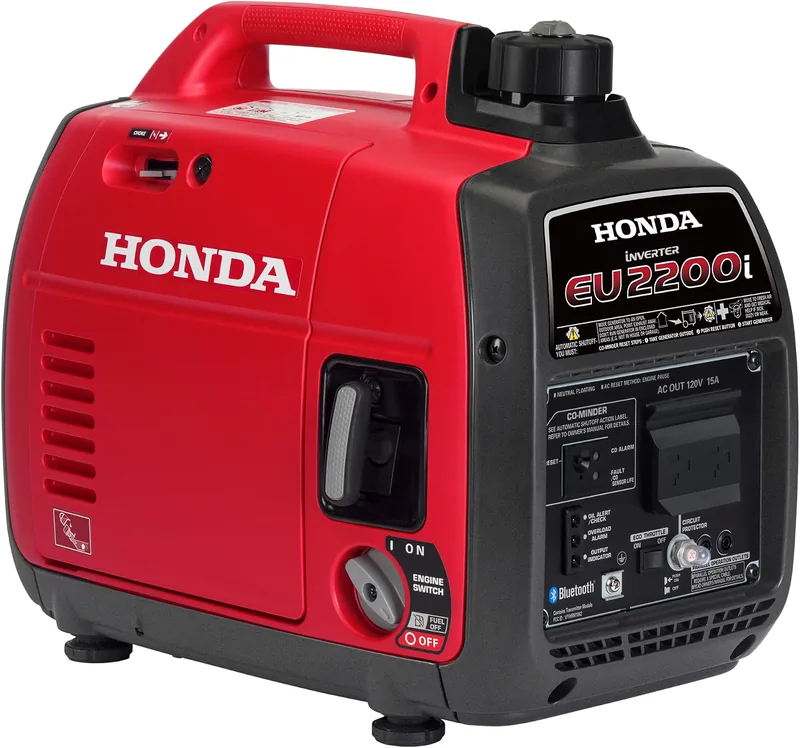
A pull-start generator is reliable until the morning you need it in the cold, when a stiff engine and a bad shoulder turn a simple job into a struggle. Electric start adds a battery, a starter, and a key or button, and it is the feature that most often decides whether a household can actually deploy the machine.
The trade is another battery to maintain. A starter battery left flat through the summer will not crank in January, so an electric-start unit needs a maintainer or a monthly run. That habit is easy to keep if the generator lives on a shelf in the garage and hard if it lives behind a snowblower.
Weight and wheels decide where it lives
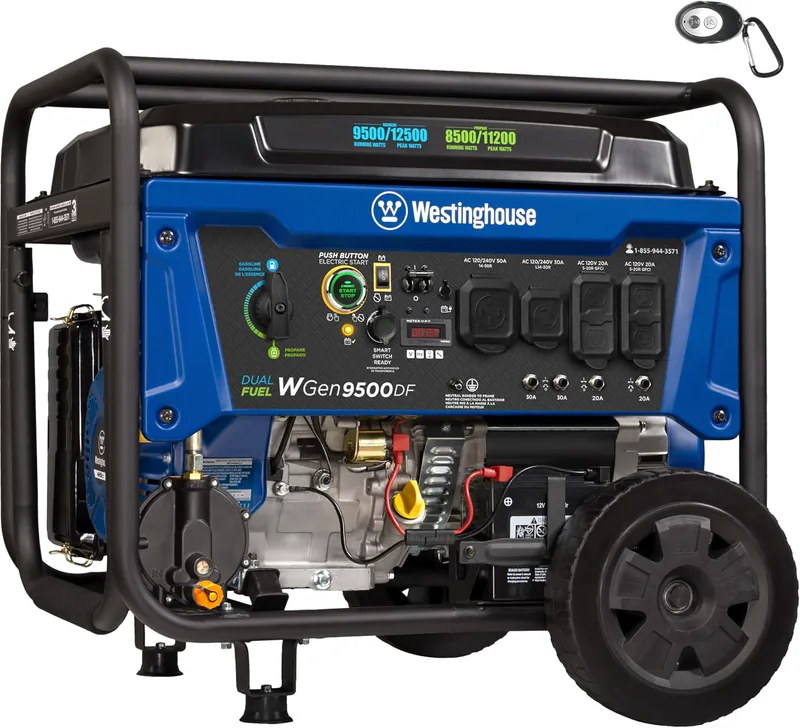
Conventional open-frame units tend to be heavier for the same output because the alternator and the frame are built to take abuse rather than to be carried. Inverter generators are often lighter and more compact, which is why they end up in the back of a truck or on a balcony instead of staying in the garage.
Wheels and a folding handle matter more than the weight figure on the spec sheet. A generator has to move from storage to the run spot and back, often over a threshold and through a door, and a machine that is awkward to move is a machine that gets left out in the weather. Pick the run spot first, then the machine that fits the path.
Maintenance intervals are not the same
Both designs need oil changes, a clean spark arrestor, and fresh fuel, but the hours add up differently. A conventional generator running at a constant speed accumulates engine hours quickly during an outage, and the oil change interval arrives sooner than most owners expect. An inverter running at part load logs fewer hard hours for the same delivered energy.
Oil changes and storage
Change the oil after the first few hours of a new machine, then follow the manual’s interval and shorten it if the generator runs in heat or dust. For storage, drain the tank or add a fuel stabiliser, run the carburettor dry, and keep the unit covered with the vents clear. A generator that starts on the first pull in year three was stored properly in year one.
How the two types compare side by side
The table below describes how each design behaves in daily use rather than which one wins. On a phone, swipe sideways to see every column.
| Aspect | Inverter | Conventional |
|---|---|---|
| Power quality | Rebuilt sine wave | Raw alternator output |
| Engine speed | Varies with load | Fixed, always high |
| Noise | Quiet at part load | Loud whenever running |
| Fuel use | Tracks the load | Constant per hour |
| Weight | Lighter for the watts | Heavier frame and core |
| Electronics | Safe for boards | Risky for sensitive loads |
| Service | More parts to diagnose | Simple and repairable |
| Best fit | Homes, outages, camping | Tools, pumps, job sites |
Parallel capability changes your expansion plan
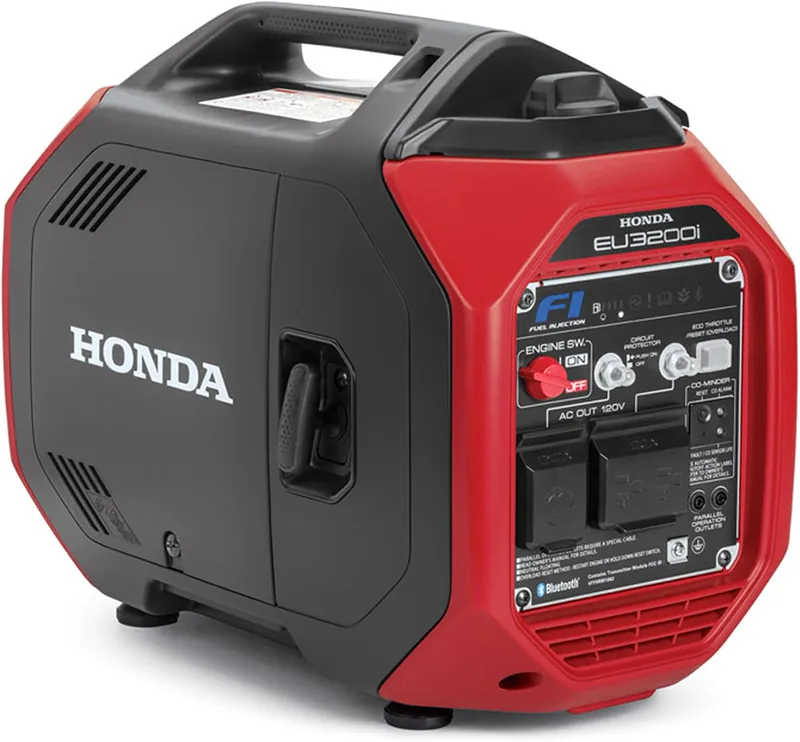
Many inverter generators can be paired with a second identical unit through a parallel kit, which doubles the available power without buying a bigger machine. That is useful if your needs grow: start with one unit for essentials, add a second later for a well pump or a window air conditioner.
Conventional portables rarely offer the same option, so the choice is a bigger single machine from the start. If you expect to add a load in a year or two, the parallel path keeps the first purchase useful. If the load is fixed and the budget is tight, a single conventional unit is the simpler answer.
Carbon monoxide safety is not negotiable
Every generator produces carbon monoxide, and the odourless gas kills people who run a machine in a garage with the door cracked. The unit belongs outdoors, well away from windows, doors, and vents, with the exhaust pointing away from the house and never into a crawl space or an attached shed.
Battery-powered carbon monoxide alarms on every level are the second half of that plan, and they belong in the budget alongside the generator. A machine with a shutdown sensor is a helpful backstop, not a substitute for placement. If the run spot cannot be outdoors and away from openings, the setup is wrong and no feature fixes it.
Transfer switches and how you connect a house
Extension cords work for a fridge and a lamp, but a house with a furnace, a well pump, or a sump pump needs a proper connection. A transfer switch isolates the circuits you want to power and, just as importantly, keeps generator current from feeding back into the utility lines while crews are working.
What a transfer switch prevents
Backfeeding through an outlet is the practice of plugging a generator into a house circuit, and it is dangerous in both directions: it can shock the person wiring it and it can energise lines that a utility worker believes are dead. A transfer switch, manual or automatic, makes the changeover deliberate and keeps the two sources apart.
Owning cost runs beyond the sticker
The purchase is the smallest part of the decision. Fuel, oil, filters, a cover, a cord or a transfer switch, and the electrician who installs it all add up, and an inverter adds a service risk that a conventional unit does not have: fewer technicians will repair one.
Weigh that against what the machine protects. A conventional unit that keeps the freezer cold through a three-day outage has already done its job. An inverter that also keeps the furnace board and the internet alive through the same outage is doing a different job. Choose the job first, then the machine that does it without drama.
A practical way to choose
- Write down the circuits you want to keep alive, add up their running watts, and note the largest starting surge.
- If the list includes a furnace, a boiler, or a tankless heater, an inverter is the design that protects those boards. If the list is a fridge, a few lamps, and a power tool, a conventional portable does the job for less.
- Then decide where the machine will run, how it will be connected, and who will move it. Those three answers narrow the market faster than any feature comparison, and they are the answers that do not change when the model year does. For related home-system guides, the Home Improvement & Tools section is where we keep them, and if a summer outage is your worry, our comparison of portable and window air conditioners covers what those units demand from a generator.