Home · Cooling
One hangs in a window and cools the room it was built for, the other rolls across the floor and comes with you. The lease usually decides before the spec sheet does.
Every air conditioner does the same job: it collects heat inside a room and puts it somewhere else. The two shapes sold for homes simply move that heat along different paths, and the path is what changes installation, noise, how much cooling reaches the floor, and whether your landlord will ever find out.
A window unit sits in the frame and dumps heat straight outside. A portable unit stands on the floor and pushes heat through a hose that has to reach a window or a sliding door. Everything else follows from that single difference.
Quick answer
- Choose a window unit when you own the window and want the strongest cooling for the space it occupies.
- Choose a portable unit when the lease, the sash or the storm window leaves you no permanent option.
- Measure the room and the window opening before either decision, not after.
- Plan where the condensate goes, because both designs will produce water.
The two units move heat in different ways
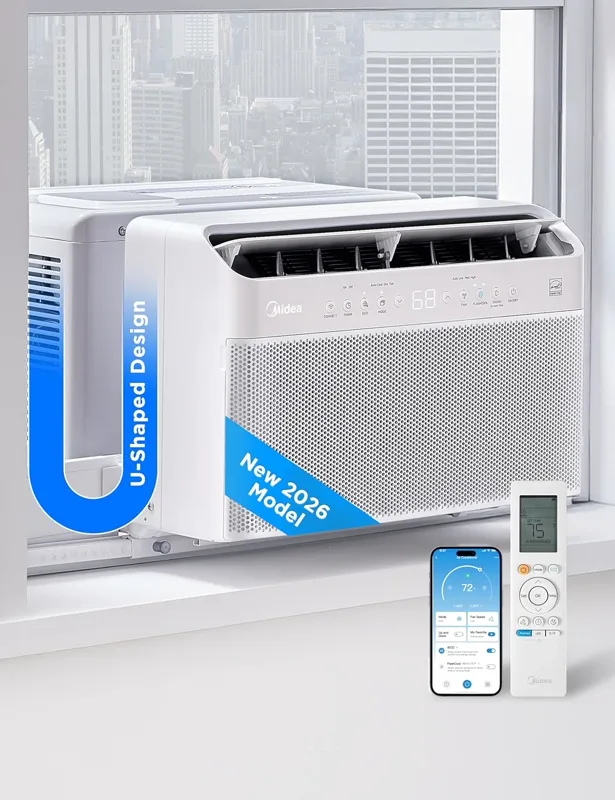
Both designs use a compressor, a condenser coil and an evaporator coil. The difference is what sits on which side of the wall. In a window unit the hot coil is outdoors and the cold coil is indoors, separated by the frame itself, with no duct in between.
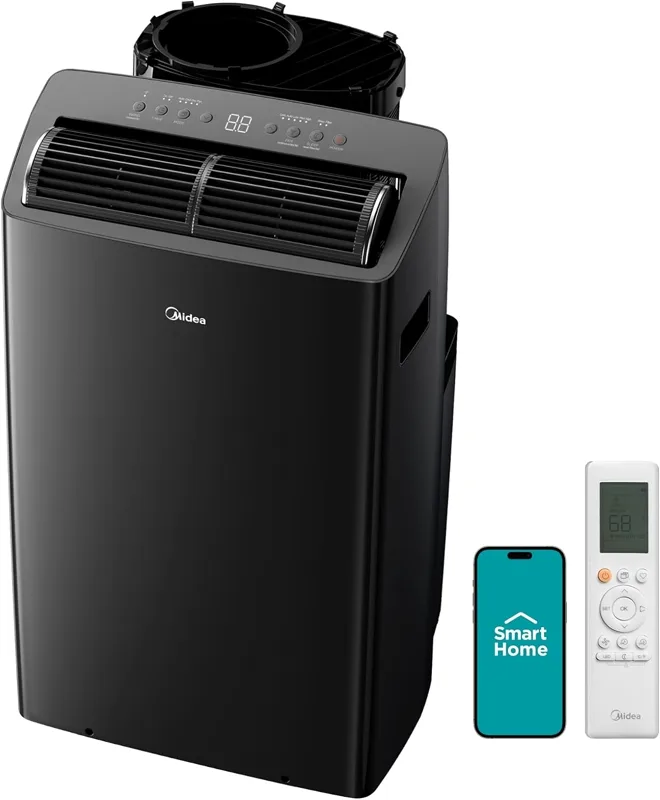
A portable unit keeps both coils in one cabinet indoors. The condenser coil is cooled by room air that is then pushed out through the hose, which means the machine is permanently borrowing a little of the air it just cooled. That recycling is the source of most of the practical differences below.
Window units run a closed loop through the frame
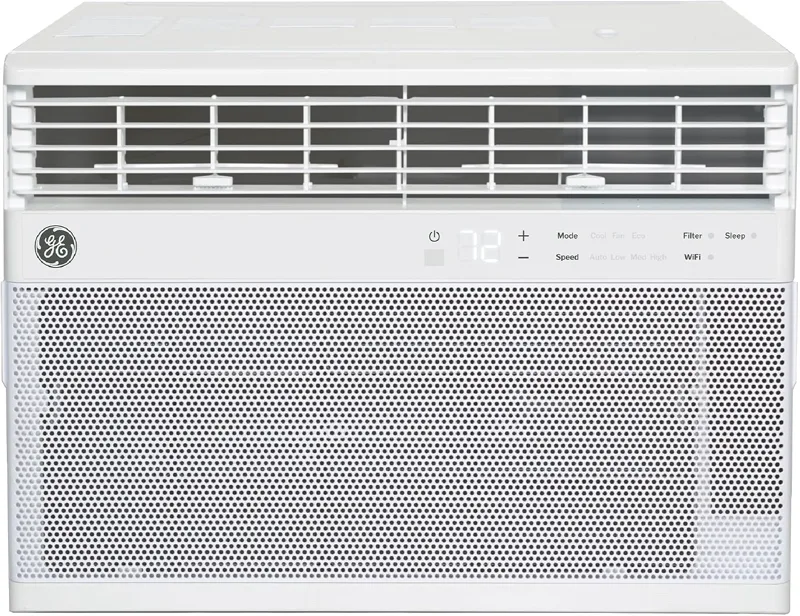
Because nothing travels through a duct, a window unit can reject heat with very little loss. The indoor air stays indoors, the outdoor air stays outdoors, and the unit only has to overcome the resistance of its own coils. That is why the same nominal capacity usually feels stronger in a window mount.
The trade is permanence. The unit occupies part of the window all summer, blocks some light, and needs a stable surface with a slight outward tilt so that condensate drains outside instead of into the room.
Portable units exhaust through a hose
A portable unit pulls room air across its hot coil and sends that air out through a hose, taking some of your cooled air along with it. In a single-hose design the room is therefore under slight negative pressure, and warm outside air leaks back in through every gap to replace what left.
Dual-hose designs fix most of that by bringing replacement air in through a second duct, so the unit is no longer stealing from the room. If you are comparing two portable units, the hose count is one of the few differences that reliably shows up in how the room feels on a hot afternoon.
Installation is the first real difference
A window unit is a two-person job once a year. A portable unit is a fifteen-minute job whenever you move it, provided the window adapter fits the opening you have. Neither is difficult, but one of them changes what you can do with your window for the whole season.
Portable units also need somewhere to put the hose. A sliding door panel is the usual compromise, and a hose that has to bend sharply loses more of its capacity than most buyers expect.
What a lease usually allows
Many rental agreements quietly rule out anything screwed into a window frame, and some buildings ban window units for appearance or liability reasons. A portable unit generally slips inside those rules because nothing is permanently attached. If you are renting, read the clause before you fall for a window model.
Room size decides whether either unit keeps up
Capacity has to match the space. Too small and the unit runs without ever reaching the set point, which is both uncomfortable and expensive. Too large and it short-cycles: the room gets cold quickly, the compressor stops, humidity climbs again, and the air never feels dry.
Sun exposure, ceiling height, kitchen heat and the number of people in the room all shift the number you need. A west-facing bedroom with a computer in it behaves nothing like the square-metre figure printed on the box.
Noise is the tax a portable unit charges
In a portable unit the compressor is in the room with you, a couple of metres from the bed. In a window unit it is outside, behind glass and a wall. That single fact decides which machine people can sleep next to, and it matters more than a decibel rating measured at an artificial distance.
Where a window unit gets loud instead
A window unit is not silent. It vibrates through the frame, and in an old building with thin walls that hum travels further than you would like. Inverter models vary compressor speed instead of switching on and off, which removes the most irritating part of the noise rather than the volume itself.
Efficiency follows the design
Because a window unit never pushes cooled air outdoors, it converts electricity into cooling more directly. Portable units work harder for the same result, and a single-hose model works hardest of all. Over a full summer the gap shows up on the bill as much as in the room.
Inverter compressors narrow the difference by running slowly instead of cycling. If you plan to leave the unit on for hours rather than minutes, that feature is worth more than a marginally higher headline capacity.
Draining and maintenance
Dehumidified water has to go somewhere. A window unit tilts slightly outward and lets it drip outside. A portable unit either collects it in a tank you empty, evaporates it through the exhaust, or needs a hose run to a drain, and in humid weather a full tank can arrive at an inconvenient hour.
Both designs want their filters rinsed every couple of weeks in high season. A clogged filter is the most common reason a working machine suddenly feels weak, and it is the cheapest problem to fix.
Windows and sashes decide what actually fits
Measure the opening, not the window. Width matters, but so does the height available above the sill and whether the sash can rest on top of the unit. Casement windows, very tall sliders and windows behind a radiator are the usual deal-breakers for a window mount.
Some newer window units are shaped to leave the sash usable, which keeps light and lets you open the window over the machine. If your only window is also your only ventilation, that shape is worth seeking out.
Cooling one bedroom versus cooling a living room
A bedroom asks for quiet and steady temperature more than raw power, and the door usually stays shut. A living room asks for reach: the unit has to push cool air across an open plan and past a kitchen corner that generates its own heat.
Portable units are easier to reposition when the room layout changes, but their airflow is directional and local. Window units cool the whole volume more evenly, at the cost of living in one specific window.
How the two designs compare side by side
The table below compares how the two designs behave in a home rather than crowning a winner. Swipe sideways on a phone to see every column.
| Aspect | Window unit | Portable unit |
|---|---|---|
| Heat path | Straight through the frame | Out through a hose |
| Installation | Seasonal, two people | Rolls in, minutes to set up |
| Lease friendliness | Often restricted | Usually permitted |
| Cooling reach | Whole room, even | Local, directional |
| Noise at the bed | Compressor is outside | Compressor is in the room |
| Energy use | Lower for the same cooling | Higher, worst with one hose |
| Condensate | Drips outside | Tank, drain or evaporate |
| Moving day | Heavy, needs a window | Moves with you |
A practical way to choose
Work backwards from the window. If you can install a window unit and keep it there, that is the simpler and cheaper machine for the same room. If you cannot, everything else is a variation on making a portable unit work well.
Then match capacity to the room you actually cool, not the whole apartment, and decide how much noise you can tolerate at the head of the bed. Those two answers settle most of the decision.
- Measure the window opening and the sill depth first.
- Decide whether the unit can stay installed all season.
- Match capacity to one room, not to the whole floor plan.
Running costs you can actually influence
Where you set the thermostat matters more than the design of the machine. Every degree of extra cooling costs more than the difference between two units of the same type. Closing the door to the room you are cooling does more than any efficiency label.
After that, look for an inverter compressor, clean filters and an unobstructed exhaust. Sealing the gap around a window installation and keeping the hose as short and straight as possible are the two cheapest improvements available to either design.
Which one makes sense if you move often
Moving resets the question, because every new apartment hands you a different window. A portable unit is the only design that survives an unpredictable sequence of openings, and it is the only one you can carry up a stairwell without help.
When a portable unit is the only option
Casement windows, basement rooms, historic buildings, dormitory rules and landlord clauses all point the same way. In those situations the honest comparison is not window against portable, it is portable against a fan and a dehumidifier. Our dehumidifier versus air conditioner guide covers that fallback.
Storage, resale and the off-season
Window units come out in autumn and take up shelf space, so they need a dry place where they will not sit on their coils. Portable units store upright, hose coiled, and are easier to keep clean through the winter.
Both hold value well enough that a working unit is worth keeping through a move. Clean it, drain it, label the remote, and it will start again next summer without an argument. For more cooling and appliance comparisons, the dehumidifier versus air conditioner guide is the closest companion piece on the site.