Kitchen · Coffee gear
One grinder gives you grounds you can repeat tomorrow, the other hands you a mix of dust and chunks. The difference shows up in the cup, not on the box.
A coffee grinder has one job: turn a roasted bean into particles small enough to brew. How evenly it does that job decides how much of the flavour you actually get into the cup, and the two designs on a typical store shelf answer the question in opposite ways.
One crushes beans between two hard surfaces held a fixed distance apart. The other spins a small blade and chops whatever falls into its path. Both make coffee, both have devoted owners, and the interesting differences appear in consistency, control and how much attention the machine asks of you every morning.
Quick answer
- Choose a burr grinder when repeatable results matter more to you than anything else.
- Choose a blade grinder only if you brew occasionally and treat coffee as caffeine rather than flavour.
- Decide honestly how often you will change the grind setting before you buy either design.
- Pick the machine you will clean without dreading it, because a stale grinder undoes everything else.
The two grinders break beans in different ways
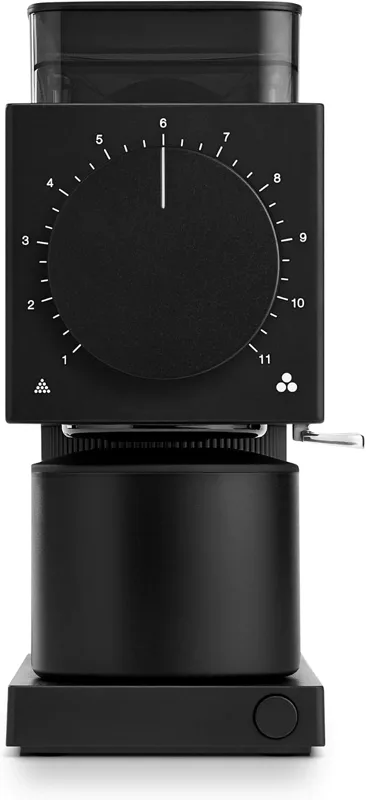
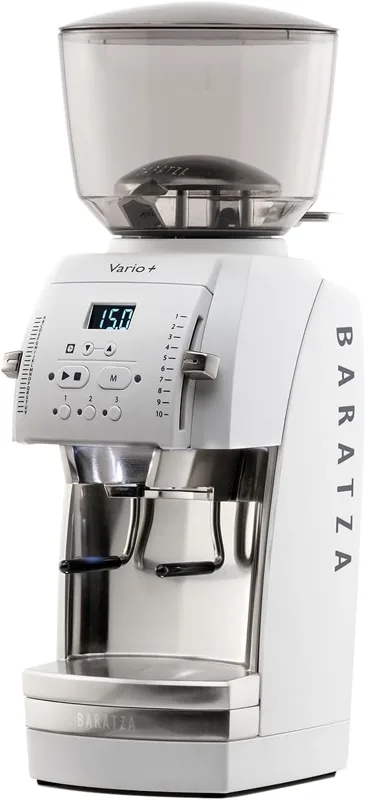
A burr grinder pulls the bean into a gap between two abrasive surfaces and crushes it as it turns. The size of that gap is set by a dial or a collar, so the machine has an answer ready for every brew method. You choose a position, and the grinder repeats it as long as you leave the setting alone.
A blade grinder has no gap to set. It has a spinning blade in a cup, and the only controls are how long you run it and how hard you shake it afterwards. That is not a design flaw so much as a different philosophy: the machine leaves the judgement to you and asks only that you pay attention.
Burr grinders crush beans to a set size
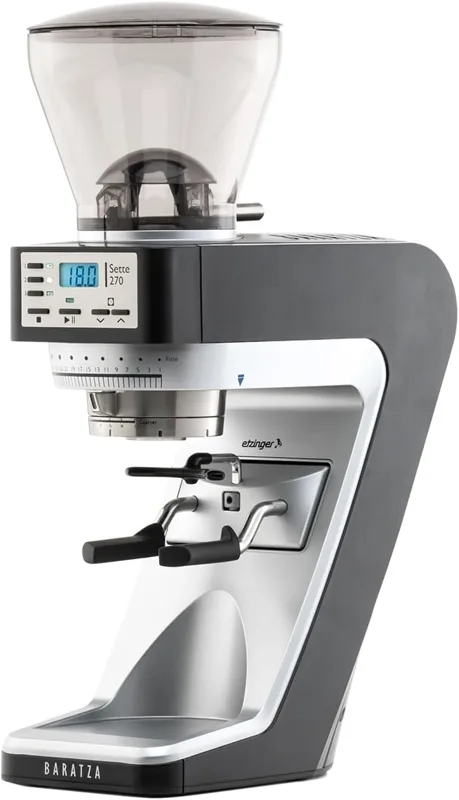
Because the gap is fixed, every bean that passes through is reduced to roughly the same particle size. A few fines and a few coarse pieces always survive the trip, but the bulk of the bed lands in a narrow band. That narrow band is what lets water extract evenly across the whole dose instead of racing through the small particles and barely touching the large ones.
The setting also becomes a place you can return to. If a brew tasted right last Saturday, the same number on the dial gives you the same grind this Saturday, which turns coffee from a lucky accident into something you can steer.
Blade grinders chop beans into dust and chunks
A blade grinder is closer to a small food processor than to a mill. The blade hits whatever happens to be near it, so beans next to the centre shatter while the ones clinging to the wall are barely touched. The result is a wide spread of particle sizes sitting in the same cup.
In practice you learn a rhythm: pulse, shake, pulse again, and stop when it looks roughly right. That routine works well enough for a drip machine or a French press, where a broad range of sizes still produces drinkable coffee. It works less well the moment you want the same result next time.
Where a blade grinder starts to struggle
The trouble is not that a blade grinder makes bad coffee, it is that it cannot make the same coffee twice. As the cup fills and the beans get finer, the blade spins through powder rather than cutting it, and the last seconds decide whether the batch is balanced or bitter. Once you have changed nothing but the timing, you have no lever left to pull.
Consistency is what you actually taste
Water extracts flavour at a rate that depends on surface area. Fine particles give up their flavour quickly, coarse ones slowly. When both are present in the same bed, the fine dust over-extracts and turns harsh while the coarse chunks stay under-extracted and taste thin. You get bitterness and weakness in the same sip.
An even grind removes that contradiction. The bed drains at one predictable speed, the brew tastes of the bean rather than of the process, and adjusting one variable, such as the dose or the water, changes the cup in a way you can feel and repeat.
Static and heat change how the grounds behave
Fast metal moving against dry beans generates static, and static makes fine grounds leap onto the walls of the bin or the rim of the cup. A grinder that runs slowly and uses an anti-static path leaves you a cleaner counter and less waste. A blade grinder running at full speed tends to fling a fine film everywhere.
Heat matters for the same reason it matters in a spice grinder. The faster and harder a machine works, the more warmth it puts into the grounds, and warm grounds lose aromatic compounds before they ever see water. Slower crushing keeps the coffee cooler and the aroma closer to what the roaster intended.
Adjustment is the feature you will use every day
Different brewers want different grinds. A French press wants coarse particles that will not slip through the mesh, a pour-over wants something like table salt, and espresso wants a powder fine enough to resist pressure. One dial that moves between those settings is worth more than any single feature on the box.
Look for steps you can feel and count, so that going back is as easy as going forward. A stepped collar lets you note a position and return to it. A stepless collar gives finer control but asks you to keep your own reference, which suits anyone who brews the same way most days and adjusts rarely.
Cleaning decides which grinder you keep using
Old grounds turn rancid, and rancid oil flavours every batch that follows. A grinder with removable burrs and a brushable chamber takes a few minutes a month. One that needs a screwdriver tends to be cleaned never, and the decline is slow enough that most owners blame the beans.
The blade design has an apparent advantage here, because the cup rinses out easily. What it cannot do is let you clear the packed fines that build up under the blade, which is exactly where the stale taste lives. Easy to wipe is not the same as easy to keep honest.
Noise, speed and counter footprint
Neither design is quiet, but they are noisy in different registers. A blade grinder shrieks for a few seconds and stops. A burr grinder hums for longer, which is a problem in a kitchen next to a bedroom at six in the morning, and it is the complaint most often raised by people who brew before anyone else is awake.
Footprint matters as much as volume. A tall hopper eats vertical space under a cabinet, while a short, single-dose design slides into a drawer. Measure the gap between your counter and your upper cabinets before you fall in love with a shape.
Espresso asks far more of a grinder than filter coffee
Espresso is the stress test. Water is pushed through a small puck at pressure, and the flow either resists or gushes depending on the particle bed. A small change in grind moves the shot from a slow drip to a fast flood, so the grinder has to make the same particle size again and again and offer you fine enough steps to steer with.
That is why espresso owners talk about grinders more than machines. The expensive part of a repeatable shot is not the pump, it is the ability to hold one setting steady and nudge it by a hair when the beans change.
Why filter brewing is more forgiving
Filter methods are gentler with a mixed grind. A drip machine or a French press gives the bed more time and less pressure, so the extremes matter less and a blade grinder can produce coffee that most people would happily drink. If filter is all you brew, the case for upgrading is about repetition rather than rescue.
Capacity, hoppers and single dosing
A hopper lets you fill once and brew for a week, at the cost of leaving beans exposed to air. Single dosing means weighing what you need and grinding it fresh, which keeps the beans fresher and lets you change beans without emptying a chamber. Neither approach is better; they suit different mornings.
Think about how many cups you make before you refill and whether your household argues about which beans go in the hopper. A shared kitchen usually ends up single dosing simply to stop the disagreement.
How the two designs compare side by side
The table below describes behaviour rather than a winner. Swipe sideways on a phone to see every column, and read each row against the way your own kitchen actually works.
| Aspect | Burr grinder | Blade grinder |
|---|---|---|
| Grind consistency | Even band of sizes | Wide mix of dust and chunks |
| Repeatability | Setting you can return to | Depends on timing and shaking |
| Control | Dial with many positions | Run time only |
| Best brew fit | Espresso through French press | Occasional drip and press |
| Flavour outcome | Balanced, predictable extraction | Unpredictable, can turn harsh |
| Counter footprint | Usually taller and heavier | Compact and light |
| Cleaning | Removable burrs, occasional brush | Rinses easily, fines stay packed |
| Learning curve | Learn one dial, then repeat | Learn by ear and by eye |
A practical way to choose
Start with the brew method. If espresso is on the menu, a burr grinder is not a luxury, it is the part that makes the rest work. If you brew filter coffee a few mornings a week and drink it without ceremony, a blade grinder will not embarrass you.
Then be honest about temperament. A burr grinder rewards someone who likes a setting and a routine. A blade grinder rewards someone who enjoys listening to the machine and stopping when it sounds right. Both are valid; only one of them matches you.
- Write down the brew methods you use in a normal week.
- Note whether two people in the house want different beans.
- Decide how much counter height you are willing to give up.
What a better grinder actually changes
Upgrading does not make coffee stronger, it makes it clearer. Flavours that were muddled by uneven extraction separate, the difference between two beans becomes obvious, and a bad shot becomes something you can diagnose instead of something you have to endure.
When a blade grinder still makes sense
If you drink one mug a day, brew it in a drip machine, and have never once wished the coffee tasted different, there is nothing to fix. Keep the counter space, keep the simplicity, and spend the difference on better beans, which will change your cup more than any machine will.
Repairs and longevity favor the simpler machine
A blade grinder is a motor and a blade, and there is very little to fail. A burr grinder adds a gear train, a carrier, a collar and a set of precision surfaces, each of which is a wear point. That is not a reason to avoid one, but it is a reason to prefer a maker who sells spare burrs and answers questions.
Burrs do dull, and a dull burr produces more fines and more heat. Knowing that a replacement set exists, and roughly what it asks of you to fit, tells you whether the machine is a long-term tool or a disposable one.
Which grinder suits a shared kitchen
In a household where two people drink espresso and one drinks drip, the grinder has to move between settings without losing its place. A stepped collar with clear markings turns that into a ten-second job; a blade grinder turns it into an argument. If the household also owns a brewing appliance, the choice is easier to reason about together with it. Our espresso machine versus pod coffee maker comparison covers that decision, and the Kitchen & Cooking section collects the rest of our countertop guides.
Whichever way you go, buy once and learn the machine. A grinder you understand beats a grinder you replace, and the habits you build around one setting are worth more than any feature list.
- Pick the design that matches your brew method first.
- Check that spare burrs or blades are sold.
- Keep a written note of the setting that worked.