Home appliances · Laundry
A door in front or a lid on top decides how you load, how you bend, and how much floor the laundry corner eats. The useful difference is in the routine each design forces on you.
A washing machine is one of the few appliances you use several times a week for a decade, so the small frictions matter more than the feature list. Front-load and top-load washers clean clothes in different ways, and those differences show up in your back, your floor space, and your water bill rather than on the showroom floor.
The short version is that front-loaders tumble clothes through a shallow pool of water while top-loaders agitate them in a full drum. Everything else follows from that one decision: how much water each load needs, how fast the drum spins, how the machine is serviced, and whether you can stack a dryer on top of it.
The short version
- Choose a front-loader when water and energy use matter and you can leave the door open between loads.
- Choose a top-loader when you want to drop in a forgotten sock and never kneel on a concrete floor.
- Measure the laundry room twice, including door swing and dryer stacking, before you read another spec sheet.
- Plan the detergent and the maintenance routine before the first wash, because both designs punish the wrong habits.
Both designs clean clothes, but the loading motion sets them apart
A front-loader lifts clothes to the top of a horizontal drum and lets them fall back through a shallow pool of water. That tumbling action is gentle on fabric because nothing scrubs against anything hard. A top-loader moves clothes through water with an agitator or an impeller, and the motion is closer to stirring than to falling.
The practical result is a different relationship with the load. With a front-loader you sort first and commit, because the door is at the bottom of the machine and a dripping item is awkward to fish out. With a top-loader you can drop in the item you missed without stopping the cycle, which is why households with children tend to forgive the extra water use.
Water use separates the two designs more than the marketing admits
Because a front-loader only needs enough water to wet the bottom of the drum, it uses a fraction of what a top-loader fills. A top-loader with an agitator typically floods the drum, and even impeller models that sense the load still use more than a horizontal drum would for the same weight of laundry.
That difference compounds in a household that runs several loads a week, and it also changes how quickly a load finishes. Less water means less heating, and less heating means shorter cycles and a smaller energy draw. If your utility bill is the reason you are reading this, the horizontal drum is the design that answers the question.
Spin speed decides how much water your dryer has to remove
Spin speed is the quiet hero of laundry. A faster spin pushes more water out of the fabric, so clothes arrive at the dryer lighter and dry in less time. Front-loaders generally spin faster than top-loaders because a horizontal drum balances better at high speed than a vertical one does.
The trade is that high spin speeds crease some fabrics and can vibrate a lightly built floor. If you hang dry most of your laundry, the extra extraction is a gift. If you tumble everything, it still shortens the drying cycle, which is where a large share of the energy in laundry actually goes.
Detergent is not a detail you can skip
Front-loaders need low-suds detergent because the tumbling action whips up foam that a shallow water pool cannot dilute. Too many suds and the machine will either rinse longer or leave residue behind. Top-loaders are more forgiving, though high-efficiency formulas still work better in modern impeller models.
Why high-efficiency detergent matters
High-efficiency detergent is formulated to clean in less water, which is exactly the condition a front-loader creates. Using a conventional powder in a horizontal drum is the most common cause of a machine that smells sour within a year, because residue collects where the water never reaches. Read the dosing line on the cap and use less than you think you need.
Top-loaders are easier on your back and your floor
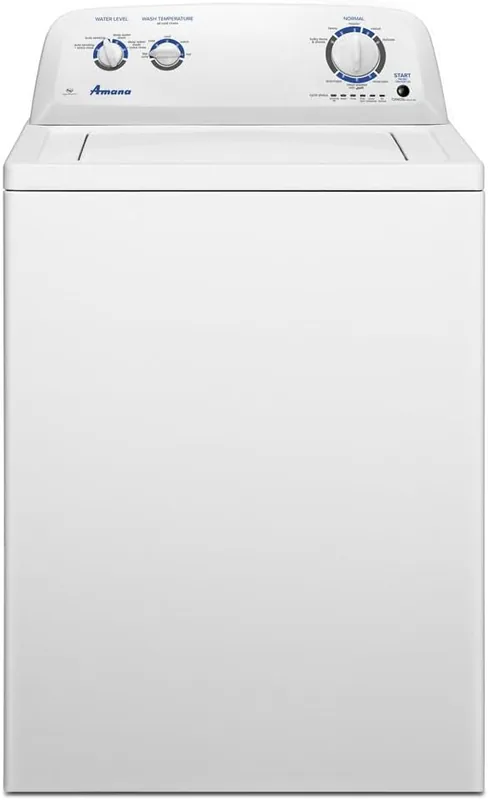
A top-loader lets you stand upright while you load, which matters more as the years pass and the laundry room stays the same height. You also do not need clearance in front of the machine for the door to swing, so a narrow alcove can still take a top-loader where a front-loader would block the walkway.
The design also survives a slightly uneven floor better. A vertical drum is more tolerant of a slope than a horizontal one spinning at speed, which is why basements and old wooden floors so often end up with a top-loader. If the machine has to sit on a framed floor above a crawl space, that tolerance is worth more than any feature.
Front-loaders ask for floor space you may not have
The door on a front-loader needs room to open, and the machine itself is deeper than a top-loader because the drum runs front to back. In a narrow galley or a closet laundry, that depth is often the difference between a machine that fits and one that blocks a doorway.
What you get back is usable surface. A front-loader can sit under a counter or inside a cabinet run, and the top of the machine becomes a folding shelf instead of a lid that has to stay clear. If your laundry corner doubles as a hallway, that flat top is the feature you will actually use.
Stacking changes a small laundry room
Most front-loaders accept a matching dryer on top, which turns two footprints into one. That is the single biggest layout advantage of the design, and it is the reason small apartments and upstairs closets so often end up with a stacked pair. Top-loaders cannot be stacked, so the dryer needs its own floor space beside them.
Cycle length differs more than the dial suggests
A normal cycle on a front-loader is usually shorter than the equivalent on a top-loader, mostly because there is less water to heat and remove. The gap widens on heavy cycles, where a top-loader may add a deep fill and an extra rinse that the horizontal drum simply does not need.
Cycle length is not a virtue by itself. A short cycle that leaves detergent behind is worse than a long one that rinses clean, and some front-loaders stretch their cycles with extra rinses when the load is large. Watch the clock for a week rather than trusting the numbers on the display.
Maintenance routines are not equal
Every washer needs attention, but the two designs ask for different kinds. A front-loader collects lint and water in the door gasket, and that seal needs wiping and occasional cleaning to stay ahead of mould. A top-loader has no gasket to speak of but does collect lint in the drum and around the agitator.
Both types benefit from a monthly hot wash with a cleaning tablet, and both want the detergent drawer rinsed out. The difference is that a front-loader’s failure mode is visible early, as a smell, while a top-loader’s is slower and shows up as residue on dark clothes. Either way, the routine is short if you keep it.
The door gasket and the agitator
On a front-loader, run a finger around the inside of the gasket after every few loads and dry what you find. On a top-loader, check the top of the agitator for hair and grit, and pull the fabric softener cup out to rinse it. Two minutes of attention a month is the whole maintenance story for either design.
Vibration travels through a floor differently
A horizontal drum spinning at high speed wants to walk, and on a springy wooden floor it will. Front-loaders need a level, rigid surface, and older homes often require a plywood base or anti-vibration feet to keep the machine in place during a spin cycle.
Top-loaders vibrate too, but the motion is vertical and generally stays in the cabinet rather than travelling into the joists. If the machine sits above a bedroom or a living room, that difference is the one your household will notice. A concrete basement floor makes the question irrelevant.
Repairs, parts, and how long a machine lasts
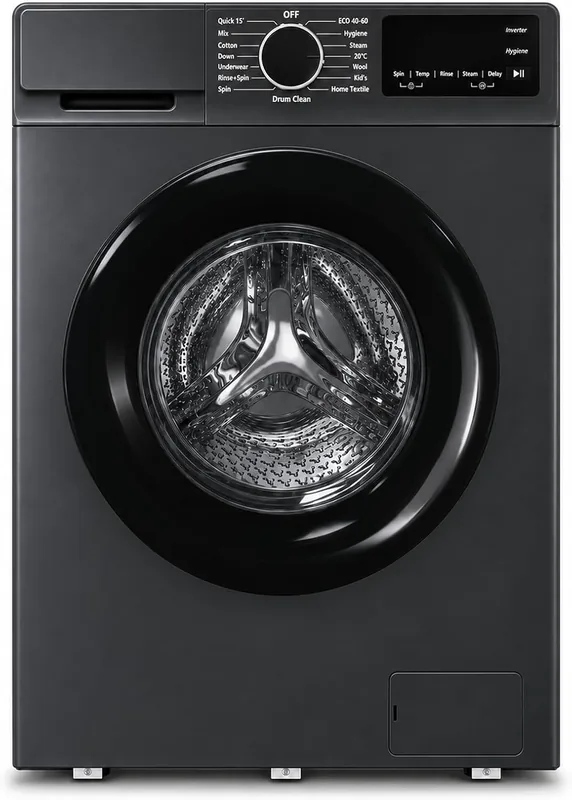
Front-loaders carry more electronics, a door lock, and a drain pump that has to move water upward, so there are more parts that can fail. Top-loaders are simpler machines with fewer sensors, and a basic agitator model is often the cheapest thing in the house to repair.
Simplicity is not the same as longevity, though. A well-built front-loader with a sturdy suspension can outlast a flimsy top-loader, and the reverse is just as true. Look at who services the brand locally and whether the model has been sold for years, because a long production run is the best guarantee that a part will be available in eight years.
How the two types compare side by side
The table below describes how each design behaves in daily use rather than which one wins. On a phone, swipe sideways to see every column.
| Aspect | Front-load | Top-load |
|---|---|---|
| Loading | Bend and reach in | Drop in from above |
| Water use | Shallow pool, low fill | Fills the drum |
| Spin and drying | Faster spin, drier clothes | Slower spin, wetter clothes |
| Floor space | Deep body, door swing | Narrow body, lid clearance |
| Stacking | Dryer on top | Needs separate space |
| Cycle length | Typically shorter | Typically longer |
| Maintenance | Gasket wipe, drain clean | Drum and agitator clean |
| Best fit | Small rooms, low bills | Family homes, tight floors |
Match the machine to your household size
A single person washing twice a week does not need a drum that holds a duvet, and a family of five will wear out a compact machine within a few years. Size the drum to the biggest single load you actually wash, not to the biggest load you imagine, and leave a hand’s width of clearance around the cabinet for airflow.
Household rhythm matters as much as household size. If laundry runs on weekday evenings, a shorter cycle is worth more than a larger drum. If it runs all day on Sunday, capacity wins and the cycle length stops mattering. Write down when the machine actually runs before you choose.
Think about the laundry room, not just the machine
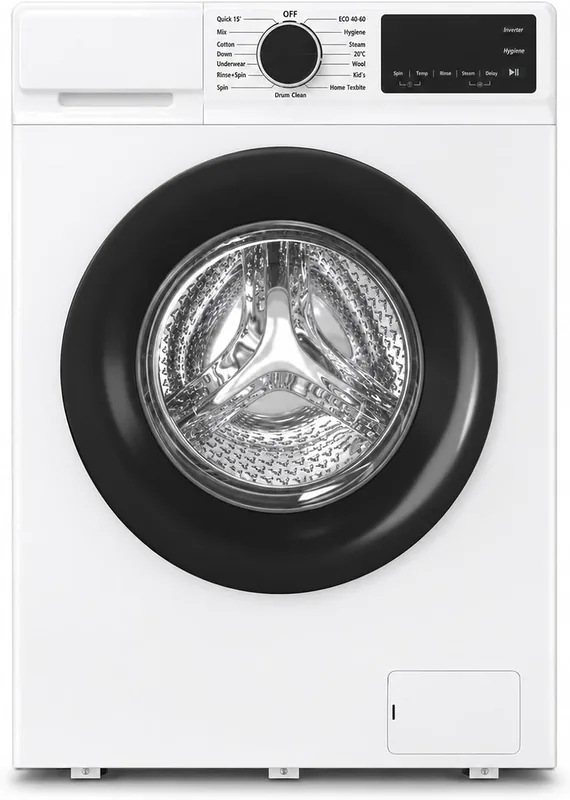
The room decides as much as the appliance. A front-loader in a closet needs a door that opens outward and a drain pan underneath, and a top-loader in a basement alcove needs enough headroom for the lid to stand up. Measure the opening, the depth, and the path from the front door, because the delivery team will not remove a door frame for you.
Ventilation is the other quiet requirement. A front-loader left sealed in a damp closet will smell of mildew within months, so if the room has no window, plan to leave the door ajar and run a cleaning cycle on a schedule. It is a small habit that decides whether the machine still smells neutral in year five.
A practical way to choose
- Start with the room. If it is narrow, stacked, or under a counter, a front-loader is the design that fits, provided the floor is level.
- If the room is generous, the floor is wooden, and you want to load while standing, a top-loader will keep you happier for longer.
- Then look at the laundry itself. Heavy soil, pet hair, and children’s clothes reward the extra water and the simpler mechanics of a top-loader, while delicates, everyday office wear, and a household that cares about the water bill reward the gentler tumble and faster spin of a front-loader. Neither choice is a compromise if it matches the room and the routine, which is the only test that survives the second year. For more appliance comparisons in the same practical register, the Home Improvement & Tools section collects the guides we keep current.