Home improvement · Water filtration
One hides in the cabinet and feeds a tap; the other sits on the counter and needs no plumbing. The useful difference is how much water your household drinks and whether the kitchen is yours.
Bottled water is a habit that solves one problem and creates two: you carry it home, then you carry it out again as plastic. A reverse osmosis system replaces that loop with a machine that makes drinking water in your kitchen, and the choice that follows is where that machine should live.
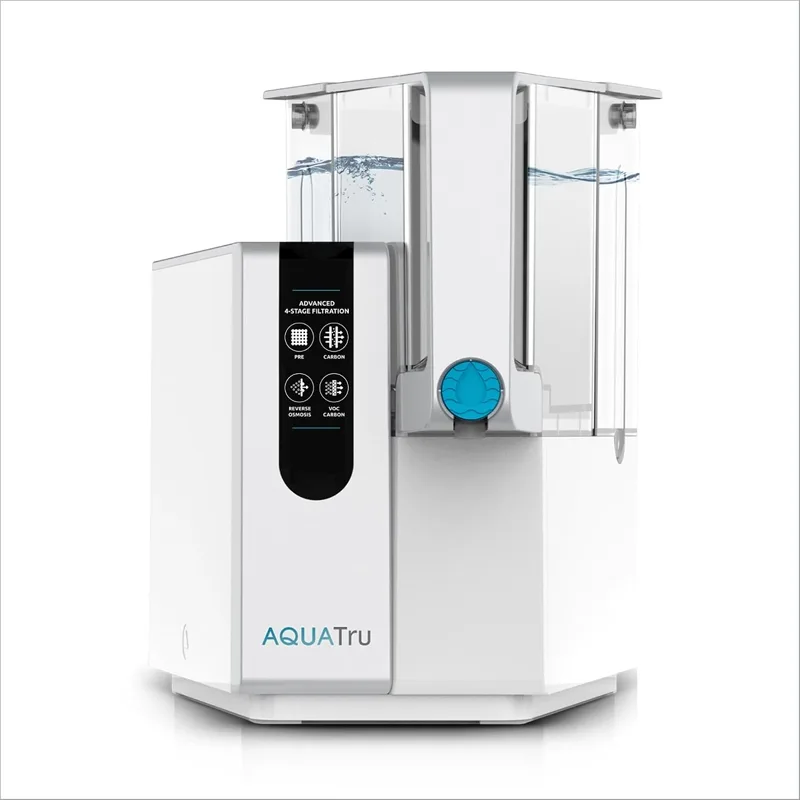
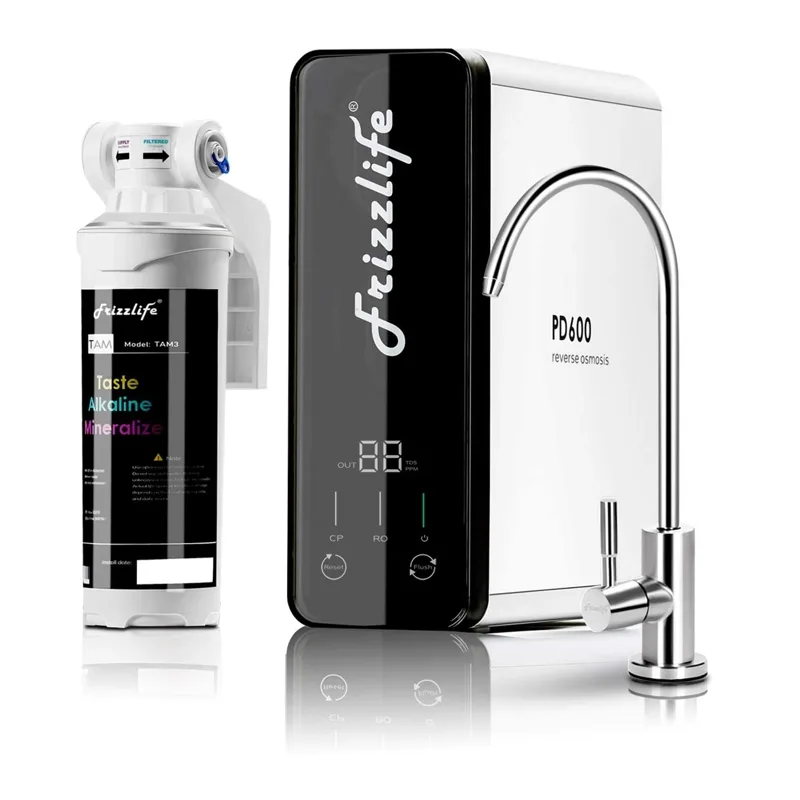
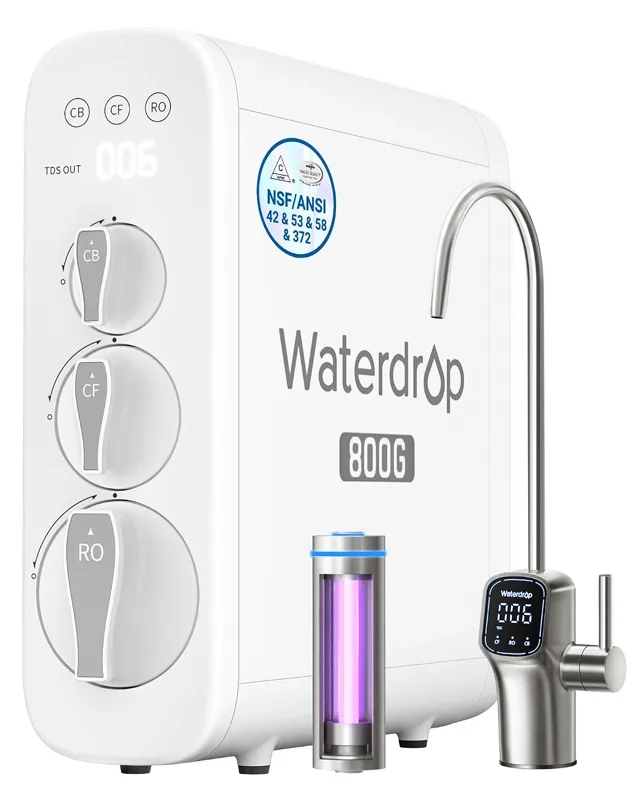
A countertop reverse osmosis unit sits on the counter and fills from a pitcher or its own tank. An under-sink system hides in the cabinet and feeds a dedicated faucet. They remove the same things from water. What differs is how they are installed, how much water they can deliver at once, and how much of your kitchen they claim.
The short version
- Choose countertop when you rent, move often, or have no cabinet space to give up.
- Choose under-sink when you want water on demand without filling anything first.
- Judge both by how many litres a day your household drinks, not by the number of stages on the box.
- Price the replacement filters before you price the machine, because that is the cost you keep paying.
Both systems rely on the same membrane
Reverse osmosis works by pushing water through a dense membrane that rejects dissolved solids along with most of what is dissolved in it. Every domestic system, whatever its shape, is built around that membrane plus a carbon pre-filter and a post-filter to improve taste.
So there is no quality hierarchy buried in the form factor. A well-maintained countertop unit and a well-maintained under-sink unit produce water of the same kind. The difference is plumbing, storage and the amount of water each can push through in an hour.
Installation is the difference you feel on day one
A countertop unit needs a socket and a flat surface. You fill its reservoir, wait, and pour. Nothing is drilled, nothing is clamped to a pipe, and when you move house the machine leaves with you.
An under-sink system connects to the cold supply, to the drain, and to its own faucet through a hole in the counter or the sink deck. That is an afternoon of work with basic tools, and a permanent change to the flat. In a house you own, that trade is minor. In a rental, it is often the whole decision.
Counter space and cabinet space are not equal trades
Under-sink systems consume the back corner of a cabinet, which is the one place in a kitchen nobody misses. Countertop systems consume the most contested surface in the house, the strip between the sink and the prep area.
That asymmetry explains a lot of buyer regret. A cabinet corner is nearly free. A square of counter is not, especially in a small kitchen where the kettle, the toaster and the cutting board already negotiate for room each morning.
Production speed decides how you pour water
Membrane output is slow by nature, which is why every system either stores water in advance or asks you to wait. Under-sink units usually keep a small pressure tank so the faucet delivers a steady stream the moment you open it.
Countertop units typically fill a pitcher or a reservoir at the pace the membrane allows, and stop when full. That is fine for a kettle and a couple of glasses. It becomes a compromise when you are filling a pot for pasta or a jug for the fridge.
Storage tanks change the rhythm of the day
A tank is not a feature you notice until it runs dry. Under-sink systems with a small tank deliver a few litres quickly and then slow to the membrane’s pace, which is why a household that cooks and drinks a lot often wants the larger tank option.
Tankless under-sink designs skip the tank and heat nothing, but they ask the membrane to work directly at the tap, so their delivery rate depends entirely on the pump. Countertop units already behave like this by design, with the pitcher as the buffer.
Water pressure is the hidden requirement under the sink
An under-sink membrane needs adequate supply pressure to push water through, and many units include a booster pump for homes where the supply is weak. Without it, output drops and the system runs longer for every litre it makes.
Countertop units sidestep the question because they include their own pump and draw from a reservoir at atmospheric pressure. That is one genuine advantage of the smaller design, and it matters most in older buildings and upper floors.
What low pressure does to output
Weak pressure shows up as a slow trickle at the faucet and a system that seems to run constantly. If you already notice poor flow at the kitchen tap, plan for a pumped system or choose the countertop route rather than discovering the problem after installation.
Waste water belongs in the running cost
Every membrane sends a portion of the incoming water to the drain to carry rejected solids away. Older systems wasted several litres for each litre produced; current designs do better, but the ratio still varies enough between models to be worth checking.
This is where a countertop unit can look attractive, because you see exactly how much water goes in. It is also where an efficient under-sink system can win, because it recovers more of what it takes. Either way, the number matters more than the badge on the front.
Filter changes are the real long-term expense
Sediment and carbon stages need replacing far more often than the membrane, and the cost of those cartridges over several years usually exceeds the difference in purchase price between one design and another. Check the price and availability of the cartridges before you commit.
Proprietary cartridges are convenient to swap and expensive to keep buying. Generic cartridges are cheap but need more care to fit correctly. Neither is wrong; what is wrong is discovering the pattern after the first replacement is due.
Why the first cartridge matters most
The carbon pre-filter protects the membrane, so a tired pre-filter shortens the life of the most expensive part of the system. Replacing it on schedule is cheaper than replacing a membrane early, and on a countertop unit it is usually a two-minute job with no tools.
Countertop units suit renters and small kitchens
If you rent, plan to move within a couple of years, or have a kitchen where every cabinet is already full, a countertop unit is the version that fits without negotiation. It also survives a move, which is rare among kitchen appliances.
The compromise is volume. A household of two that drinks water all day and cooks at home will fill a pitcher more often than they expect. That is not a fault, just the arithmetic of a reservoir that holds a couple of litres.
Under-sink systems suit permanent, high-volume kitchens
In a house you own, with a family that fills water bottles, kettles and pots every day, an under-sink system disappears into the kitchen and simply works. The dedicated faucet becomes the tap everyone uses for drinking water, and the reservoir never runs dry mid-pot.
It also frees the counter completely, which in a small kitchen is worth more than it sounds. The trade is that installation is a commitment, and the cabinet corner becomes permanently occupied by plumbing you will not want to move twice.
How the two types compare side by side
The table below describes how each design behaves in daily use rather than which one wins. On a phone, swipe sideways to see every column.
| Aspect | Countertop | Under-sink |
|---|---|---|
| Installation | Plug in, fill, pour | Plumb to supply and drain |
| Space claimed | Counter surface | Cabinet corner |
| Delivery | Reservoir at a time | Faucet on demand |
| Pressure needs | Self-contained pump | Depends on supply |
| Rental friendly | Moves with you | Permanent change |
| Daily volume | One or two people | Family, cooking, bottles |
| Upkeep | Swap cartridges at the unit | Swap cartridges in a cabinet |
| Best fit | Small kitchens, leases | Owned homes, heavy use |
Noise and vibration differ more than people expect
Both designs use a pump, and both make a low hum while they work. A countertop unit is audible because it sits beside you; an under-sink unit hides the sound behind a cabinet door but transmits a faint buzz into the pipework and the sink itself.
If you work at a table near the kitchen, the countertop unit will interrupt you each time it refills. If you are sensitive to vibration through the sink, sit the under-sink pump on the rubber feet it came with rather than bolting it directly to the cabinet floor.
Installation mistakes that cause leaks
Most under-sink leaks come from three places: a supply tee that was not tightened evenly, a drain saddle drilled in the wrong spot, and tubing pushed too far into a push-fit connector so the seal never seats. All three are avoidable with a slow, dry run before the water is turned on.
The drain saddle and the air gap
The drain connection has to sit above the trap and be drilled cleanly, and where local rules require an air gap, skipping it is the mistake that gets noticed at inspection. If you are unsure, a plumber for one hour is cheaper than a cabinet floor replacement.
A practical way to choose
Start with tenure. If the kitchen is not yours for the next few years, the countertop design is the one that fits without permission, and it leaves nothing behind when you go. Everything else about that design is a compromise you can live with.
If the kitchen is yours, count the litres. A household that fills bottles, kettles and pots every day will appreciate a faucet that never needs filling first. The same reasoning applies to other home systems we cover, such as tank and tankless water heaters, where daily demand decides the design. More of these comparisons sit in our Home Improvement & Tools section.
- Count how many litres your household drinks and cooks with on a normal day.
- Check the cartridge price and availability for any model you shortlist.
- Confirm your kitchen tap pressure and whether the cabinet corner is genuinely free.
Whichever you choose, the system only earns its place if the filters stay current. A reverse osmosis unit with tired cartridges is an expensive way to store water, and the calendar reminder you set on installation day is the part that keeps it honest.