Home improvement · Pressure washers
One follows you around the house on an extension lead, the other arrives with its own engine. The useful difference is about what you clean and how often, not which one is stronger.
A pressure washer does one thing: it throws water hard enough to lift dirt that a hose and a brush will not. Everything else, including whether the machine plugs into a wall or starts with a pull cord, is a consequence of how much water it has to move and how far from a socket you intend to take it.
That is why the choice splits so cleanly in two. An electric washer is light, quiet and tethered to an outlet. A gas washer is heavy, loud and free to work wherever it can carry its own fuel and water.
Quick answer
- Choose electric when your cleaning happens near the house and near a tap.
- Choose gas when you clean large areas far from power and do not mind the noise.
- Decide how you will supply water before you compare cleaning strength.
- Pick the machine whose routine you will actually repeat, not the one with the biggest number on the box.
The two washers split on one question: where the power comes from
An electric washer uses a household motor, so its output is limited by what a normal circuit can supply. A gas washer uses a small engine, which is not bound by a cable or an outlet and can therefore move more water for longer.
Everything that people like or dislike about each type flows from that single decision. Weight, noise, upkeep and where you can work are all downstream of the power source, not separate features to weigh up.
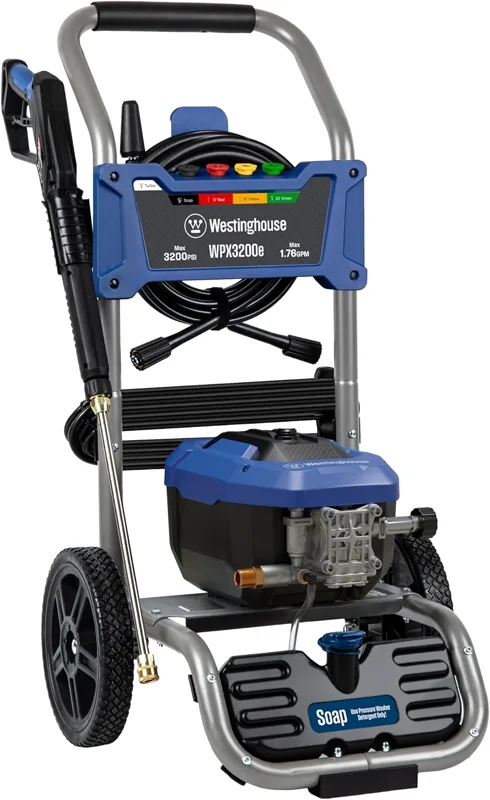
An electric washer plugs in and travels light
An electric washer is the one most homes should start with. It is light enough to carry up a step, quiet enough to use on a Sunday, and it starts with a switch instead of a cord you have to yank.
The trade is reach. You need an outlet and a tap within the length of the cables and the hose, which in practice means driveways, patios, cars and garden furniture rather than the far end of a field.
A gas washer brings its own engine
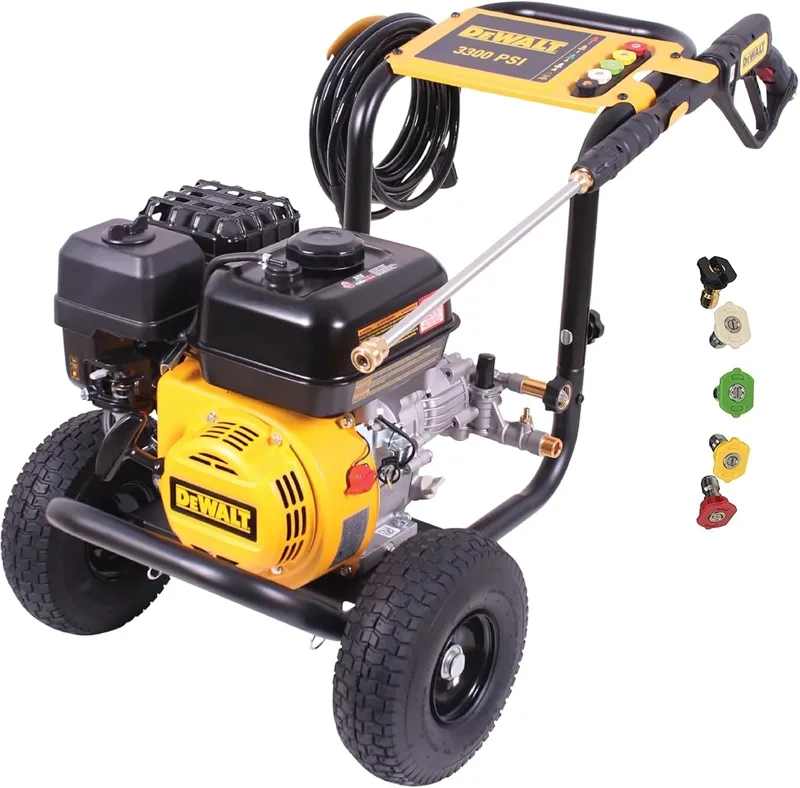
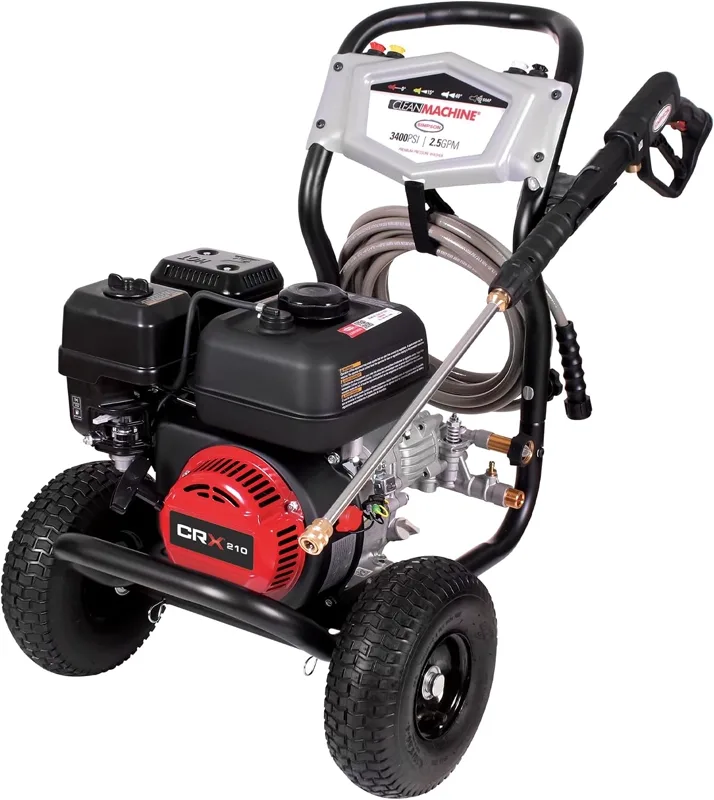
A gas washer carries its own power, which is why it can be taken to a fence line, a long driveway or a second property without anyone running an extension lead across the lawn.
In exchange it asks for fuel, oil, a place to breathe and a willingness to start an engine every time you want to rinse something. That is a fair trade only if the job is big or the distance is real.
What the extra power actually buys
More power buys time, not magic. A stronger stream covers a large surface faster and keeps up with a wide nozzle, which is why long runs of siding or paving suit a gas machine. On a small car or a few chairs, the extra capacity mostly sits unused.
Cleaning power matters less than how you use it
Two people with the same washer get different results because the difference is technique: the angle of the wand, the distance from the surface, and whether the nozzle matches the material underneath.
Getting closer is not the same as cleaning better. Past a point, extra force starts to damage wood, strip paint or etch a finish, which is a problem no amount of engine size can fix.
Portability is about weight and setup, not wheels
Both types roll, so the word portable can mislead. What actually decides portability is the weight you lift into a car and the number of steps between deciding to clean and water hitting the surface.
An electric machine is usually a one-trip job. A gas machine adds fuel, oil and a longer start-up, which is fine at home and awkward when you are loading it for someone else’s driveway.
Noise and fumes decide when you can work
An electric washer can be used early or late without annoying a neighbour, which quietly extends the hours you can work. A gas washer announces itself to the whole street and adds exhaust to the air you are standing in.
Indoors the difference is not a preference but a rule. Engines produce exhaust, so a gas machine stays outside, while an electric one can be used in a garage as long as water and electricity are kept sensibly apart.
Water supply is the limit nobody talks about
Both washers need water, and how you supply it often determines what is possible. An electric machine is normally fed from a garden tap, which ties it to the house.
A gas machine can draw from a bucket or a tank as well as a tap, which is exactly what makes it useful in places with no plumbing. If your job is far from a spigot, this matters more than any power figure.
Upkeep separates the two designs
An electric washer asks very little: keep the inlet filter clean, drain it before a freeze and store it somewhere dry. There is no oil to change and no spark plug to think about.
A gas washer behaves like any small engine and needs fuel stabiliser, an oil change and a pump that is protected from frost. None of that is hard, but it is a routine you own.
Winter changes the routine
Water left inside a pump can freeze and crack it, and this is the most common way either machine is ruined. The fix is the same for both: run the unit dry, add the recommended protection for the pump, and store it where the temperature will not surprise you.
Running cost is not the same as purchase price
An electric washer spends cheap household power, while a gas washer burns fuel you have to buy and carry. Over a few uses a year the difference is small; over many, fuel and engine upkeep add up.
The fair comparison is cost per season rather than per litre of water. Count the fuel, the oil, the stabiliser and the spare nozzle, then decide whether the extra capability is worth the extra errands.
How the two types compare side by side
The table below describes behaviour rather than a winner. Swipe sideways on a phone to see every column, and read each row against the way you actually clean.
| Aspect | Electric | Gas |
|---|---|---|
| Power source | Household outlet | Petrol engine |
| Cleaning strength | Steady, moderate | Higher, sustained |
| Weight and size | Lighter, compact | Heavier, bulkier |
| Setup | Plug in and go | Fuel, oil, pull start |
| Noise and fumes | Quieter, no exhaust | Loud, exhaust smell |
| Water draw | Usually from a tap | Tap, tank or bucket |
| Upkeep | Drain, filter, store dry | Oil, fuel, frost care |
| Best fit | Cars, patios, small jobs | Driveways, siding, long runs |
Matching the washer to the job in front of you
Write down the three biggest jobs you will actually do, and be specific: a car, a patio, a walkway, a fence, a set of gutters. The machine that suits the biggest one is not always the machine that suits the most frequent one.
If the list is short and close to the house, an electric washer will finish it and go back in the garage without ceremony. If the list is long and far from a socket, the engine earns its keep.
- Note whether every job sits within reach of a tap and an outlet.
- Estimate how long each job takes, then weight the longest one heavily.
- Decide whether you will tolerate an engine start for small jobs.
Safety habits belong in the plan, not the manual
The risks with a pressure washer are mostly about direction and standing water. The stream is powerful enough to injure, and electricity and puddles make a poor pair, so the safest routine is also the tidiest one.
Keep the wand pointed away from people and pets, avoid spraying anything electrical, and never let the machine sit in the runoff it just created. These habits matter more with a gas engine simply because the machine is heavier and harder to move in a hurry.
Small habits that matter
Start on the lowest setting that works, test on a hidden patch before you commit to a whole surface, and shut the machine down whenever you stop moving the wand. A pressure washer left running against a single spot is the quickest way to remove a finish you liked.
A practical way to choose
Begin with distance, because distance decides water and power. Everything reachable from a tap and a socket points to an electric machine; anything beyond that points to an engine.
Then weigh maintenance honestly. An electric washer is close to a hose with ambition, while a gas washer is a small engine you now maintain. The same reasoning shows up with indoor cleaning tools, where we compared a canister and an upright vacuum on the surfaces each one handles best. There are more such comparisons in our Home Improvement & Tools guides.
- Measure the distance from the furthest job to your nearest tap.
- Decide whether you want an appliance or an engine in your garage.
- Check your storage for frost, fuel and a dry place to keep it.
What you notice after the first season
The surprise is rarely about power. Owners of electric machines notice how often they use it simply because there is nothing to prepare. Owners of gas machines notice how well it handles the one job that would have taken an afternoon with anything weaker.
Neither reaction is wrong. A pressure washer is a tool you buy for the worst job you own, so it pays to know which job that is before the machine is sitting in your garage.