Home cleaning · Vacuums
One shape trails its motor behind you on a hose; the other rides on top of the brush. That single difference decides stairs, storage and your wrists.
Canister and upright vacuums get compared because they both clean a floor and both cost real money. Everything past that point is a question of where the weight sits. A canister parks its motor on a body that trails behind you and sends only a hose and a wand into your hand. An upright bolts the motor directly above the brush and asks you to steer the whole assembly. Once you notice that, most buying questions answer themselves.
This guide is about behaviour rather than shopping tiers. It explains what each shape is genuinely good at, where each one disappoints, and which one a home with stairs, cars and a mix of floor surfaces will still be glad it bought a year from now.
The short answer
- Choose a canister if you have stairs, a car to clean, bare floors, or furniture you want to reach underneath.
- Choose an upright if one wide stretch of carpet is cleaned often and you want the machine to carry its own weight.
- Refuse the compromise: a canister too heavy to drag is worse than an upright that is merely tall.
- Decide by the floor you clean most days, not by the attachment you might use once a season.
A canister vacuum carries its weight on a hose
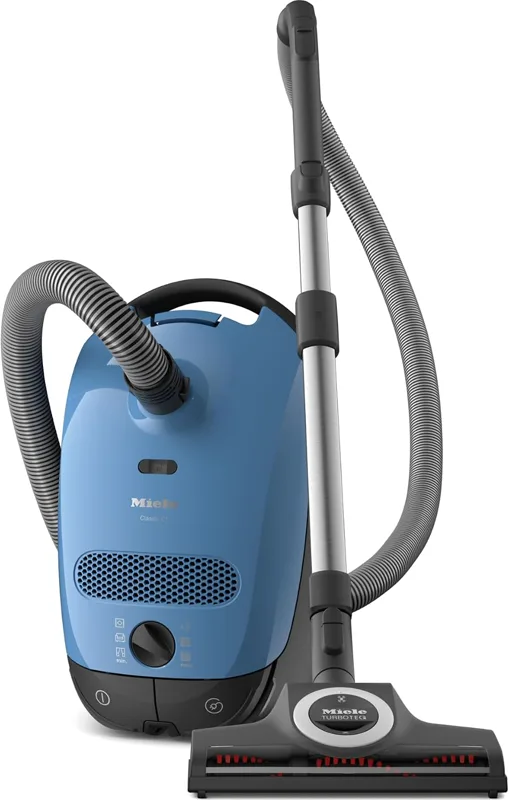
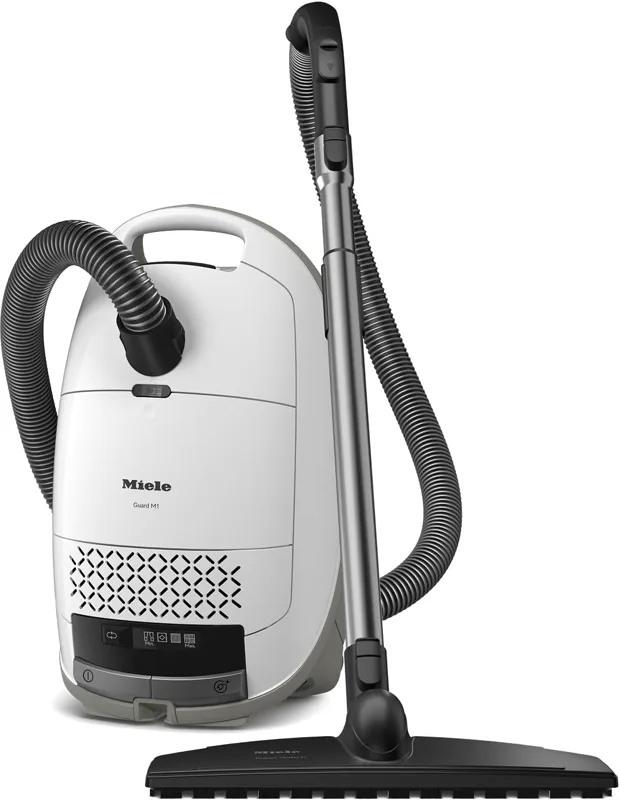
A canister splits the machine in two. The motor, the bag and the filters ride on a small body that follows you around, while the parts that touch the floor stay in your hand. That arrangement makes the working end feel light even when the machine itself is not, which is why people with staircases, tall shelving and cars tend to gravitate towards it.
The second consequence is reach. Because the working end is a wand on a flexible hose, a canister can travel under a bed, along the top of a wardrobe or into a car footwell without lifting the body at all. The price of that reach is towing: the body still has to be pulled along, so a long straight run of carpet costs a tug with every step you take.
An upright vacuum keeps the motor over the brush
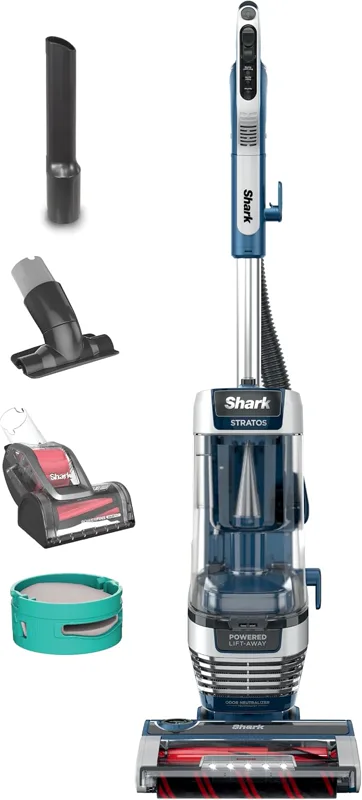
An upright stacks motor, bag and handle above the cleaning head. Weight that would otherwise hang on your wrist now presses down through the brush housing, and the machine rolls on its own wheels. Steering becomes a matter of tilting the handle, which is why a full-size upright can cross a single wide room with almost no effort at all.
The costs appear at the edges of the room. Going upstairs means carrying the entire assembly rather than a hose. Getting flat under furniture is limited by the body sitting behind the head. And on bare floors a wide head can scatter debris that the airflow has not yet reached, because suction is spread across a broad opening instead of concentrated at a nozzle.
Stairs, cars and ceilings decide more than suction
Ask a buyer what matters and the answer is suction. Ask the same person a year later and the answer is stairs. A staircase is the clearest test of the two shapes: an upright has to be carried, and often carried while its hose is stretched to reach the next tread, whereas a canister can be left at the bottom while the hose climbs the flight on its own.
Car interiors behave in exactly the same way. A crevice tool on a long hose reaches a footwell from a comfortable standing position, and the same tool on a short upright hose usually means kneeling on the driveway. That is a difference in how the machine is used rather than in how well it performs.
Where the canister quietly wins
A canister is not simply a smaller upright. The shape gives it three advantages that are genuinely hard to copy with a single-body machine:
- A hose long enough to clean a whole staircase from one place on the landing.
- A floor head narrow enough to follow into gaps the body of an upright can never enter.
- Tools that swap at the end of the wand without lifting anything off the floor.
There is one honest disadvantage to name. The body is something you drag, so a large open-plan floor asks for two hands and a deliberate lap of the room, where an upright would have asked for one hand and a couple of passes.
Where the upright quietly wins
Uprights win on uninterrupted floor. Where a canister needs a path for its body, an upright needs only the width of its head, so a single pass across a bedroom takes seconds rather than a minute. That matters in homes where the same carpet is cleaned daily rather than weekly.
The second advantage is habit rather than engineering. An upright usually stands where it is used and its cord wraps onto the handle, so it is easy to grab. Many canisters live in a cupboard, which adds a step to every quick clean. A vacuum that takes effort to reach gets used less often, however well it steered on the shop floor.
Bags, bins and the cost of running one
Filter media is a running cost, not a feature list. Bagged machines trap dust inside a sealed container that is thrown away whole, which keeps the emptying area tidy and protects the motor from fine grit. Bagless machines replace that cost with a routine instead: empty the bin, rinse the filter, then wait for it to dry completely.
Whichever shape you pick, the practical question is whether you will keep up with that routine. A clogged filter cuts airflow on any machine, and a vacuum that has lost airflow cleans badly no matter how well it steered in the shop.
Hard floors, carpet and the head you actually need
The floor head does more for the final result than the shape of the machine does. Matching the head to the surface is the difference between gliding across a room and pushing debris around it, so it is worth reading the head before you read the motor.
Bare floors
Hard flooring wants a head that can be used with the brush switched off and a nozzle that concentrates airflow, so grit is picked up ahead of the wheels rather than thrown past them. A soft, wide brush is a liability here, because it flicks crumbs outwards instead of collecting them.
Low-pile carpet
Short carpet wants a rotating brush that lifts the pile and a head that seals against the floor, because suction alone will not pull dust out of a weave. This is the surface where a full-size upright is at its most convincing and where a bare-floor canister needs its carpet head fitted first.
Pet hair and long pile
Thick pile and pet hair want either a height adjustment or a head designed to grip the carpet and comb hair out. Without one of the two, the fibres are rearranged rather than cleaned, and the hair simply moves to a different part of the room.
Reach, storage and the cupboard problem
Storage decides how often a vacuum is used. An upright occupies a footprint roughly the size of its own head and stands up on its own, so it can live in a hallway or beside a wardrobe. A canister is compact, but it wants a shelf and its hose needs somewhere to coil without being crushed.
If the only space available is a cupboard behind a closed door, ask honestly whether you will open that door twice a week. If the answer is no, the shape that stands in the corner wins by default, because the vacuum that actually gets used is the one that cleans the house.
How the two compare side by side
The table below compares the two shapes on the points that decide a purchase. On a narrow screen the table stacks into one card per row, so nothing is cut off.
| Aspect | Canister | Upright |
|---|---|---|
| Weight in hand | Motor stays on the floor | Motor rides above the brush |
| Stairs | Body waits, hose climbs | Whole machine is carried |
| Bare floors | Narrow head, focused airflow | Wide head needs care at edges |
| Carpet | Good once the right head is on | Strong across long open runs |
| Reach | Wand goes under and behind | Limited by the body behind the head |
| Storage | Usually parked in a cupboard | Usually stands where it is used |
| Setup time | Hose, wand and head to connect | Unwind the cord and tilt |
| Upkeep | Replace bags, check the filter | Empty the bin, wash the filter |
A decision rule for a home with stairs
If your home is on more than one level, count the staircases before you count the rooms. One flight is usually enough to make a canister the easier machine, because the body can be left on the landing while the hose does the work above and below it.
If everything is on one level and covered in wall-to-wall carpet, the arithmetic flips. An upright that lives in the hall and crosses the living room in a few passes will be used more often than a canister that has to be assembled, towed and then put away again.
What to buy first when you can only buy one
Start with the machine that matches your floor rather than your wishlist. Three questions usually settle the argument without any further reading:
- How many levels are there, and will you carry the machine between them?
- How much of the floor is carpet rather than hard surface?
- Is there somewhere to park it that is not behind a closed door?
If two of those answers point the same way, buy that shape and stop reading reviews. If they cancel each other out, buy the one that matches the floor you clean most often and accept that the other floor will always be the compromise.
What wears out first, and what that tells you
Belts, brushes, hoses and filters are the parts that age first. A stretched hose and a worn brush both reduce the cleaning you get from an otherwise healthy motor, and both cost far less to replace than a whole machine does.
That is an argument for choosing the shape you can maintain easily. A vacuum whose filters and brushes are simple to reach will be kept working for years, while one that is awkward to open will be retired long before its motor gives up.
Three homes, three different answers
A two-storey house with bare floors and a car in the driveway is canister territory, because reach matters more there than the width of a single pass. A single-storey flat laid with wall-to-wall carpet is upright territory, because speed and self-support matter more than a hose that can climb stairs.
A small flat with a mix of surfaces and nowhere to park a machine is the genuinely hard case. There, choose the lighter body and the narrower head. The home improvement and tools archive collects the other comparisons in this series, and the guide to robot vacuums against cordless stick vacuums covers the cordless half of the question.
Whichever shape you choose, the vacuum you will still be using next winter is the one that is easy to reach, easy to empty and light enough to carry to the stairs without a second thought.