Kitchen · Pizza ovens
One plugs into a wall and lives on the counter, the other needs open air and a fuel line. The useful differences are about where you cook, not which design wins.
A pizza oven has one ambition: to get a flat stone hot enough that a round of dough cooks before it dries out. How that heat is made, and where the oven is allowed to sit, splits the market into two camps that share almost nothing except the result on the plate.
One camp is a countertop electric box that plugs into a kitchen outlet. The other is an outdoor burner that runs on propane or wood and keeps its distance from the house. Neither is simply better. They are answers to different kitchens, different leases and different evenings.
Quick answer
- Choose a countertop electric oven when you cook indoors, want no fuel and like a warm-up you can start on a whim.
- Choose an outdoor oven when you have the space for open flame and a plan for buying and storing fuel.
- Decide where the oven will live first, because power and clearance rule out more models than any feature does.
- Match the oven to the pizza you make most weeks, not the one you make twice a year for guests.
The two ovens answer the same craving from different rooms
Both designs exist to beat a domestic kitchen oven, which rarely pushes far past the range where a crust sets quickly. A countertop model chases that heat with an electric element a metre from your sink. An outdoor model chases it with a live flame and a stone that soaks up heat before the dough ever lands on it.
Once you accept that the cooking job is identical, the decision stops being about quality and becomes a set of practical questions about your kitchen, your lease and your habits. Those questions are far easier to answer honestly than a comparison of peak temperatures.
A countertop oven plugs in and stays put
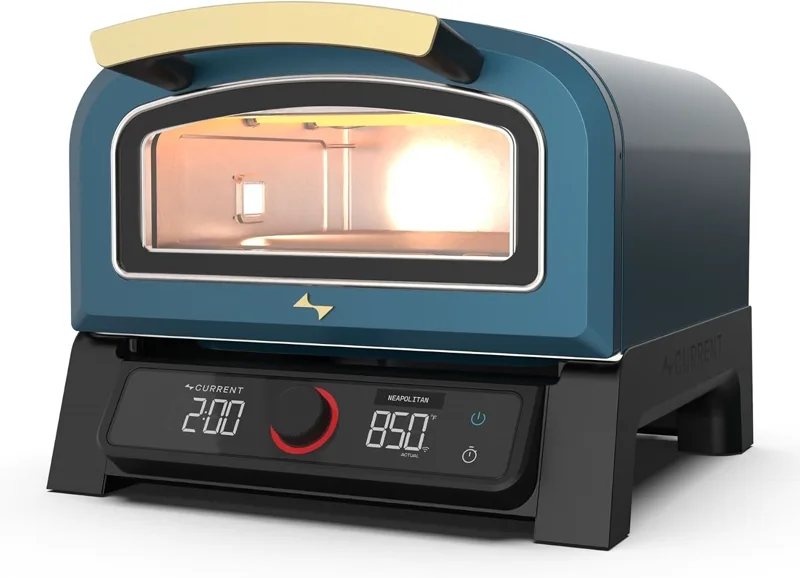
Plug a countertop oven into a normal outlet and it is ready whenever you are. There is no tank to fill, no regulator to attach and no reason to check the forecast. The trade is scale: the stone is small, so you bake one modest pizza at a time and work in batches when friends arrive.
That scale suits a household of one or two far better than a crowd. It also suits anyone renting, where running a fuel line outside or storing a cylinder is simply not on the table.
An outdoor oven trades convenience for heat
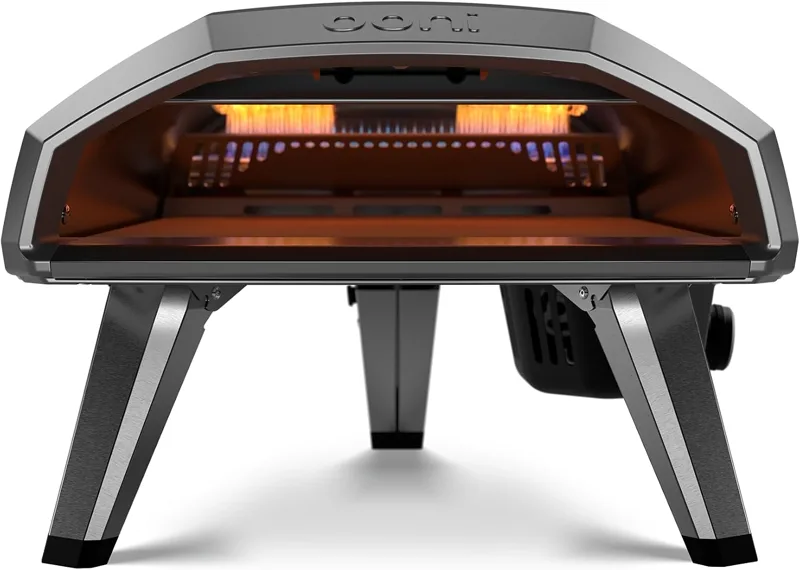
An outdoor oven gives up the outlet in exchange for headroom. Its burner can be pushed much harder, and a larger stone holds enough heat to keep producing pizzas back to back instead of waiting for an element to recover.
What you pay for that is a routine. Fuel has to be bought and stored, the oven has to sit where heat and smoke will not trouble anyone, and every session begins with a setup you cannot skip.
Where an outdoor oven asks you to compromise
The compromises are real but predictable: ground with clearance on every side, a windbreak for gusty days, and a cool-down period before the oven can be covered again. None of it is difficult, but all of it is a decision you make before the first pizza rather than halfway through it.
Heat is the real dividing line
Heat separates the two designs, and it is also the easiest thing to over-read. Marketing leans on peak figures, but the number that changes your evening is how much heat the stone keeps once the first pizza is out of the way.
A countertop oven recovers between bakes; an outdoor burner can usually hold its temperature through several. If you cook one or two pizzas, the difference barely shows. If you cook six, it is the whole story.
Where you are allowed to put each one
A countertop oven is an appliance, so it answers to the same rules as a toaster: a heat-proof surface, a little clearance and a socket within reach. An outdoor oven needs open air, a stable base and a safe distance from anything that could catch.
Those rules remove options quickly. A small flat with two feet of counter can host a countertop oven. It cannot host a propane burner, however compact the burner happens to be.
Clearance is not a suggestion
Every outdoor oven ships with a stated clearance, and the sensible reading of it is a minimum rather than a target. A wall or a fence that violates it will not fail on the first evening; it will simply keep absorbing heat until the arrangement becomes a problem.
Warm-up time decides how often you use it
An oven you can start without thinking is an oven you will actually use. Countertop models reach their working temperature while you stretch the dough. Outdoor models ask for a longer lead, which is why they tend to appear on planned evenings instead of ordinary ones.
That single difference in effort explains most of the regret people report. They buy the oven they imagined using on a Tuesday and discover it only really fits a Saturday. The same logic governs other countertop appliances, as we found comparing an air fryer and a toaster oven for the same stretch of counter.
A countertop oven fits a small kitchen
Counter space is the real currency of a small kitchen. A countertop oven claims a fixed footprint that you keep paying for, so measure the space you are willing to surrender before you fall for a particular model.
In return it needs no planning and no shopping trip beyond a bag of flour. For anyone cooking indoors most nights, that low friction is worth more than any extra degree of heat.
An outdoor oven wants a yard and a fuel plan
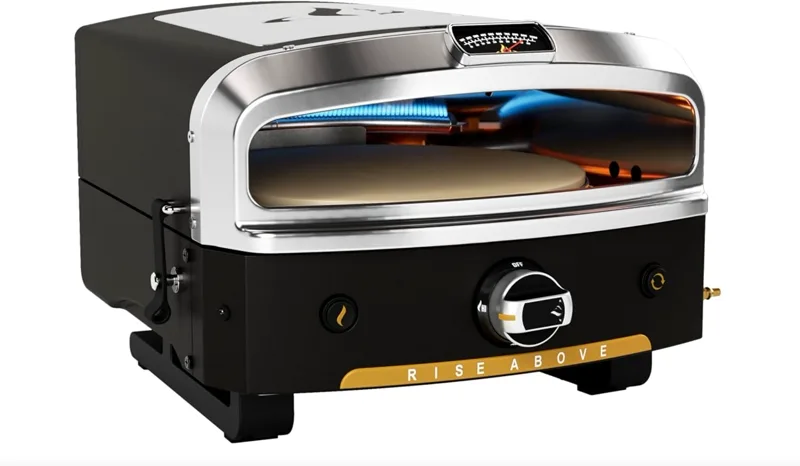
An outdoor oven is happiest where nobody minds a plume of hot air and the smell of a gas flame. If you have that space, the oven turns a patio into the best pizza kitchen you own.
It also asks you to think about fuel the way a gardener thinks about soil: buy it before you need it, store it safely, and keep a reserve for the evening you did not plan.
Weeknight pizza and weekend pizza are different jobs
Most homes make two kinds of pizza. The weeknight one is fast, unglamorous and close to the kitchen. The weekend one is slower, more social and often outdoors.
A countertop oven owns the first. An outdoor oven owns the second. When both happen in your house, the honest answer is that you are choosing which one you care about more, not which one is better.
- Weeknight: one or two pizzas indoors, started without a plan.
- Weekend: several pizzas outdoors, with the setup treated as part of the occasion.
- Guests: an outdoor oven keeps producing while you talk, where a countertop oven works in batches.
How the two designs compare side by side
The table below describes behaviour rather than a winner. Swipe sideways on a phone to see every column, and read each row against the way your own kitchen actually works.
| Aspect | Countertop electric | Outdoor gas |
|---|---|---|
| Where it can be used | Indoors, on a counter | Outdoors, with clearance |
| Heat source | Electric element | Gas burner or wood |
| Warm-up | Starts while you prep | Needs a longer lead |
| Batch cooking | Recovers between pizzas | Holds heat back to back |
| Space cost | Permanent counter footprint | Yard or patio space |
| Setup per use | Plug in and go | Fuel, position, clearance |
| Cleanup | Wipe the stone and tray | Brush the stone, cool, cover |
| Best fit | Small kitchens, renters | Yards, planned evenings |
Cleaning and upkeep reward different owners
Both ovens ask for the same basic ritual: let the stone cool, scrape it, and keep grease away from the parts that get hottest. The difference is where the mess ends up.
A countertop oven keeps crumbs and flour inside a machine you can wipe on the spot. An outdoor oven sends ash, soot and heat into the open air, which is easier in some ways and harder in others.
Fuel, storage and the quiet costs of ownership
Ownership costs have less to do with the oven than with everything around it. A countertop model asks for an outlet and a permanent patch of counter. An outdoor model asks for fuel, a cover and somewhere to keep both.
None of those costs is large on its own. Added together they decide whether the oven becomes part of a routine or an object you move twice a year.
What you keep buying after the oven arrives
For one design it is flour, semolina and a spare peel. For the other it is fuel, a weather cover and the occasional replacement part for a burner that lives outside. Budget for the habits, not just for the box.
A practical way to choose
Start with location, because power and clearance eliminate more models than any feature list. If the answer is a kitchen counter, the countertop camp wins by default. If it is a patio, the outdoor camp does.
Then be honest about frequency and company. An oven that appears only for celebrations should be judged on how well it handles celebrations, not on how tidy it looks on an ordinary Tuesday. More countertop cooking comparisons sit in our Kitchen & Cooking guides.
- Write down where the oven will live before you compare a single model.
- Count how many pizzas you usually make in one sitting.
- Decide whether setup and cleanup are a ritual you enjoy or a chore you avoid.
What actually changes once the oven is in place
A new oven rarely changes the pizza; it changes the evening. The countertop version shortens the distance between deciding to cook and eating. The outdoor version lengthens it and makes the cooking itself the point.
Both are worth owning, and neither is a compromise, as long as you buy the one whose routine you are willing to repeat. That is the only test that matters once the novelty has worn off.