Kitchen appliances · Mixing and prep
One machine holds the bowl still and moves the tool; the other moves the food so fast it never keeps its shape.
The two appliances get compared because they are both heavy, both expensive, and both end up on the counter. That is where the similarity ends. A stand mixer holds the bowl still and moves a tool through the food, while a food processor spins a blade fast enough that the food never gets a chance to hold its shape. Once you see that difference, most of the buying questions answer themselves.
This guide is about behaviour rather than shopping tiers. It explains what each machine is genuinely good at, where each one disappoints, and which one a kitchen without a second oven will still be using a year from now.
The short answer
- Buy a stand mixer if you bake bread, cakes or meringue more than twice a month and want your hands out of the dough.
- Buy a food processor if your cooking is savoury and you want chopping, slicing, shredding and emulsions finished in minutes.
- Buy both only if you have a dedicated stretch of counter, because neither machine tolerates being carried in and out of a cupboard twice a week.
- Decide by the bowl you will fill most often, not by the attachment you might use once.
A stand mixer holds the bowl still and moves the tool
A stand mixer is a geared machine with a stationary bowl and a head that carries the tool around the inside of it. The planetary action means the beater traces a circle while the bowl stays put, so every part of the mixture meets the tool at a predictable speed. That predictability is the whole point: you can walk away from a meringue and come back to something you recognise.
The machine is built for volume and for air. Creaming butter and sugar, whipping egg whites, kneading a stiff dough — all of those jobs depend on sustained, even motion rather than a sharp cut. A mixer with a dough hook develops gluten by stretching and folding, which a blade cannot do without also chopping the strands it just formed.
It is also a machine with a footprint. The head needs clearance to tilt, or the bowl needs clearance to lift, and both arrangements are taller than a processor of the same capacity. In a kitchen with wall cabinets, that height decides whether the mixer lives on the counter at all.
A food processor moves the food and never lets it rest
A food processor works the opposite way. The bowl is stationary and the blade spins at speed, so the food is thrown outward, hits the wall, and falls back into the blade. Nothing in the bowl gets to keep its shape for long, which is exactly what you want for onions, carrots, nuts, breadcrumbs and pastry.
The feed tube is the machine’s real limit. You can process a lot at once, but only in pieces small enough to drop through the chute, and only in batches the bowl can hold without turning into a purée at the bottom. Anyone who has made pesto in a food processor knows the pattern: the leaves at the bottom become paste while the leaves at the top stay whole.
The processor also earns its place through the discs you swap in: a slicing disc for potatoes, a shredding disc for cheese, a plastic blade for dough. That set of accessories is why one machine can stand in for a knife, a grater and a mandoline on the same afternoon.
The jobs that only one machine does well
Mixing and kneading
Only the mixer can run for ten minutes without complaint, and only the mixer can knead a dough stiff enough to climb the hook. A processor will make dough, but it heats it as it works, and the results get worse the longer you run it.
Chopping and slicing
Only the food processor can turn a pile of vegetables into a uniform dice in less time than it takes to find a knife. A stand mixer cannot chop anything; the beater simply pushes the pieces around the bowl until you give up.
Emulsifying and puréeing
The processor’s high speed is what makes mayonnaise, hummus and smooth soup. A mixer will whip cream and egg whites but will not break a cooked vegetable down into a purée, because the tool is designed to fold air in rather than to shear solids apart.
Where the stand mixer quietly wins
It wins on patience. A mixer can run unattended for minutes at a time, which means you can weigh the next ingredient while the current one creams. It also wins on consistency: the same speed setting produces the same result every time, so a recipe that worked once will work again without you watching the clock.
It wins on the second bowl, too. Most mixers accept an extra bowl or a scraper beater, which turns a two-bowl cake into a one-bowl job. Nothing about a food processor is that accommodating: you either wash the bowl or buy a second machine.
Where the food processor quietly wins
It wins on speed and on the mess it prevents. Dicing three onions by hand takes ten minutes and leaves the board wet; the processor takes half a minute and leaves one bowl and one blade to wash. For anyone cooking dinner on a weeknight, that trade is the entire argument in a sentence.
It also wins on preparing ingredients rather than equipment. Sliced vegetables, grated cheese, ground nuts and fresh breadcrumbs all keep better when they are prepped in advance, and a processor makes advance prep realistic in a way that a knife and a board never quite do.
Bowl size and motor type decide more than brand
Bowl capacity is quoted in quarts or litres, and the number is only useful once you know what you are filling it with. A five-quart mixer handles a two-loaf batch of bread or a three-layer cake; a larger bowl is mostly about headroom for dough that climbs the hook. A processor’s work bowl is about how much you can process without stopping, and the feed tube is what actually limits you.
Motor type matters for a different reason. A direct-drive mixer runs quieter and lasts longer than a belt-driven one, but the belt is what protects the gearbox when a dough is too stiff. In a processor, the difference shows up in how the machine behaves when it hits something dense.
Dough is the test that settles the argument
If you bake bread more than occasionally, the decision is already made. A mixer develops gluten evenly and can be left to knead while you prepare a proofing basket; a processor will do it in short pulses, and the dough will be warmer by the end, which changes how it ferments and how it bakes.
If you do not bake bread, the mixer’s strongest argument disappears. Cakes and cookies can be made with a hand mixer and a bowl, and the counter space a stand mixer occupies is real estate you will notice every single day, especially in a kitchen where the toaster already has to be moved to open a cupboard.
Cleaning is where the decision actually gets made
A food processor has more parts, and every one of them catches food. The bowl, the lid, the feed tube, the blade, the base gasket — all of it needs attention, and the blade is sharp enough that hand washing is genuinely unpleasant. The stand mixer has a bowl and one attachment, and the bowl usually goes in the dishwasher.
That difference compounds over a week. The machine you actually use is the one whose cleanup does not feel like a chore, and for most people that is the mixer, even though the processor is faster at the job itself.
Three machines, three different kitchens
The three picks below are not a ranking. Each stands for a case you might actually be in, and each was checked as a live US listing with delivery to a New York ZIP code and a working add-to-cart button at the time of writing.
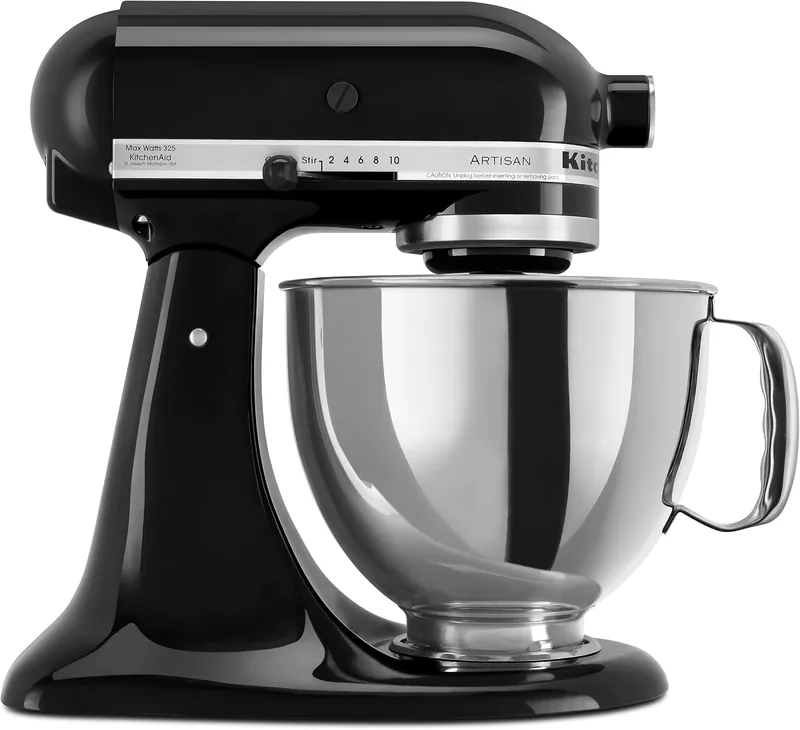
- Tilt-head case: the KitchenAid Artisan 5-quart tilt-head mixer is the classic shape, with a head that lifts for access and enough power for cake batter and cookie dough.
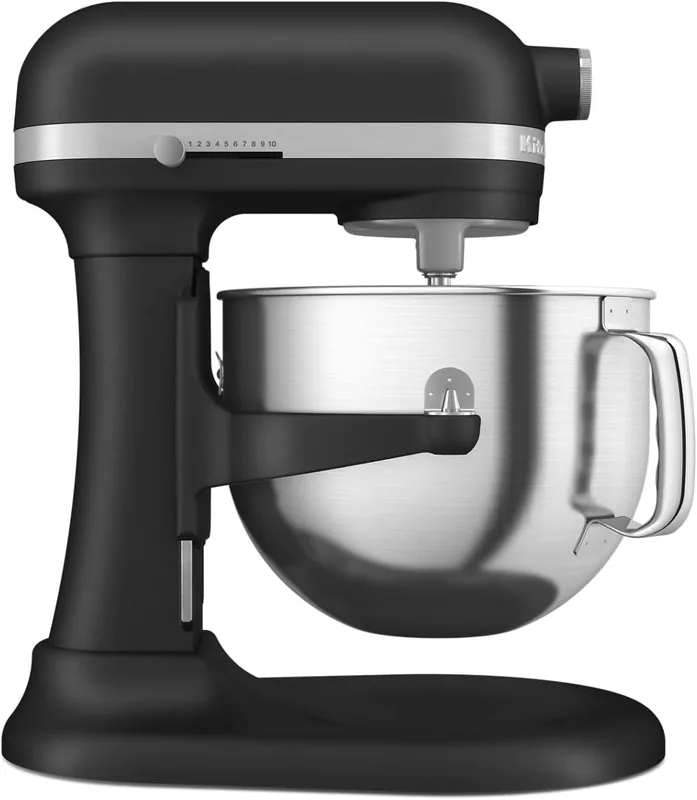
- Bowl-lift case: the KitchenAid 7-quart bowl-lift mixer adds capacity and stability for stiff bread dough, at the cost of height above the bowl.
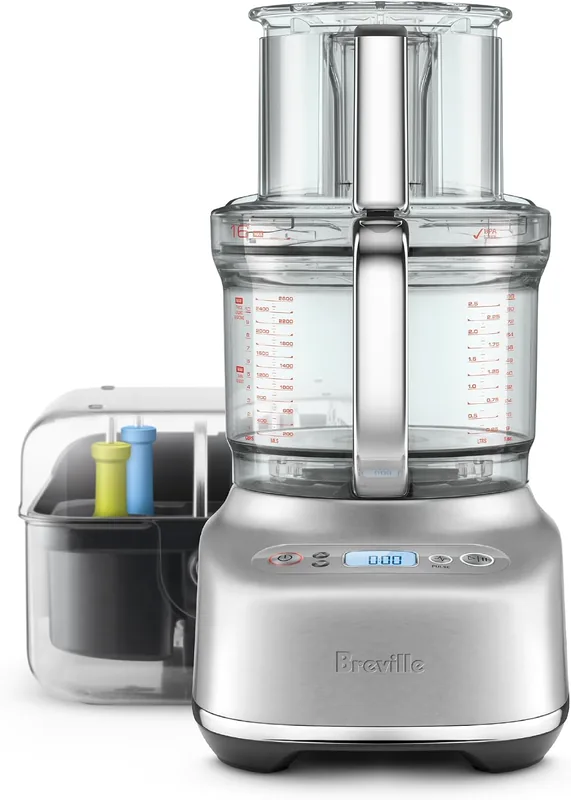
- Processor case: the Breville Sous Chef 16-cup food processor brings a wide feed tube and a full set of discs, for kitchens where prep is the bottleneck rather than baking.
A decision rule for a small kitchen
Ask yourself what you did most recently: creamed butter and sugar, or diced an onion. The answer is usually obvious, and it is a better guide than any specification table, because it describes the food you actually cook rather than the food you imagine cooking.
- Baking more than twice a month: stand mixer.
- Cooking savoury food five nights a week: food processor.
- Baking occasionally and cooking often: processor first, hand mixer second.
- Neither, but you want one machine for both: a large processor with a dough blade, and accept the compromise.
Counter space, height, and the cupboard you will curse
Measure before you buy, and measure the right things: the height from counter to cabinet, the depth of the counter, and the clearance behind the machine for the plug. A tilt-head mixer needs room for the head to swing back, and a bowl-lift needs room above the bowl.
Both machines are heavy enough that lifting them out of a cupboard is a two-hand job, and both are awkward enough that most people stop doing it within a month. If space is the constraint, the counter-space comparison for air fryers and toaster ovens uses the same arithmetic and may change which appliance you decide to keep out.
What to buy first when you can only buy one
Buy the machine that matches the food you already cook. Most people overestimate how much they will bake and underestimate how often they need something chopped.
There is one exception worth naming. If your kitchen has a single stretch of counter and you genuinely cook both ways, a large food processor with a dough blade covers more of both jobs than a small mixer does. It will not knead bread well, but it will chop, slice, shred, mix and purée, which is more than a mixer can claim.
How the two compare side by side
The table below compares the two machine types on the points that decide the purchase. On a narrow screen the table stacks into one card per row, so nothing is cut off.
| Aspect | Stand mixer | Food processor |
|---|---|---|
| How it works | Bowl stays still, tool travels | Blade spins, food is thrown |
| Best at | Dough, batter, meringue | Chopping, slicing, shredding |
| Worst at | Chopping anything | Developing gluten gently |
| Capacity | Fixed bowl, one batch | Work bowl plus feed tube |
| Feeding | Add while running | Limited by chute size |
| Cleanup | One bowl, one tool | Bowl, lid, blade, base |
| Footprint | Tall, needs headroom | Wide, short |
| Learning curve | Forgiving | Fast but unforgiving |
Neither machine replaces a knife, and neither replaces a pair of hands for small jobs. What they replace is the ten minutes of prep that stands between a weeknight and a proper dinner. The kitchen and cooking archive collects the rest of the countertop comparisons.