Workshop tools · Joinery
One method hides the fastener, the other hides the clamp time. The right pick depends on what you build.
Two joinery tools sit on the same shelf in most catalogues and solve completely different problems. A biscuit joiner cuts a slot and presses a compressed wafer of beech into it. A pocket hole jig drills an angled hole and pulls the joint together with a screw. Both are fast, both are strong enough for furniture, and neither one replaces the other.
This comparison is about how each method behaves in a small shop: how the joint looks, how long it takes, what it demands in clamps and setup, and where each one quietly stops being the right answer. It is not a ranking of specific machines.
The short answer
- Choose biscuits when the joint will be seen and the panels need to line up flush.
- Choose pocket holes when the joint will be hidden and the assembly has to come together fast.
- Choose neither for a joint that carries structural load without support underneath it.
- Expect to own both eventually; the question is which one earns bench space first.
Biscuits and pocket holes pull a joint together in opposite directions
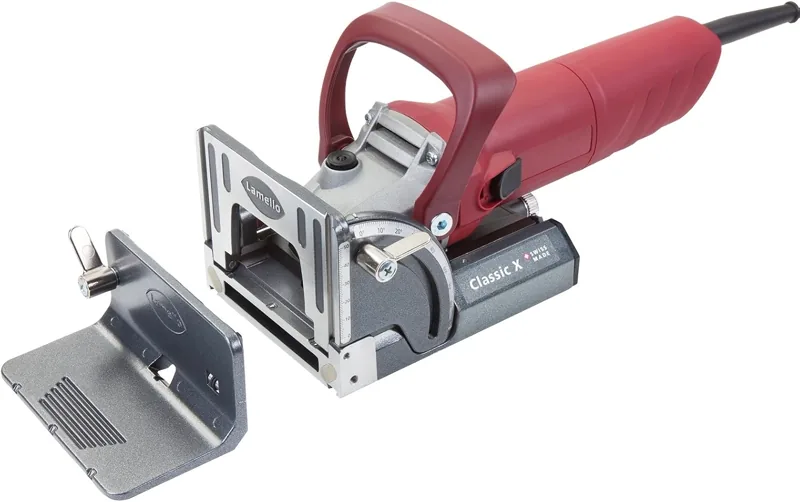
A biscuit joiner cuts a crescent-shaped slot across the joint line and drops in a wafer that swells with glue. The wafer does not clamp the joint; it aligns the two faces and keeps them from sliding while the clamp does the real work. A pocket hole jig drills a pilot hole at an angle and pulls the joint tight with a screw and a washer-faced head.
That difference in direction explains almost everything that follows. Biscuits work along the joint, pocket holes work across it, and each method is awkward in exactly the situation the other handles without thinking.
A biscuit joiner aligns panels that would otherwise slide
Anyone who has glued up a panel knows the problem: two boards, wet glue, and a joint that slides half an inch the moment you reach for the next clamp. A biscuit fixes that. The slot is cut in the same position on both edges, the wafer locates them, and the panel goes together on the line you planned.
The same logic applies to face frames, mitres, and any assembly where two surfaces have to meet flush. Biscuits are not a structural fastener so much as a registration system, and in a small shop with limited clamps that registration is worth more than the strength.
A pocket hole jig replaces clamps with a screw
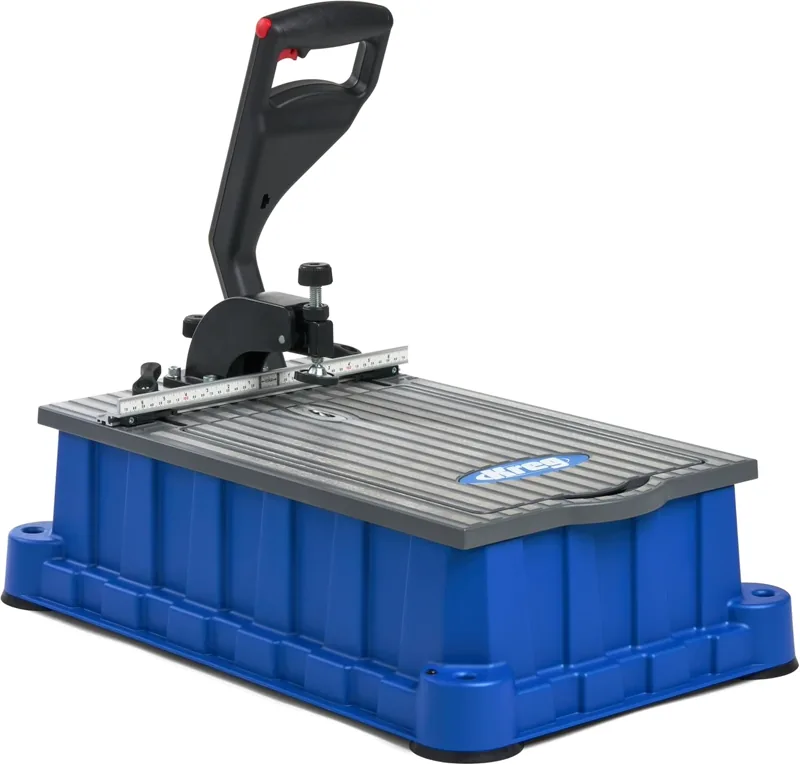
A pocket hole jig drills an angled hole through one part and into the edge of the other. The screw pulls the joint closed and holds it there. There is no waiting for a clamp to be freed, no pile of cauls, and no glue-up clock running while you line up the third panel.
That is why pocket holes dominate face frames, cabinet boxes, and any assembly built by one person working alone. The joint is not delicate, and the jig does not care whether the parts are flat, square, or already finished on one side.
Visibility decides more projects than strength does
Pocket holes leave a visible, oval-shaped pocket beside the screw. On painted cabinetry and shop furniture that is invisible after a plug. On a stained oak table top it is the first thing anyone notices, which is why so many plans hide pocket holes underneath or on the back.
Biscuits leave nothing but a thin glue line. For a table top, a mitred picture frame, or any surface that will be sanded and finished, that matters more than any strength difference between the two methods.
Setup time is where the two methods really separate
A biscuit joiner needs a flat reference surface, a consistent depth setting, and enough clamp pressure to close the joint while the glue swells. Setup is quick but the glue-up is a race, and every extra part adds a few seconds you do not have.
A pocket hole jig needs the right bit height, the right collar setting for the material thickness, and a clamp on the jig for small parts. Once that is done, assembly is calm. You can drill ten parts, then drive ten screws, then adjust one that sat proud.
Where biscuits stop being the right answer
Biscuits are at their best in sheet goods and wide panels. They are at their worst in narrow stock, end grain, and anything where the wafer has more leverage than the wood around it. A biscuit in a two-inch rail is a slot waiting to become a split.
End grain and narrow stock
End grain absorbs glue and swells the wafer unevenly, so the alignment you rely on becomes a variable. Narrow stock leaves too little material on either side of the slot. In both cases the joint may hold, but it will not hold in the way the method promises.
Where pocket holes show through
The pocket hole’s limitation is the exit point. On a mitre, the screw can break through the outside face. On thin material it can mushroom the surface. And on a joint that will be disassembled and reassembled, the screw’s grip degrades with every cycle.
None of this is a defect. It is the cost of a method that pulls the joint closed from one side, and it is a cost that is easy to plan around once you know where the exit will land.
Clamp strategy changes the whole assembly
A biscuit joint is a clamp-heavy operation. Every joint needs pressure until the glue grabs, and a small shop never has enough clamps. The usual workaround is to build in stages, which stretches a one-evening project across three.
A pocket hole joint needs almost no clamping. The screw supplies the pressure, and the jig supplies the alignment. Shops that build alone tend to notice this first, because it changes how many parts can be in progress at once.
Material thickness limits both methods differently
Biscuits need enough thickness for the slot to sit inside the material without breaking out. Pocket holes need enough thickness for the screw to bite without splitting the face. The two thresholds are different, and both are lower than most beginners expect.
Thin panels and thick stock
Half-inch plywood is comfortable for biscuits and marginal for pocket screws. Four-quarter hardwood is comfortable for both, though the pocket hole wants a longer screw and a deeper jig setting. Reading the material before choosing the method saves a surprising number of offcuts.
Speed matters most on the second, third, and fourth copy
The first joint of a project is always slow, because you are checking everything twice. The tenth joint is where the method shows its character. Biscuits reward a rhythm of cut, glue, clamp; pocket holes reward a rhythm of drill, drive, move on.
If the project is a single shelf, either method will finish before dinner. If the project is a run of cabinets, the method you can repeat without thinking is the one that finishes the job.
That is also where jig quality shows. A jig that holds its setting through a long afternoon saves more time than a faster motor ever will, and a jig that drifts turns every joint into a fresh measurement.
Finishing and glue-up behave differently
Biscuit joints squeeze glue out along the whole joint line, which is easy to see and easy to sand. Pocket holes trap squeeze-out inside the pocket, where it can be missed until the finish goes on and the glue shows as a pale patch under the stain.
Squeeze-out and sanding
A damp rag at the right moment solves both, but the right moment arrives at different times. Biscuit glue-ups demand attention immediately; pocket hole assemblies can be cleaned up after the last screw is driven, which is a much more forgiving schedule.
Strength expectations need to match the joint
Neither method is a replacement for a mortise and tenon, and neither is meant to be. A biscuit adds alignment and a little resistance to racking. A pocket screw adds real clamping force along its axis but very little resistance to a load that tries to peel the joint apart.
For a bookcase, both are plenty. For a bench that will be dragged across a floor, neither is the right answer on its own, and the joint needs a mechanical stop or a proper frame.
A decision rule for a small shop
If your projects are panels, tops, and frames that will be seen, start with a biscuit joiner. If your projects are boxes, face frames, and anything assembled alone, start with a pocket hole jig. If you build both, buy the one that matches this year’s list and add the other when a project insists.
- The joint will be sanded and finished: biscuits.
- The joint will be hidden and the panel is heavy: pocket holes.
- You work alone and own four clamps: pocket holes.
The guide to benchtop mortisers versus the Domino joiner covers the next step up in joint strength, and the planer versus jointer decision explains how to get panel edges flat enough for either method to work. The tools archive keeps the rest of the workshop comparisons together.
The table below compares the two methods on the aspects that come up most often in a small shop. Swipe sideways on a phone to see the full row.
| Aspect | Biscuit joiner | Pocket hole jig |
|---|---|---|
| Visible fastener | None | Oval pocket |
| Clamp demand | High | Low |
| Panel alignment | Strong | Weak |
| Setup per joint | Two cuts | One drill |
| Best material | Plywood, MDF | Solid stock |
| Disassembly | Not intended | Possible |
| Face frames | Awkward | Natural fit |
| Edge joints | Natural fit | Awkward |