Workshop tools · Track saws and table saws
Two saws, one patch of floor, and a decision that really comes down to how you buy your lumber.
Every small shop hits the same wall eventually: there is room for one serious saw, and two very different machines want the spot. A track saw and a table saw can both break down a sheet of plywood, both cut a straight line, and both cost real money. What separates them is not the cut itself but everything that happens before and after it.
This comparison looks at the two the way a small shop actually uses them — one outlet, limited floor space, and a project that has to be finished before the weekend is over. It is a comparison of behaviour and workflow, not a ranking of two specific machines.
The short answer
- If your material arrives as full sheets, a track saw does more of your real work with far less floor space.
- If your material arrives as boards that need repeatable rips, a table saw carries the shop.
- Match the saw to your next three projects rather than to an argument you read online.
- Expect the second saw to arrive as an addition, not as a replacement.
Track saws and table saws are built around different materials
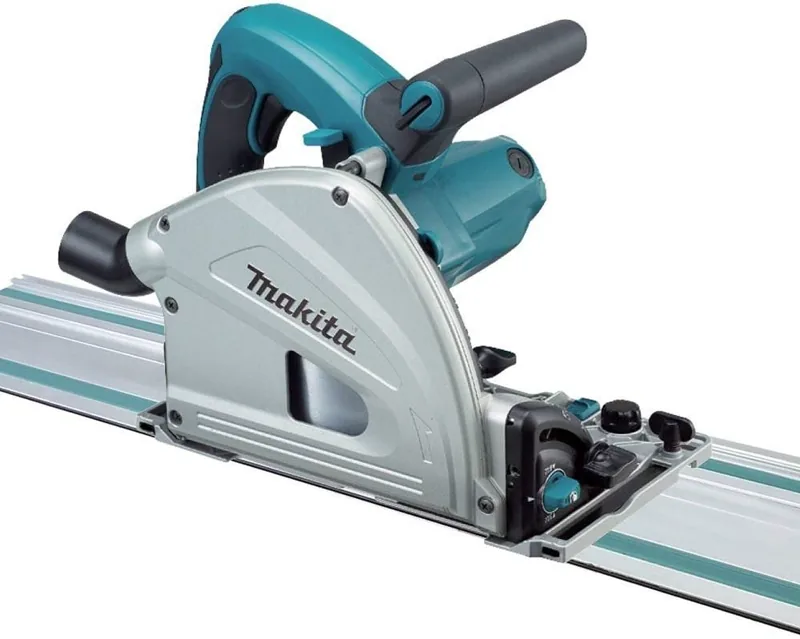
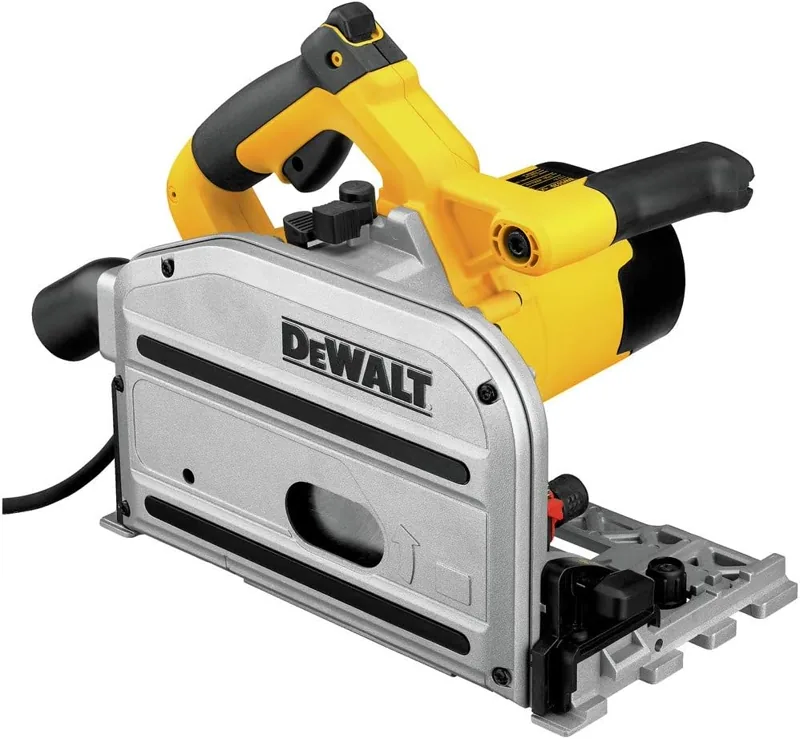
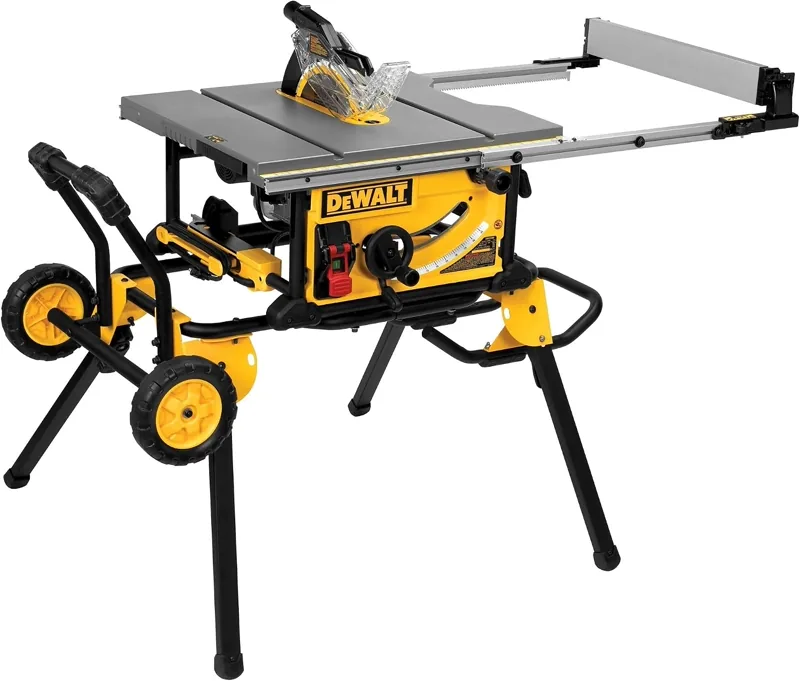
A track saw is a circular saw with a straightedge that also behaves like a rail system. The saw rides the track, the track clamps to the workpiece, and the cut comes out straight because the tool cannot wander. A table saw reverses the arrangement: the workpiece moves, the blade stays put, and a fence controls the distance from the edge.
That single difference explains most of what follows. When the tool moves, the material can stay where it is — on the floor, on sawhorses, on a stack in the driveway. When the material moves, the tool needs a stable surface and enough room on both sides to feed a long board without binding.
A track saw turns any flat surface into a cutting table
The appeal of a track saw in a small shop is that it does not need a dedicated table. Two sawhorses and a sheet of rigid foam will do, and the whole setup folds away at the end of the day. For anyone who shares a garage with a car, that is not a small advantage.
It also changes the order of operations. With a track saw you can buy a full sheet, cut it down in the driveway, and carry only the pieces into the shop. The material you never have to lift through a doorway is material you never have to wrestle.
A table saw earns its footprint on repeated rips
Where the table saw wins is repetition. Set the fence once and every subsequent piece comes out the same width. That is the entire logic of cabinet work, trim, and any project built from a stack of identical parts. A track saw can match a measurement, but it cannot match a fence for speed across twenty parts.
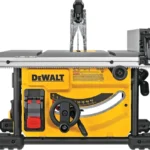
The table saw also brings a stable work surface into the shop. Outfeed support, a crosscut sled, and a dado stack all assume a machine that stays put. Those accessories are what turn a saw into a system rather than a single operation.
Cabinet work is a tolerance game. Doors, drawers, and face frames only line up when the parts are consistent, and consistency comes from a fence, a stop block, and a sled. Track saws can be repeatable if you build a stop system into the rail, but it is a workaround, and workarounds cost attention on every cut.
Floor space decides more shops than horsepower does
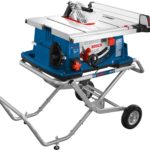
In a one-car garage, the real currency is floor area that stays clear when nothing is happening. A cabinet saw occupies that area permanently. A jobsite saw demands a fold-and-roll ritual. A track saw occupies a shelf and a corner of the wall.
This is why the question is rarely about capability. Both tools can cut a straight line. The question is whether the shop can afford to keep a station set up, and how much of the week it actually stays set up.
Breaking down sheet goods is a one-time job per project
Every sheet goods project begins with the same step: reduce a four-by-eight sheet to manageable parts. It happens once, at the start, and then the work moves to narrower pieces. A track saw is extremely good at that first step and perfectly adequate at the ones that follow.
A table saw is the opposite. It is clumsy with a full sheet unless the shop has real infeed and outfeed space, and it is superb once the material is already small. Most shops that own both use them in exactly that order, project after project.
Where a track saw runs out of road
A track saw struggles when the piece is narrower than the track. It also struggles with tapered cuts, because the rail follows a straight line and the taper does not. It cannot cut a dado without a jig that essentially rebuilds a table saw’s fence in plywood.
Tapered cuts and narrow offcuts
None of these limits are fatal. They are simply the moments where you notice you are working around a tool rather than with it. In a shop that builds mostly shelving and built-ins, they come up less often than you would expect.
In a shop that builds furniture with tapered legs, they come up on the first project and never stop.
Where a table saw runs out of room
The table saw’s weakness is the first cut and the last cut. A full sheet needs space behind the blade and space to the side, and most small shops have neither. The usual workaround is a circular saw or a track saw, which is why so many shops end up owning both.
There is also the question of what happens when the shop is also a parking space. A saw that has to be unfolded, aligned, and folded again is a saw that gets used less than its owner intended, and that gap between intention and use is where most tool budgets go wrong.
Dust, noise, and the neighbours
Both saws make dust, and both can be connected to a vacuum. The difference is where the dust goes. A track saw captures a good share at the shoe because the cut is enclosed by the rail. A table saw throws dust upward and backward unless the blade guard and the cabinet are both doing their job.
Noise follows a similar pattern. A track saw is a handheld tool with a universal motor, and it sounds like one. A table saw is often an induction motor running at lower speed, which is easier to live with in a shared building — but only if the saw is not a jobsite model with a universal motor of its own.
Set-up time is the cost nobody budgets for
A track saw setup is a short ritual: lay the foam, lay the sheet, lay the rail, check the offsets at both ends, clamp, cut. It takes a few minutes and it happens once per sheet. A table saw setup happens once per project, but changing from ripping to crosscutting to dadoes can eat the same few minutes several times over.
The five-minute changeover
The honest comparison is not which tool is faster in total but which interruption you mind less. Shops that work in short evening sessions tend to prefer the tool that is ready the moment they walk in, even if it is slower per part.
Safety behaviour separates the two more than the spec sheet
A table saw’s characteristic injury comes from kickback: the workpiece lifts, catches the back of the blade, and comes back at the operator. A track saw’s characteristic injury comes from the saw dropping off the end of the rail, or from reaching under the workpiece to check a cut.
Kickback and where it comes from
Neither tool is safe by reputation. What matters is whether the shop has the room to use the tool the way it was designed to be used. A table saw wedged into a corner with no outfeed is more dangerous than the same saw with clear space behind it.
Mobility decides whether the saw gets used at all
Tools that are hard to move do not get moved. That is the whole argument for a track saw in a shared space, and the whole argument against a heavy cabinet saw in a garage that also houses bicycles and a chest freezer.
If the saw has to come out of a corner and go back into it every session, mobility is not a luxury feature. It is the difference between a project that happens and a project that waits until the weather changes.
Phasing the purchase without buying twice
The cheapest path is usually to start with the tool that matches the material you buy most often, then add the other when a project forces the issue. Starting with a track saw and adding a jobsite table saw later costs less than starting with the wrong cabinet saw and selling it at a loss.
The one thing worth avoiding is buying a light, inexpensive version of both. Two compromised tools take up more space than one good one, and they teach you less about the work you are actually doing.
- You have started turning down projects because a cut is awkward.
- You are building jigs to imitate a fence you do not own.
- You have begun borrowing shop time from someone else.
A simple decision rule for a one-car garage
If the shop shares space with a vehicle and most projects begin with a full sheet, buy the track saw first. If the shop is dedicated and most projects begin with boards, buy the table saw first. Everything else is a detail that resolves itself once the first tool is in the room.
The related guide on choosing between a table saw and a band saw covers the next decision most shops face, and the tools archive collects the rest of the workshop comparisons in one place.
The table below compares the two tools on the aspects that come up most often in a small shop. Swipe sideways on a phone to see the full row.
| Aspect | Track saw | Table saw |
|---|---|---|
| First cut in sheet goods | Straight off the rail | Needs room to feed |
| Narrow rips | Awkward without a stop | Fence makes it routine |
| Footprint | Folds to a shelf | Owns floor space |
| Session set-up | Lay rail, check offset | Fence stays set |
| Dadoes and joinery | Jig needed | Sled and stack |
| Dust capture | Good at the shoe | Depends on the shroud |
| Transport | Carries in one hand | Two-person lift |
| Error tolerance | Forgiving | Kickback punishes |