Home kitchen · Cookware
Two materials, two different jobs in the pan drawer — and most kitchens end up needing a little of both.
Walk down any cookware aisle and the choice looks binary: a mirror-bright stainless set or a dark, slick nonstick one. In practice the two are not rivals at all. They are built for different moments in the same week, and the households that cook happily for years tend to own both rather than pick a side.
What follows compares the two materials on the things that decide whether a set still works two years from now: how they handle heat, how long the surface lasts, how much care they demand, and how they fit the meals you actually cook. No scores, no shopping shortcuts — just the trade-offs worth understanding before you commit cabinet space.
Quick answer
- Pick stainless if you sear, brown, deglaze, and want pans that survive a decade of daily use.
- Pick nonstick for eggs, pancakes, fish, and anything that needs to slide out cleanly.
- Build a first set around one skillet of each instead of a full matching suite.
- Retire a nonstick pan the moment the surface scratches or stops releasing food.
The two materials solve different kitchen problems
Stainless steel is a construction material. It holds heat, tolerates metal utensils, and lets you build fond on the bottom of the pan. Nonstick is a convenience material. Its whole reason to exist is that food releases without fat and the pan rinses clean in seconds.
That difference drives everything else. A stainless pan rewards technique and punishes impatience with sticking. A nonstick pan rewards speed and punishes heat with a shortened life. Neither is better in the abstract; each is better at a specific job.
- Stainless is the pan you reach for when browning matters.
- Nonstick is the pan you reach for when cleanup matters.
- Most home cooks need both within arm’s reach.
Stainless steel earns its reputation on heat and browning
Heat a stainless skillet properly and the surface gives you a crust. Meat, mushrooms, and onions all develop color instead of steaming, because the pan can sit at a high temperature without a coating breaking down. Those browned bits are also the base of most pan sauces.
The catch is that stainless shows every mistake. Cold food, a lukewarm pan, or too little fat and proteins bond to the surface. Once you learn to preheat and to leave food alone until it releases on its own, the sticking problem largely disappears.
How a clad stainless pan is put together
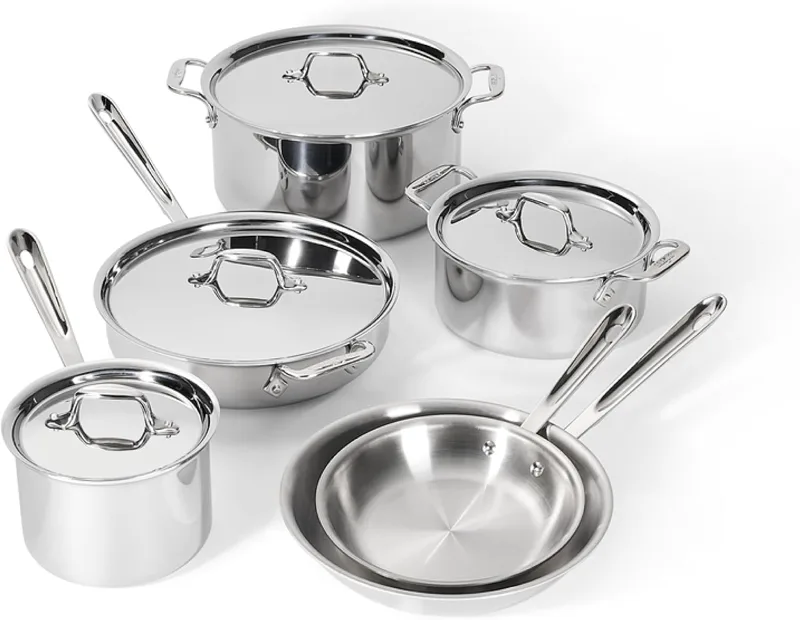
Most quality stainless cookware is clad: an aluminum or copper core sandwiched between layers of stainless. The core spreads heat; the outer layers resist scratches and corrosion. Fully clad pans carry that sandwich up the sidewalls, which is why they brown more evenly than a pan with a disc welded to the base.
Nonstick wins the mornings when speed and cleanup matter most
For eggs, crepes, pancakes, and a piece of salmon with skin that refuses to cooperate, nonstick removes an entire skill requirement. Food releases with a fraction of the fat, and the pan is usually clean after a rinse and a wipe.
That convenience has a ceiling. Coatings are consumables. They wear where the spatula scrapes, they degrade when the pan is left hot and empty, and they cannot be restored. A nonstick pan is a tool with a service life, not an heirloom.
Where a nonstick coating stops being a bargain
Once the surface dulls, scratches, or starts releasing food unevenly, the pan is finished. Cooking around a worn patch means more oil, more frustration, and food that browns in stripes. Replacement is the honest answer, which is why the material suits a small number of frequently used pieces better than a large matching set.
Surface life separates a decade of cooking from a few years
A stainless pan has no coating to lose. Scratches are cosmetic, and a scuffed skillet still sears exactly as well as it did on day one. Households that cook hard and often get the most value from that durability, because the pan never needs to be replaced for a reason other than damage.
Nonstick is the opposite: the surface is the product. Even careful owners eventually see the coating thin where heat and utensils meet it. Planning for replacement every few years is realistic, and it changes how much sense a large nonstick set makes.
Use the comparison below as a behavior guide rather than a ranking. It is about how each material behaves in daily use, not about which brand wins a test.
| Aspect | Stainless steel | Nonstick |
|---|---|---|
| Heat response | Holds high heat steadily | Prefers moderate heat |
| Browning | Builds crust and fond | Colors food unevenly |
| Food release | Needs fat and technique | Releases with little fat |
| Surface life | Decades with care | A few years of daily use |
| Utensils | Metal is fine | Silicone or wood only |
| Oven use | Broiler safe | Often limited by handle and coating |
| Weight | Heavier, more planted | Lighter and easier to lift |
| Best role | Searing, sauces, roasting | Eggs, pancakes, delicate fish |
Care routines decide how long either set stays usable
Stainless tolerates dishwashers, scouring pads, and the occasional soak. It also tolerates neglect better than most materials: a stained skillet can be brought back with a paste of baking soda and water. The only real rules are preheating properly and drying thoroughly to avoid water spots.
Nonstick asks for more restraint. No dishwasher heat, no metal tongs, no empty pan over a flame, and no sudden cold water on a hot surface. Stacked pans need a cloth or a felt protector between them, because the coating is soft enough to mark.
- Wash stainless hot and dry it immediately.
- Wash nonstick by hand with a soft sponge.
- Store nonstick pans with a protective layer between them.
Weight and balance change how a pan feels in the hand
Clad stainless is dense, and a large skillet can feel heavy once it is full. That weight keeps the pan stable on the burner and holds temperature when food goes in, but it also makes tossing vegetables and lifting a loaded pan harder on the wrist.
Nonstick pans are usually lighter, which matters for anyone who cooks one-handed or fills a pan close to the rim. Lighter cookware also heats and cools faster, so temperature control is livelier and less forgiving of a distracted moment.
Oven and broiler use limits what you can finish on the stovetop
Stainless moves from burner to oven without complaint, which is why it handles steak, frittata, and pan-roasted chicken so well. Broiler heat is not a problem for the metal itself, only for the handle if it is not oven safe.
Nonstick is often capped well below broiler temperatures, and many pans carry handle limits that make oven finishing awkward. If a recipe calls for a quick blast under heat, the stainless pan is the one to grab.
Stovetop compatibility matters more than most buyers expect
Induction cooktops need magnetic cookware, and stainless is naturally suited to that job when the base is magnetic. Many nonstick pans use an aluminum body that needs a separate steel plate, and inexpensive ones sometimes skip it entirely.
Check the base before buying a set, especially if you plan to move house or upgrade appliances later. A pan that will not heat on your cooktop is not a bargain at any price, no matter how well it releases an egg.
Cleaning effort is a daily cost, not a one-time detail
Nonstick saves minutes every single time it is used, and those minutes add up over a year. Stainless asks for a short soak and a little scrubbing after a sticky sauce, but it never needs to be babied and it never stops working because of a scratch.
Neither routine is burdensome. The question is which one you will actually keep up with. Someone who cooks late and wants to be done in five minutes will get more out of nonstick; someone who enjoys the cooking itself will not mind the stainless routine.
Food release is a technique question as much as a coating question
Stainless can be remarkably nonstick when it is hot enough and the food is dry. Pat protein dry, preheat the pan until a drop of water beads and skitters, add fat, and wait. The food releases when a crust has formed, not a moment before.
Nonstick asks for the opposite discipline. Moderate heat protects the coating, and a little butter or oil still improves browning. Treating nonstick as a high-heat searing pan is the fastest way to shorten its life.
Coating safety deserves a straight, unsensational answer
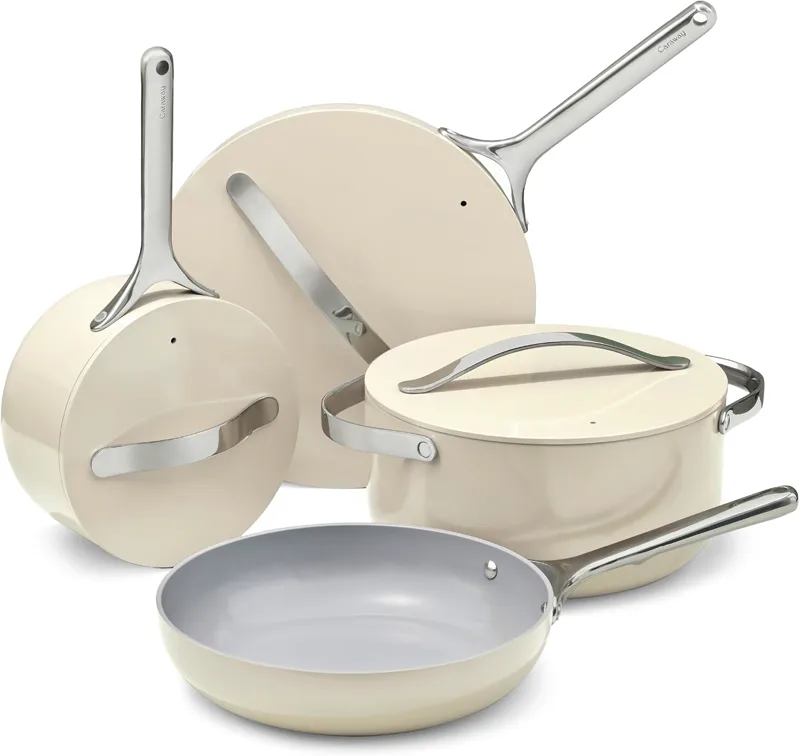
Modern nonstick coatings are designed to be stable at normal cooking temperatures, and the guidance from manufacturers is consistent: avoid overheating an empty pan and replace it once the surface is damaged. Ceramic coatings avoid fluoropolymer concerns entirely, though they tend to lose their release sooner.
Stainless has no coating to debate, which is part of its appeal for households that would rather not think about surface chemistry at all. Neither choice requires anxiety; both require a little attention to how the pan is used.
Replacement cost is the hidden line in the budget
Because nonstick is consumed, the true cost of a set includes the pieces you will replace. A single well-chosen skillet that gets renewed every few years often makes more sense than an entire matching suite that ages out at once.
Stainless fronts more of its cost at purchase and then keeps going. Spread over a decade of daily meals, the difference in annual outlay is smaller than the shelf price suggests, and the pan does not need to be tracked or protected.
How to split a first set between the two
Start with a stainless skillet for searing and sauces, a stainless saucepan for grains and reheating, and one nonstick skillet for eggs and delicate proteins. Add a nonstick pot only if porridge, risotto, or sticky sauces are a weekly habit. That trio covers more meals than a twelve-piece matching set.
Mixing the two materials usually beats a matching suite
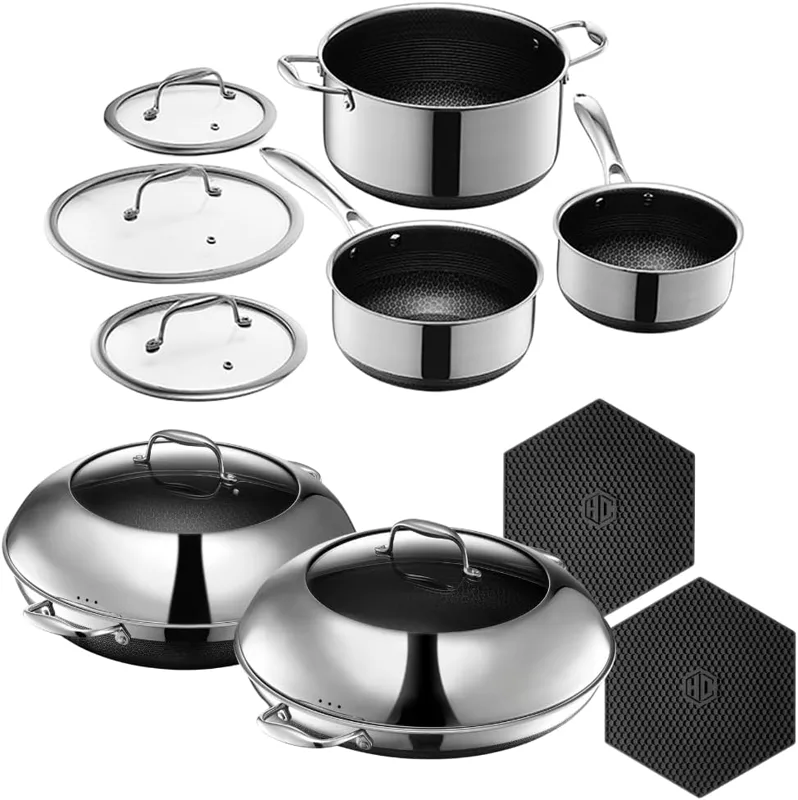
Matching sets are a storage convenience, not a cooking advantage. A kitchen that mixes materials gets the browning of stainless where it matters and the release of nonstick where it saves time, without paying for pans that duplicate a job.
If you are outfitting a kitchen from scratch, browse the rest of our kitchen and cooking guides for appliance comparisons that pair with new cookware, and see how we weigh rice cookers against multi-cookers when counter space is tight.
Choose by the meals you cook most, not by the label
Write down the five dinners that show up most often in your house. If they involve browning, pan sauces, or oven finishing, stainless deserves the larger share of the budget. If they involve eggs, pancakes, or fish that must come out whole, nonstick earns its place.
Most households land on both, in proportions that shift with the season and with how much time anyone has on a weeknight. That answer is more useful than any single material claim, and it keeps the pan drawer honest.