Workshop tools · Router tables & shapers
A router table and a spindle shaper cut the same profiles from the same board. What separates them is mass, tooling and how much room you are willing to give up.
A router table and a spindle shaper both spin a cutter through an opening in a flat top. Stand in front of either machine and the job looks the same: feed a board past the cutter, catch the moulding at the far end. That resemblance is the reason small shops so often spend money on the wrong one.
The differences appear later, once the machine is bolted down. They show up in tooling, in setup, in the space it occupies, and in what happens when a cutter catches a short offcut. Neither machine is better in general. One fits the work you actually do.
The short answer
- If your profiles come from a handful of bits and your runs are short, a router table covers far more of your work for far less money.
- If you build doors, sash or long runs from one profile, a shaper’s heavier spindle and larger cutters earn the floor space they take.
- A router table only behaves like a machine once it has a solid lift and a straight fence, so budget for those rather than the table alone.
- Buy a shaper when you can afford the tooling, the power and the room it needs, not because it looks like the professional choice.
Two machines that share a job description
A router table is a plate with a router motor hanging under it. The bit projects through the plate, a fence gives you a straight reference, and the whole assembly usually sits on a folding stand. It is light enough that one person moves it, and cheap enough that most shops own one before they own anything else.
A shaper puts a much larger spindle in a cast iron body and drives it with a belt. Cutters bolt to the spindle instead of clamping into a collet, the table is bigger, and the machine weighs as much as a small cabinet saw. Everything about it is scaled for repetition rather than for one-off work.
The comparison at a glance
The table below compares the two machine classes rather than individual models. On a phone, swipe the table sideways to see the second column.
| Aspect | Router table | Spindle shaper |
|---|---|---|
| Typical cutter | Router bit in a collet | Bolt-on cutter head on a spindle |
| Best run length | Short runs, one-offs, prototypes | Long runs of one profile |
| Profile cost | Low, and bits are everywhere | High, and cutters are specialised |
| Setup | Fast, and easy to repeat with a lift | Slower, but very stable once set |
| Cut quality | Good with sharp bits and light passes | Very good, especially on hardwoods |
| Material removed | Light passes only | Heavy passes in one or two goes |
| Footprint | Folds away against a wall | Needs permanent floor space |
| Usual mistake | Expecting it to behave like a shaper | Buying it before owning the tooling |
What a router table does well
A router table covers more operations per dollar than any other machine in a small shop. Raised panel bits, roundovers, dadoes, slip tenons and edge profiles all come from the same plate. Bits are sold on every corner of the internet, so trying a new profile costs a fraction of what a shaper cutter costs.
It is also forgiving in a small space. The table folds, the motor lifts out, and the whole thing disappears against a wall when the shop needs to become a garage again. That flexibility is worth more than raw power to anyone working evenings and weekends.
What it does not do is remove material quickly. Every pass is light, every cut is a decision about feed rate, and a dull bit announces itself immediately. Operators who learn to take three passes where a shaper would take one get clean results, but the clock runs differently. A router setup that is dialled in properly, the way a careful router setup describes, narrows that gap more than a bigger motor does.
What a shaper does that a router table cannot
A shaper holds a cutter that weighs more than most routers. That mass, plus a spindle that turns slowly with real torque, lets it take a full profile in a single pass and leave a surface that needs almost no sanding. On oak or hard maple the difference in finish is obvious after the first board.
It also repeats. Once a cutter and fence are set, the machine returns to that setting exactly, board after board, which is what door and window work demands. A router table can do this with a good lift, but the shaper does it with less fuss and far less vibration.
The trade is commitment. A shaper is not a machine you wheel out for twenty minutes. It wants a permanent home, a dedicated power circuit in most cases, and a guard system you actually use.
Where a shaper becomes the wrong purchase
A shaper bought for occasional roundovers is an expensive way to store cutters. The machine rewards repetition; if your work changes profile every project, the setup cost lands on every job and the advantage disappears. The same is true if you cannot yet afford cutters for the profiles you want, because a shaper with two cutters is less useful than a router table with twenty bits.
Cutter tooling changes the maths more than the machine does
Machine price is the number everyone compares and the least important one. Tooling decides what the machine can actually do, and the two systems are not close in cost or in availability.
Router bits stay cheap and plentiful
A decent profile bit costs about the same as a takeaway dinner, and a full set of rail and stile bits is still a modest purchase. Sharpening is either cheap or simply replaced. The catch is that small cutters dull faster and heat up quickly, so the cost returns in time rather than in cash.
Shaper cutters are heavier, and sourcing matters
A shaper cutter head usually costs several times what a comparable router bit costs, and it has to match your spindle diameter and your machine’s power. Sourcing is narrower, delivery is slower, and sharpening needs a shop that knows what it is doing. Budget for the cutters you need before you budget for the machine.
The middle path is a router table with a lift
A proper lift turns a router table into something closer to a small shaper: repeatable height, easy bit changes above the table, and enough rigidity for panel work. If you are torn between the two machines and your runs are short, this is usually the cheaper way to buy time, especially if you start from a router you already own.
Feed direction, guards and the habits that keep fingers
Both machines cut in a direction, and both punish feeding the wrong way. The cutter should pull the work against the fence, not lift it off the table. A shaper makes that rule more urgent because a heavier cutter throws a heavier offcut.
- Feed against the rotation, from right to left on a standard setup, so the cutter pushes the board into the fence.
- Use a starting pin or a jig for curved work instead of creeping up on the profile freehand.
- Keep the guard down and the featherboard set before the machine starts, not after the first pass.
- Take a light climb cut only when you have a power feeder or a very controlled push stick.
Dust collection is not a detail on either machine
A router table throws chips forward and fine dust backward through the plate opening. A shaper throws a much larger volume into the cabinet and out of the hood. Neither machine is clean without extraction, and the shaper fills a bag noticeably faster, which is why the dust port on that machine is usually sized for a real collector rather than a shop vacuum.
Floor space, weight and the second person problem
A router table folds and leans against a wall. A shaper arrives on a pallet, needs two people to move it, and stays put once it is level. If your shop shares space with a car, that difference decides the argument before performance ever comes up.
Noise and power draw in a residential shop
A router screams; a shaper hums. The shaper’s lower spindle speed and heavier body make it easier to live with in a basement, but its motor draws considerably more current, and many models want a circuit that a garage socket cannot supply. Check the circuit before you check the cutter catalogue.
Setup time and repeatability across a batch
For a single cabinet door, the router table wins on setup. For twenty doors, the shaper wins back every minute it lost. A useful habit is to treat setup as a measurement rather than a feeling, and record what worked.
- Write down the fence position, cutter height and feed rate for any profile you expect to repeat.
- Cut a test piece from the same stock as the job, not from scrap of a different species.
- Set the guard and featherboard to the test piece, then move to production without changing them.
Three machines that show the range
These three are not a ranking. They simply illustrate what each class looks like at a realistic size, from a compact router table system up to a floor-standing shaper.
The Kreg PRS1045 is the pattern most small shops copy: a squaring fence on a rigid steel stand, with the router plate as the only moving part. It is the machine that lets a router table behave like a table.
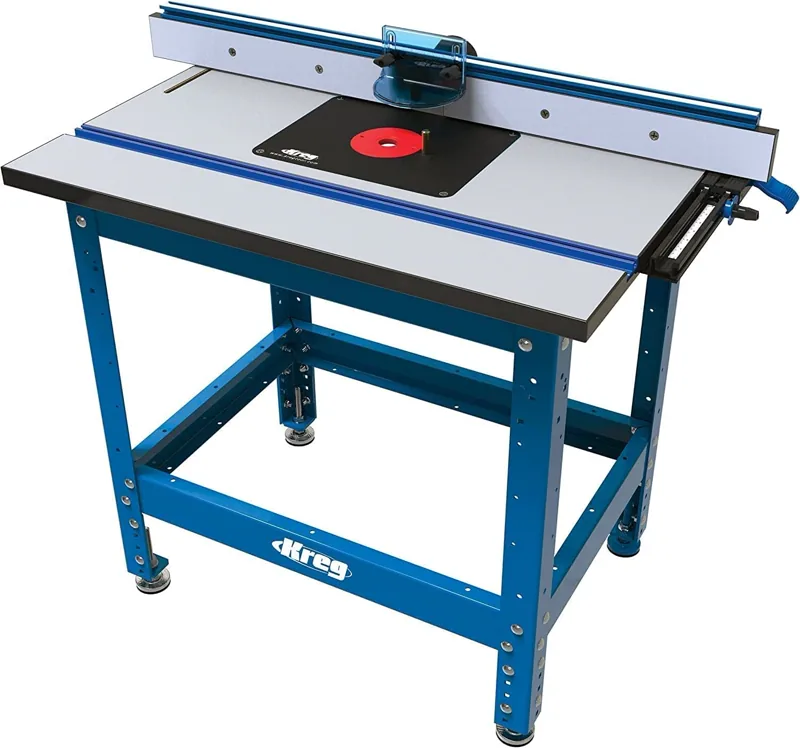
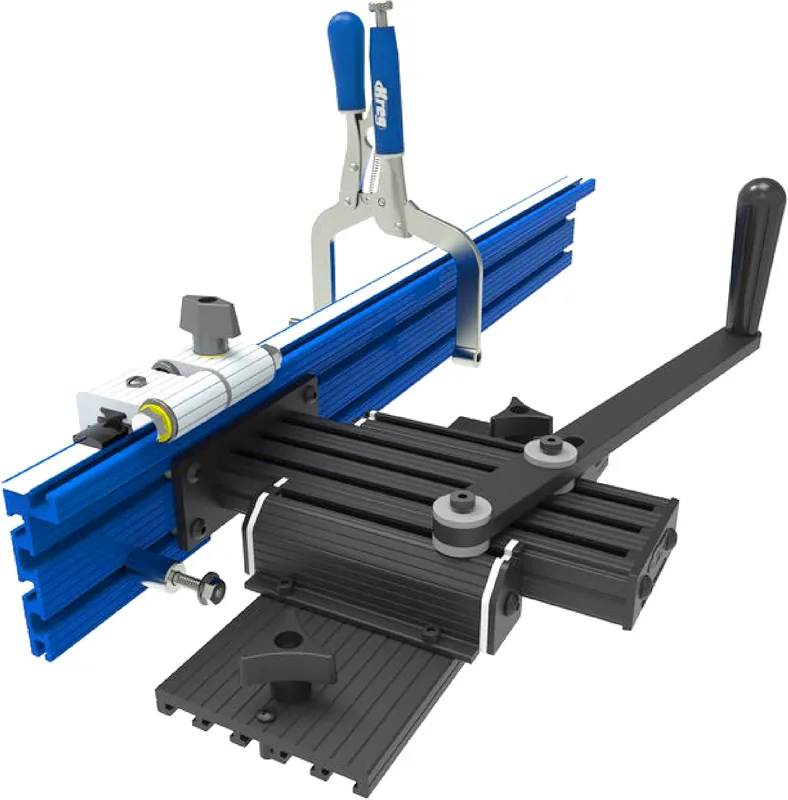
The Kreg PRS1200 shifts the emphasis to face-frame work, with a beaded fence and a steel base that stays square under load. It suits shops that build cabinets rather than furniture, where the profile is fixed and the batch is long.
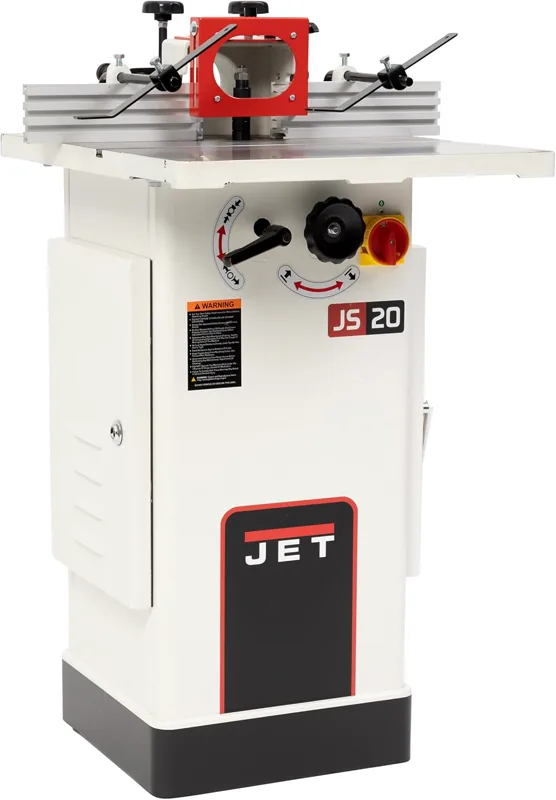
The JET JWS-20CS is the other class entirely: a cast iron shaper with a bolt-on cutter spindle, built to run the same profile all afternoon. It is the machine you buy when the router table has stopped being the bottleneck.
A decision test before you spend
Answer three questions honestly. First, how many metres of the same profile will this machine cut in a year? Second, do you already own a router motor that a table could use? Third, is there a permanent place to stand the machine, or does it have to fold away? If the answer to the first is measured in metres rather than hundreds of metres, a router table is almost always the right buy.
If the answers point to a shaper, spend the difference on cutters and dust extraction before you spend it on a bigger motor. The machine is the cheap part of that decision. If they point to a router table, spend it on a lift and a fence that stays straight, since those two parts decide whether the table is a tool or a nuisance. A look at the rest of the workshop tool guides will show where the router table fits in the sequence.
Either way, the machines overlap less than the marketing suggests. The router table is a generalist that earns its place by doing many things adequately. The shaper is a specialist that earns its place by doing one thing perfectly, thousands of times. Small shops usually need the generalist first.