Kitchen · Small appliances
One appliance heats food fast and evenly; the other makes it crisp. The counter space question only gets easier once you stop expecting either to do the other’s job.
A microwave and an air fryer both promise to get dinner on a plate without turning on the oven, which is why they end up competing for the same square of counter. In daily use they behave nothing alike. A microwave moves water molecules and steams food from the inside. An air fryer runs a fan across a hot element and browns the outside of whatever it touches.
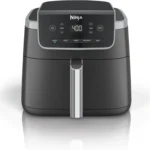
That difference decides almost every practical question: how long dinner takes, what comes out soggy, and which appliance you will still be using in a year. The three machines below cover the realistic choices under about $150 — a basket air fryer, an oven-style air fryer, and a full-size countertop microwave — and each is better at a different job.
Quick answer
- Buy the microwave first if you reheat more than you cook and want the fastest path from cold to edible.
- Buy the air fryer first if crispness matters — frozen fries, chicken wings, roasted vegetables, leftover pizza.
- If both fit, a cheap microwave plus a basket air fryer covers more meals than one expensive machine of either type.
The short version: a microwave is a reheating tool that happens to cook a few things well, and an air fryer is a small convection oven that happens to reheat a few things well. Most kitchens want both eventually, but rarely for the same reason.
Speed is not close, and that is the point of a microwave
A microwave heats a bowl of soup in two minutes because it is not heating the air around the bowl. Energy goes straight into the water in the food, which is why a plate of leftovers comes out hot at the edges and lukewarm in the middle unless you stir it. Nothing about that is a defect; it is how the appliance works.
An air fryer has to heat its whole cavity before the food starts browning, and it needs a preheat for anything that should come out crisp. A small basket model gets there in a few minutes; an oven-style unit with a larger cavity takes longer. Either way, the same leftovers that take two minutes in a microwave take eight to twelve in an air fryer.
For a household that reheats coffee, oatmeal, baby food, or a plate from last night, that gap is the whole argument. The microwave is not competing with the air fryer on quality; it is competing on the number of decisions between hungry and fed.
Texture is where the air fryer earns its footprint
Anything that was crisp and went soft — fried chicken, pizza, a schnitzel, a spring roll — comes back in an air fryer. The fan strips surface moisture while the element browns the outside, so the crust re-forms instead of turning to steam. The same food in a microwave comes out limp, and there is no setting that fixes it.
The air fryer also roasts. A tray of broccoli, cauliflower, or halved Brussels sprouts cooks in about the time it takes to heat a larger oven, without heating the kitchen. Chicken thighs come out with rendered skin. Frozen french fries are the cliché because they demonstrate the point so clearly: the difference between soggy and crisp is the entire reason people keep the machine on the counter.
What an air fryer does badly
Liquids, rice, pasta, and anything with a batter that needs to set in oil are not air fryer food. Battered fish will run through the basket. A bowl of soup is out of the question. And because the fan moves hot air forcefully, light items like spinach or thin herbs can blow around and scorch on the element.
Basket or oven-style changes how much food fits
A basket air fryer is a deep drawer with a crisper plate. Food sits in a pile, so the bottom layer cooks by contact and the top by moving air. Shaking the basket halfway is part of the routine. Four quarts is enough for two people and one protein; a family of four needs to cook in batches or move up in size.
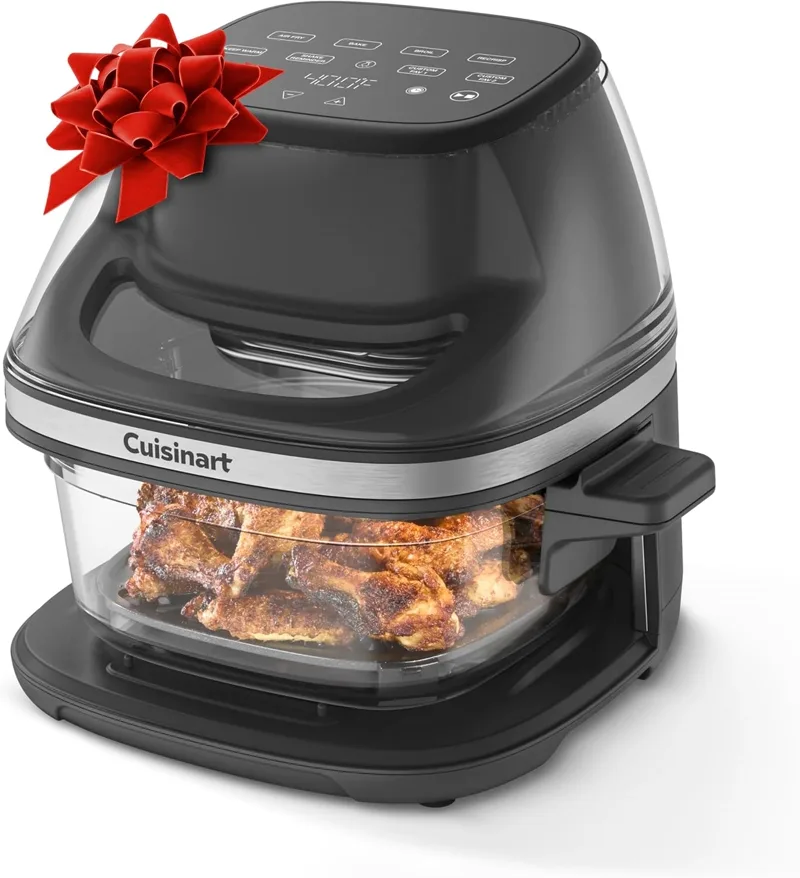
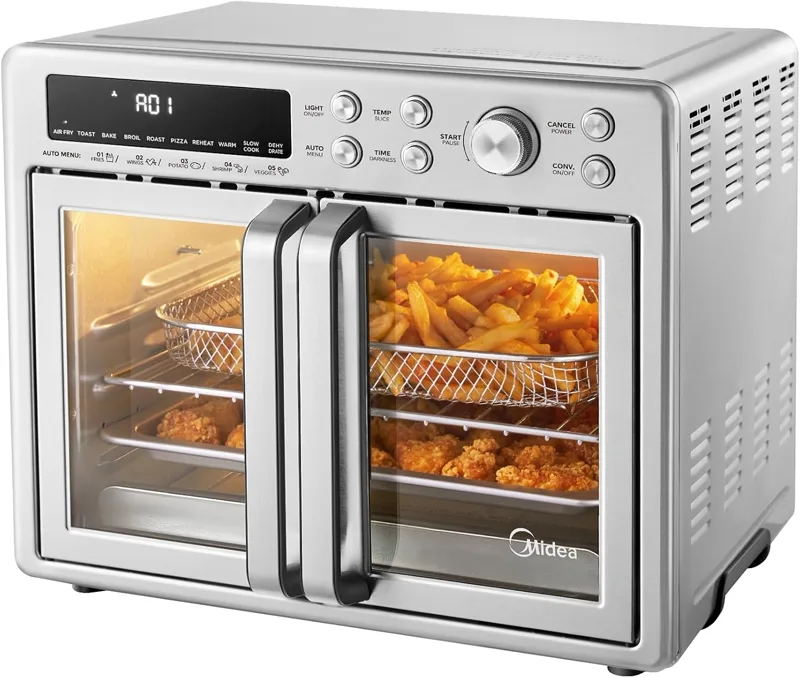
An oven-style air fryer is a small convection oven with racks and a door. Food spreads out in a single layer, which cooks more evenly and lets you use a tray for anything delicate. It also takes up more counter depth and, in most kitchens, replaces the toaster oven rather than sitting beside one.
Toaster-oven shapes are also better at toast, bagels, and a single slice of pizza, which is why households that already eat that way tend to prefer them. Basket models are faster to clean and easier to shake, which suits fries, wings, and vegetables cooked in volume.
If you are weighing the oven-style route specifically, the air fryer versus toaster oven comparison covers where the two overlap and where one clearly wins.
A countertop microwave is still the better reheater
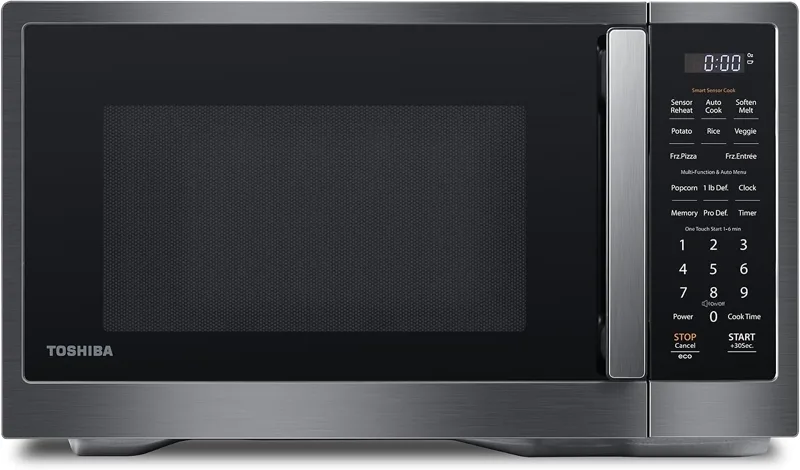
A 1.2-cubic-foot microwave with a turntable holds a dinner plate, a casserole dish, or a large mug without rearranging the kitchen. Sensor cooking — the setting that measures steam and stops when the food is hot — removes most of the guesswork from reheating, which is the main reason people burn the edges of a bowl of rice.
The trade-off is counter depth. A full-size microwave is roughly 20 inches deep and wants clearance in front of the door. Over-the-range models solve that by moving the appliance off the counter entirely, but they need cabinet and duct work that not every kitchen has.
Which one gets used more often depends on what you cook
A household that cooks from scratch most nights and uses the microwave mainly to reheat will get more value from an air fryer, because the air fryer adds a cooking method rather than duplicating the oven. A household that assembles meals, reheats leftovers, and heats milk for coffee will get more from a microwave, because speed is the only metric that matters there.
The awkward middle is the household that does both. In that case, buy the cheaper microwave and put the rest of the budget into a basket air fryer. Two modest appliances cover more meals than one premium machine, and neither needs to be excellent at the other’s job.
Energy use is smaller than the marketing suggests
Both appliances use less energy than a full-size oven for the same task, mostly because they heat a much smaller cavity. A microwave is efficient at reheating because it heats food rather than air. An air fryer uses more energy per minute but runs for fewer minutes than a wall oven, which is why it is often compared favourably for small portions.
The honest comparison is not air fryer versus microwave but either one versus the big oven. If the alternative is heating a 5-cubic-foot oven for a single tray of vegetables, both small appliances win. Between the two, the difference is small enough that it should not decide the purchase.
Cleaning is the daily cost nobody prices in
A microwave wipes clean because the food sits in a dish. A basket air fryer needs the drawer, the crisper plate, and often the element guard washed after anything greasy, and the non-stick coating punishes metal utensils. An oven-style air fryer adds a door, a rack, and a crumb tray to the routine.
If the machine is going to live on the counter, cleaning effort matters as much as cooking performance. A model that takes four pieces to the sink after every batch will get used less than one that needs a single drawer rinsed.
Noise and heat in a small kitchen
An air fryer is audible — a fan running against a hot element — and it vents warm air into the room. In a small kitchen in summer that is noticeable, though far less than an oven. A microwave is quieter and vents much less heat, which matters if the appliance sits near a dining table or in a rental with poor ventilation.
How the two appliances compare side by side
The table describes how each appliance behaves rather than picking a winner. Prices are the ones shown at a New York 10001 delivery address when this was written and will move with promotions.
| Aspect | Air fryer | Microwave |
|---|---|---|
| Main job | Browning and roasting | Reheating and defrosting |
| Leftover pizza | Crisp base, melted cheese | Soft and steamy |
| Soup or liquid | Not suitable | Fast and even with stirring |
| Frozen fries | Crisp outside, fluffy inside | Limp |
| Typical time | 8 to 20 minutes | 1 to 5 minutes |
| Counter depth | Moderate to deep | Deep, door needs clearance |
| Cleaning | Drawer, plate, element guard | Wipe the cavity |
| Price in this comparison | $109.95 to $139.95 | $139.99 |
A practical way to choose
Write down what you actually did with your oven and microwave last week. If most of it was reheating plated food and heating drinks, the microwave is the appliance you will miss. If most of it was frozen food, roasted vegetables, or anything that should be crisp, the air fryer is the one that changes dinner.
Then measure the counter. A basket air fryer needs about a foot of width and room to pull the drawer forward. An oven-style model needs more depth and a door that swings down. A full-size microwave needs the most depth of all, and a spot where the door can open without hitting the fridge.
If the answer is both, the sensible order is microwave first, air fryer second, and buy the air fryer in the size that matches how many people you feed rather than the largest one that fits. More capacity mostly means longer preheats and more to wash.
For the cooking side of the room, the kitchen and cooking archive collects the appliances that share the same counter, and the blender versus juicer comparison covers another decision that comes up in the same aisle.