Floor care · Comparison
One machine washes the floor while you walk behind it. The other drives itself around the table legs while you are doing something else. The useful question is not which one is smarter, but which one matches the way your kitchen actually gets dirty.
The short answer
- If your kitchen floor gets wet — spilled milk, dropped pasta, a dog bowl that tips — a wet-dry vacuum does work a robot mop cannot do.
- If your floor only gets dusty and faintly sticky, a robot mop keeps it that way without you holding anything.
- The two machines fail in opposite ways: the wet-dry vacuum demands your time, the robot mop demands your floor be cleared first.
- With one hard-floor zone and a cook who is barefoot most evenings, buy the wet-dry vacuum first.
- With an open-plan floor and almost no spare minutes, buy the robot mop first and accept that it is a maintenance tool, not a rescue tool.
The real difference is who holds the handle
Every comparison of these two machines turns into a spec sheet within three paragraphs, which is why most of them are useless. Torque figures and tank volumes describe the hardware. They do not describe the ten seconds after a glass of orange juice hits the tile, and that moment is where the two products separate.
A wet-dry vacuum is a manual tool in the old sense. You decide where it goes, how long it stays, and how much water it lays down. A robot mop is an automatic tool: you decide when it runs, and then you are out of the loop. Manual tools handle exceptions well and routine badly. Automatic tools handle routine well and exceptions badly. Your kitchen produces both kinds of mess, which is why the answer is usually “one now, the other later” rather than “either one forever”.
What a wet-dry vacuum actually does well
A cordless wet-dry vacuum combines suction, a clean-water tank, a dirty-water tank, and a powered roller brush. It sprays clean water, scrubs with the roller, and pulls the dirty water back into a separate chamber in the same pass. Because the dirty water never returns to the floor, repeated passes do not smear a film across the surface.
The practical consequence is that it removes mass. A dropped egg, a puddle of soy sauce, a bowl of cereal milk — these are not stains to be wiped, they are volume to be taken away, and suction is the only thing on the market that takes volume away in one movement. The same reasoning applies when you compare air handling appliances: a machine that removes the substance from the room beats a machine that spreads it around, which is the line we drew in our air purifier versus dehumidifier comparison.
The second advantage is the drying strip. Better machines blow warm air across the roller as it turns, so the floor behind you is dry enough to walk on within a minute or two. In a kitchen this matters more than it sounds: a wet floor around a stove is a slip hazard, and a wet floor around a cabinet toe-kick is how you get swollen particle board eighteen months later.
What a robot mop actually does well
A robot mop is a maintenance machine. It wanders a mapped floor, drags or spins a damp pad, and returns to its dock to wash the pad in hot water. It does not remove volume. It redistributes a thin film of water and lifts the dust that has settled since yesterday.
That sounds dismissive and it should not. Most kitchen floors are not dirty in the sense of having visible debris. They are dirty in the sense of having a faint tackiness near the working triangle, a grey sheen where shoes land, and a line of crumbs along the baseboard. A robot mop running every night erases all three without anyone noticing it happened. That is a real benefit and no manual machine can match it, because the constraint on manual cleaning is not capability but willingness.
The limitation is geometry and preparation. A robot needs clear floor. Chairs pushed in, mats lifted, cables off the ground, pet bowls moved. If your kitchen requires five minutes of tidying before a machine can run, the machine will not run often enough to matter.
Side by side, in the terms that decide it
| Aspect | Wet-dry vacuum | Robot mop |
|---|---|---|
| Wet spills | Removes the liquid in one pass | Spreads it, then dilutes it |
| Daily dust and film | Works, but only when you do it | Works without you, nightly |
| Time cost | Twenty to thirty minutes per run | A minute of tidying before a scheduled run |
| Edges and corners | Reaches with the head, needs a steady hand | Limited by the bumper radius |
| Floor clearance needed | None | Chairs, mats, and cables lifted |
| Under-cabinet reach | Good with a low head | Depends on lidar height |
| Wet debris and pet accidents | Handles it, including the smell | Smears it across the map |
| Consumables | Roller, filter, solution | Pads, dust bag, solution, dock cleaning |
| Failure mode | Stays in the closet | Runs on a dirty floor and polishes the dirt |
Three machines that show the range
The category is not one product at three prices. It is three different jobs. The picks below span the manual steam end, the everyday manual end, and the automatic end, so you can see where each one stops being the right tool.
The heavy-mess manual pick: Tineco Floor One S9 Artist Steam
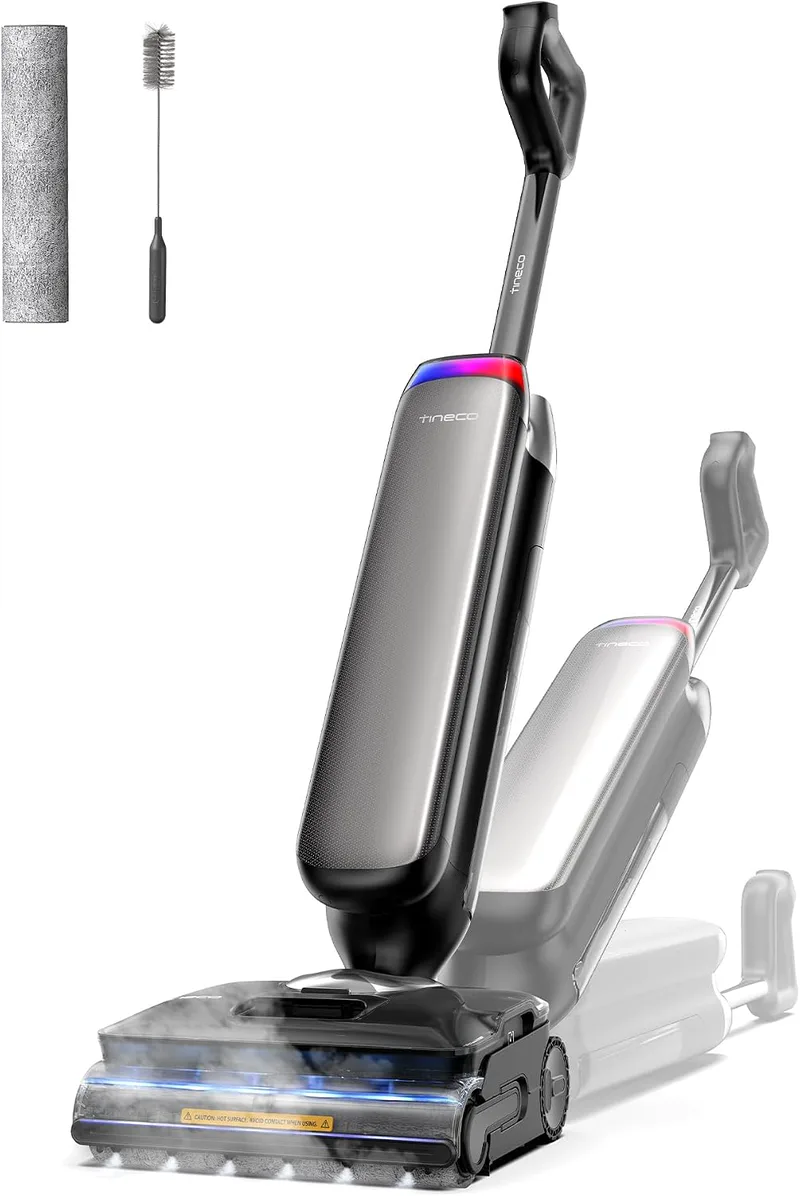
This is the machine you buy when the messes are cooked on rather than spilled. Steam softens grease on a range surround and lifts the sticky ring a pan leaves on a tile, and the roller washes itself in hot water between passes. It also lays flat to reach under a low cabinet toe-kick, which is where kitchen dirt accumulates unnoticed.
The trade-off is honest: it is heavier than a plain wet-dry vacuum, it wants distilled water, and it is not the machine you reach for to clear a bowl of cereal in ten seconds. Buy it for a deep weekly wash, not for a spill. See the Tineco Floor One S9 Artist Steam on Amazon.
The everyday manual pick: Tineco Floor ONE S7 FlashDry
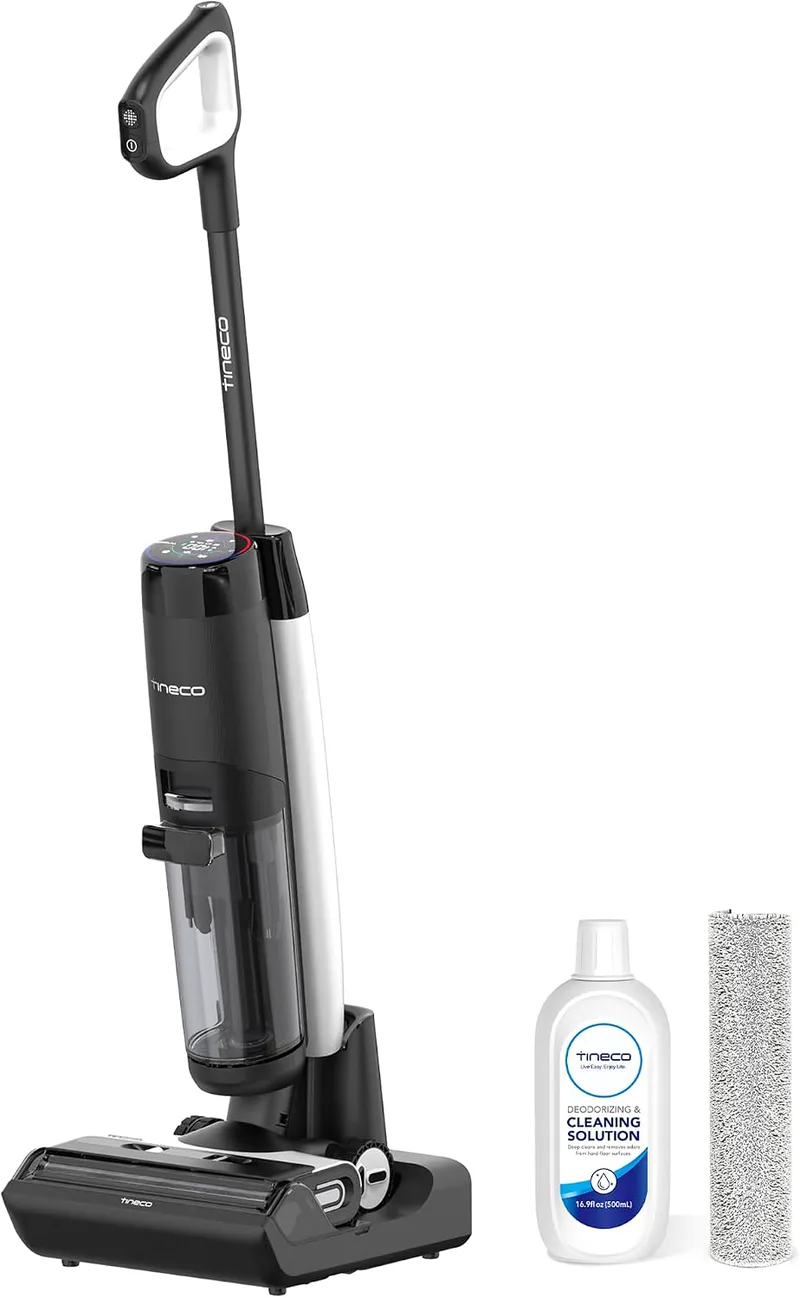
Lighter, simpler, and quicker to deploy. The value here is the drying step: warm air across the roller means the floor behind you is walkable almost immediately, which is the difference between cleaning the kitchen at seven and cleaning it at nine because you had to wait for the floor.
It handles the ordinary week — a spill, a sticky patch by the bin, the trail from the door — without the ceremony of filling and preheating a steam unit. If you only own one manual machine and your floor is a sealed hard surface, this is the shape of it. See the Tineco Floor ONE S7 FlashDry on Amazon.
The automatic pick: roborock Qrevo S Pro
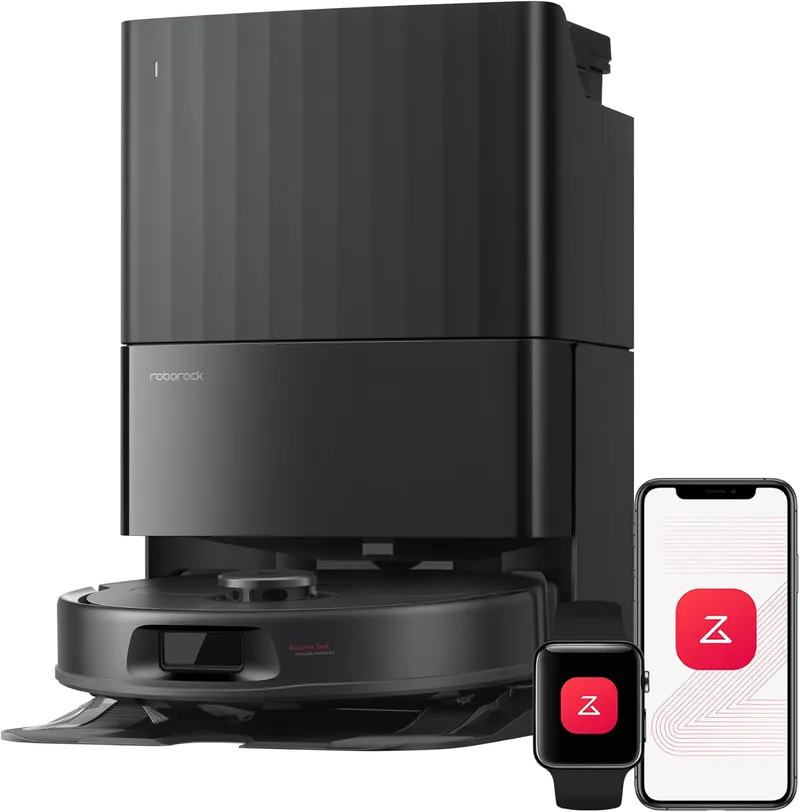
A dock that washes the mop in hot water, lifts the spinning pads when it crosses a rug, and empties itself. The point of this class of machine is not deep cleaning. It is that the floor is wiped while you are asleep, every night, without a decision.
The two things to check before buying are dock footprint and clearance under the furniture you actually own. A dock needs a wall, a socket, and about half a metre of approach; a sofa with a nine-centimetre gap will stop a lidar turret dead. See the roborock Qrevo S Pro on Amazon.
Where the wet-dry vacuum stops earning its keep
It stops when the floor is already clean and the only thing left is film. Nobody fills a tank, unrolls a cord, and washes a floor that looks fine. That is the honest reason most wet-dry vacuums spend five days a week in a closet: the machine is capable, the human is not motivated. If you know this about yourself, the automatic option is not a luxury, it is the only version of floor care that will actually happen.
It also stops at the edge of hard flooring. Rollers and suction are built for tile, sealed stone, laminate, and sealed wood. On an unsealed wood floor or a loose rug, water is a liability rather than a tool, and a robot with a liftable pad is the safer of the two.
Where the robot mop stops earning its keep
It stops the first time a pet has an accident and the robot finds it before you do. A spinning pad will distribute that across the whole mapped area in under four minutes, and you will smell it for a week. Any household with a puppy, an elderly cat, or a toddler who drops food should treat a robot mop as a scheduled nightly tool that is switched off during the day, not a robot that runs whenever.
It also stops at thresholds. A robot that has to climb a two-centimetre lip to reach the kitchen will climb it some days and not others, and the map will slowly deform as it learns the wrong shape of your house.
Matching the machine to the floor you actually have
Sealed tile is the easiest surface for both machines and the one where a wet-dry vacuum shows the largest advantage, because grout lines hold water and suction pulls it out while a robot pad pushes it in. Laminate tolerates a damp pass and punishes standing water at the seams, so a machine that dries behind itself is worth more than one with a bigger tank. Sealed hardwood is fine for both, provided the robot’s water volume is adjustable and the manual machine is not left standing with a wet roller. Unsealed wood, cork, and bamboo belong to neither; use a dry method and spot-clean.
If you are still deciding how much automation belongs in your kitchen, the same framework applies to storage: our chest freezer versus upright freezer guide makes the same argument in a different aisle — decide the job first, then the machine.
What maintenance really costs over a year
A wet-dry vacuum consumes rollers, filters, and cleaning solution in proportion to how often you use it, and the roller is the part that quietly determines performance. A matted roller stops lifting water long before the machine reports a problem. Budget for a replacement roller every few months in a busy kitchen and rinse the dirty tank after every use, because the smell that develops in a sealed dirty tank is the reason people stop using the machine.
A robot mop consumes pads, dust bags, and dock cleaning cycles, plus one annual deep clean of the dock itself, which is where biofilm forms if you never look. Its hidden cost is not consumables but floor preparation: every object you leave on the floor is an object the machine will either avoid or drag.
The buying order most kitchens should follow
If you have one hard-floor zone, cook most nights, and can give the floor twenty minutes a week, buy the manual machine first. It solves the problems that feel like emergencies, and emergencies are what make people feel their kitchen is out of control. Add the robot mop later, when the emergencies are rare and the daily film is the remaining annoyance.
If your floor is open-plan, your chairs are always pushed in, and your evenings are already full, invert the order. Buy the robot mop first, let it hold the floor at a baseline, and add a manual machine only if you find yourself scrubbing something the robot cannot reach. What you should not do is buy neither and hope the two categories cancel out.
Prices and availability change constantly on Amazon; the links above go to the current listing for each machine rather than to a fixed offer. As an Amazon Associate we earn from qualifying purchases.