Workshop tools · Wood lathes
Where a midi lathe stops being enough, and where a floor lathe is more machine than the work needs.
Wood lathes are usually sorted by size, which is a tidy way to sell them and a poor way to choose one. What actually changes between a midi lathe and a floor lathe is not the length of the bed. It is the kind of blank you can mount without a workaround, and the amount of workshop the machine quietly claims for itself.
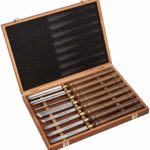
This guide compares the two by how they behave in a small shop: what each one turns comfortably, what it refuses, how it changes the bench you own, and where the money goes when you step up. If you are new to turning, the different types of wood lathe tools matter more than the machine you start on, and the machine matters more than the accessories you collect around it.
Quick verdict
- If your work fits in your hands — bowls, boxes, handles, pens — a midi lathe on a solid bench will not hold you back.
- If you already turn long spindles or wide bowls, a floor lathe removes the workaround instead of adding a feature.
- Count the stand or the bench as part of the machine, because the lathe is only as rigid as what holds it.
- Buy for the blanks you can actually get, not the ones you hope to find later.
The dividing line is swing, not price
Swing is the distance from the spindle center to the nearest obstruction, doubled. It decides the largest bowl or platter you can rough out without the blank touching the bed. Everything else — the length of the bed, the height of the spindle, the mass under the work — follows the swing or negotiates with it. Price follows all of them, but it follows at a distance, and plenty of expensive midi lathes cost more than a modest floor machine while swinging less.
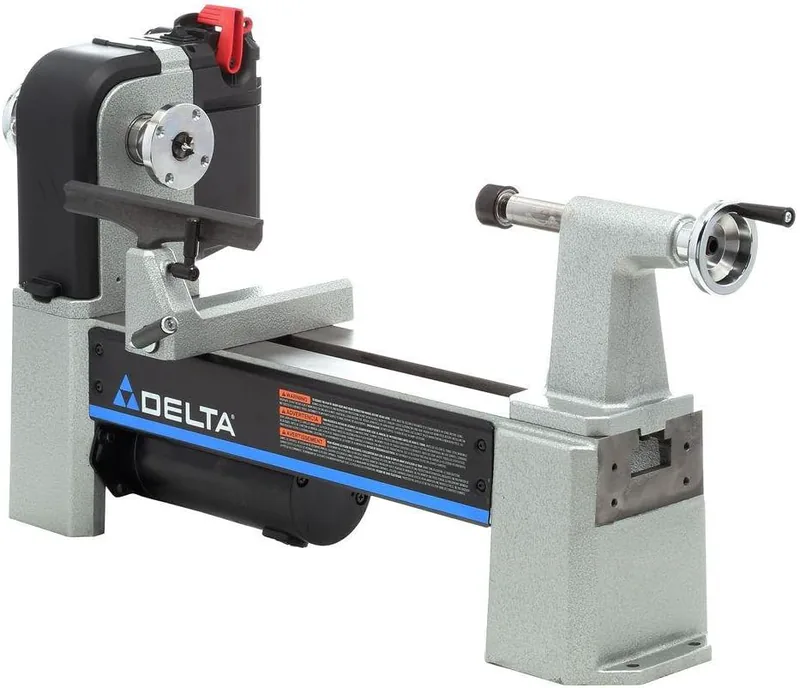
Midi lathes are built to sit on a bench you already own
A midi lathe assumes a workbench exists. It is short, light enough for two people to lift, and designed to be clamped or bolted to something heavy. That assumption is the whole appeal: the machine arrives, it goes on the bench, and the shop is turning the same afternoon. It is also the whole liability, because a light machine on a light bench will move when a catch sends a shock through the tool. A bench that racks, slides, or rings under a cut will teach you bad habits and make every tool feel dull. Bolting the lathe down, adding mass, and removing play from the bench are not upgrades to the machine; they are part of making the machine work.
What a stand adds to a midi lathe
A manufacturer’s stand turns a bench machine into a floor machine without turning it into a floor lathe. It puts the spindle at a working height, adds mass where the machine needs it, and frees the bench for assembly and finishing. The trade is space: a lathe on a stand now occupies a permanent footprint, which is the thing midi lathes were supposed to avoid.
Floor lathes are built to stand where the work happens
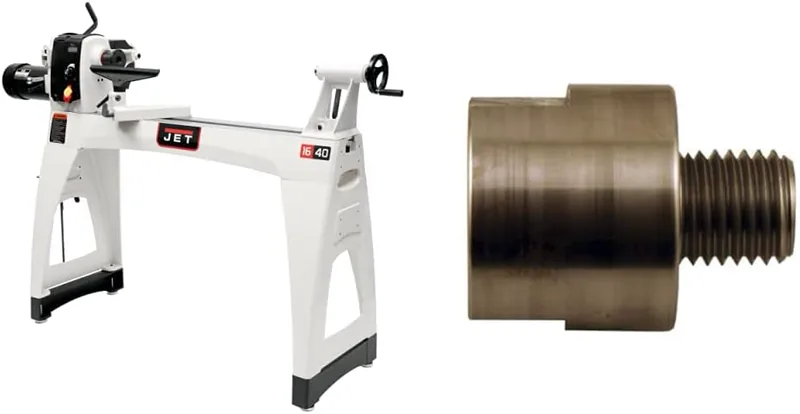
A floor lathe arrives as a machine with legs. The bed is longer, the headstock is heavier, and the stand is part of the design rather than an accessory. Nothing has to be adapted, which is why the format feels settled: the spindle is where the maker intended, the controls are where the maker put them, and the mass under the cut was calculated rather than improvised.
Swing and between-centers answer two different questions
Swing answers “how wide a bowl”, and between-centers answers “how long a spindle”. They are independent, and a machine can be generous in one and stingy in the other. Shops that turn bowls care about swing and clearance. Shops that turn legs, rails, and tool handles care about bed length and about steady rests that keep a long blank from whipping. Buying on one number and discovering the other is the most common lathe regret.
Speed control changes how you approach a blank
Every lathe can be slowed down and sped up. The difference is whether you can do it while the work is mounted and running. Electronic variable speed lets you rough a heavy blank slowly, then step up for the finish pass without stopping. Stepped pulleys make you choose before you start. Neither is unsafe, but the one you can adjust mid-cut changes how willing you are to experiment.
The same logic applies to the tools you hold. A modest lathe with sharp, well-ground tools will out-turn a large one with dull edges, which is why our guide to the best wood lathe tools is worth reading before you decide how much machine to buy.
A midi lathe reaches its limit at the edge of the bed
The limit is not usually power. It is clearance and rigidity at the edges: the blank that just touches the bed, the tool rest that cannot be positioned where you need it, the headstock that flexes when you push a gouge into a wide platter. You can work around all three with lighter cuts and more patience. What you cannot do is pretend the workaround is free.
Bowl work versus spindle work
Bowls want swing, clearance, and a headstock that can be rotated or slid to the end of the bed. Spindles want length and a tailstock that stays aligned. Most small shops do a little of both, which is exactly why the decision feels harder than it should: the machine that suits one kind of work is rarely the one that suits the other.
Floor lathes absorb the cuts that shake a bench
Mass is the quiet feature. A heavy bed bolted to a heavy stand turns a catch into a thud instead of a jump, and the tool stays where you put it. On a midi lathe, that job belongs to the bench, which is why a flimsy bench makes a good lathe feel bad. If you have ever blamed a machine for chatter that came from the table under it, you already understand the difference.
Long spindles expose the difference in bed length
A table leg is the classic test. On a short bed it either does not fit between centers or fits with so little room that the tailstock has nowhere to go. On a long bed it fits with room for a steady rest and a comfortable stance. If your work includes furniture parts, the bed length stops being a number on a page and becomes the reason you walk into the shop.
Workholding capacity grows with the headstock
Chucks, faceplates, and jaws are sized to the spindle and to the mass behind it. A midi lathe will happily spin a small chuck, and a floor lathe will carry a heavier one without complaining. That matters less at the start and more every year, because workholding is the part of turning that grows with the work rather than with the budget.
Where a midi lathe actually beats a floor model
It beats a floor lathe in a small shop that has to change function several times a week. A midi lathe can live on a shelf, come out for an afternoon, and give the space back. It also beats a floor model for anyone who turns small work and would rather spend the difference on chucks, gouges, and sharpening. A machine that fits the shop gets used more than a machine that impresses visitors.
Moving a floor lathe is a project of its own
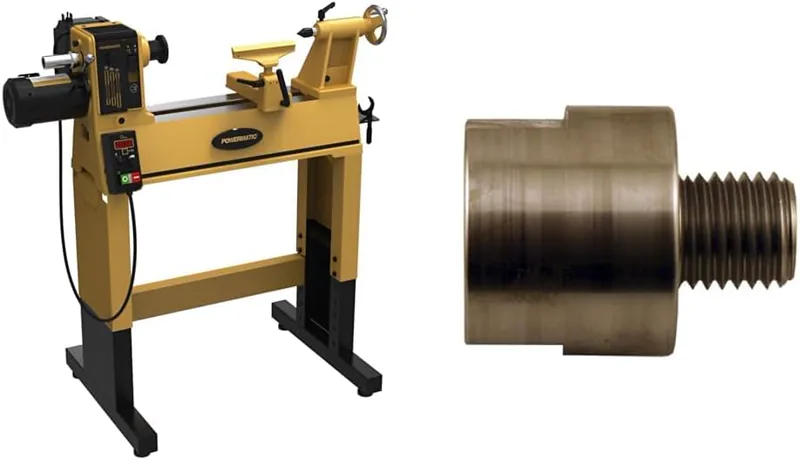
Floor lathes arrive on a pallet, and they stay where the pallet stopped. Moving one later means clearing a path, finding help, and accepting that the machine will need to be re-levelled afterwards. In a rented shop or a garage that doubles as parking, that permanence is a real cost. It belongs in the decision next to the price, even though no listing mentions it.
Power and wiring follow the size of the machine
Midi lathes are built to run from an ordinary outlet, which is part of why they suit garages, basements, and shared spaces. Larger floor lathes sometimes want a circuit that has to be planned, and the electrician’s bill belongs in the budget. If the panel is already full, a machine that needs new wiring can cost more than the step up in swing suggests.
Buying one size above your current work is the usual mistake
The tempting move is to buy a floor lathe for the bowls you plan to turn next year. The result is usually a large machine, a small pile of practice blanks, and a shop that lost its assembly table. Buying one size above today’s work leaves a little room to grow without committing the floor to a hobby you have not started yet.
Sizing the lathe around the blank, not the catalogue
Write down the three things you most want to turn, and the size of the largest blank each one needs. That list, not the range of a product page, is the specification. If everything on it fits a midi lathe, buy the midi lathe and spend the difference on workholding and sharpening. If one item needs a floor machine, the decision is already made.
- Bowls and platters: swing and clearance decide it.
- Legs, rails, and handles: bed length decides it.
- Small, occasional work in a shared shop: bench space decides it.
A test blank tells you more than a spec sheet
If you can, turn one blank on each format before you buy. Rough out something a little larger than your usual work and pay attention to what the machine does when the tool catches: does it jump, ring, or dig in? The answer is about rigidity and mass, and it is the part of the decision that no listing can tell you.
- Jump: the machine is moving, so look at the bench or the stand first.
- Ring: the bed is thin or the hold-down is loose, and the finish will suffer.
- Dig in: the cut is too aggressive for the mass behind the tool rest.
The table below compares how the two formats behave in a small shop. On a phone, slide it sideways to see the third column.
| Aspect | Midi lathe | Floor lathe |
|---|---|---|
| Swing | Limited by the bench and motor | Larger, built for it |
| Between centers | Short, bowls and boxes | Long, legs and rails |
| Footprint | Wherever the bench is | A permanent slot |
| Spindle height | Depends on your bench | Fixed by the stand |
| Speed changes | Dial or stepped pulley | Broader, with more low-end control |
| Workholding | Chucks sized to the spindle | Heavier chucks, more room |
| Moving it | Two people and a car | A pallet and a plan |
| Storage between jobs | Shelves or a corner | Claims its space |
Treat that as a comparison of behavior rather than a ranking. The floor lathe is not the better machine; it is the machine for work that needs the room.
More comparisons of the machines that share a small shop, including sanders and drill presses, are collected in the tools archive.