Laundry care · Clothes pressing
One tool hangs in a closet and relaxes a shirt in ninety seconds. The other needs a board, a socket, and a little patience, and then leaves a crease you can cut bread with. The right choice depends less on the label than on what your wardrobe is actually made of.
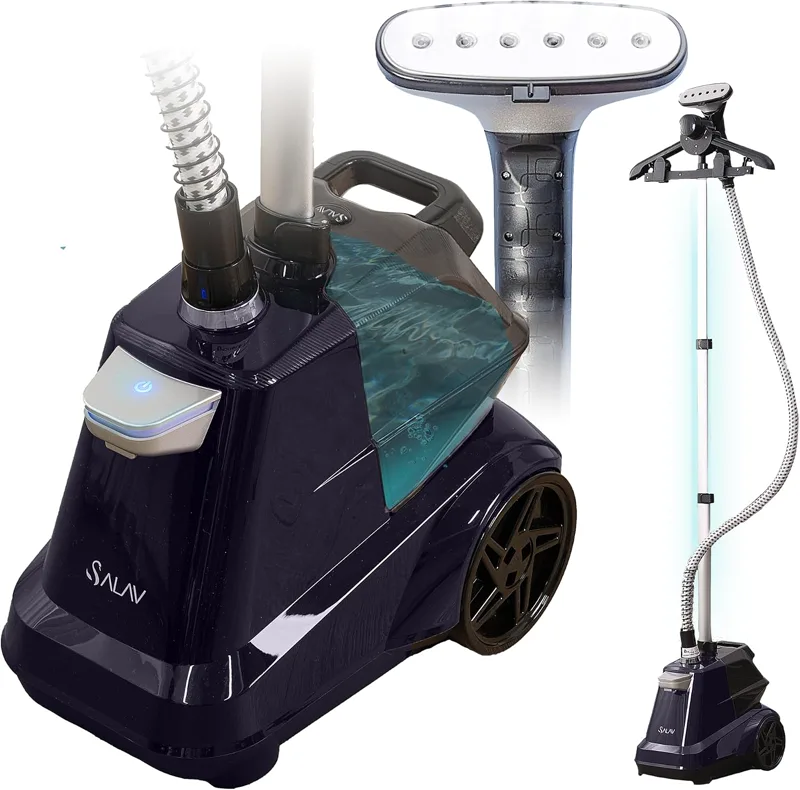
Walk into the laundry aisle and the two tools look like they belong to different decades. A garment steamer is a tank, a heating element, and a head that releases vapour onto a hanging garment. A steam iron is a weighted soleplate that presses fabric flat while steam pushes through the fibres.
This guide compares three tools that represent the choice in today’s market: a full-size standing steamer and two steam irons. It covers how each one works, where each one fails, tank size, heat-up time, fabric limits, water quality, storage, and the household routines that decide the answer, then narrows the decision to a wardrobe of knits, a stack of cotton shirts, and a household that owns both.
Quick answer
- Best for a wardrobe of knits, dresses, and dry-clean-only fabrics: a standing garment steamer, because hanging steam never crushes a fibre it cannot press.
- Best for cotton shirts, trousers, and anything that needs a crease: a steam iron, because heat plus weight is still the only thing that sets a sharp line.
- Best for a small apartment with one closet: a compact steamer, because it stores on a shelf and needs no board.
- Best for a household that wears both: the iron first, the steamer second, in that order of purchase.
A garment steamer relaxes fabric with hanging steam
A steamer heats water into vapour and pushes it through the weave of a hanging garment. The heat loosens the bonds that hold wrinkles in place, and the weight of the water in the fabric lets gravity pull the surface smooth while it dries.
Nothing presses down on the cloth, which is why a steamer can work on a dress that is already on a hanger. You hold the head with one hand, lift the fabric with the other, and work down the length of the garment in slow passes.
A steam iron presses heat and weight into the cloth
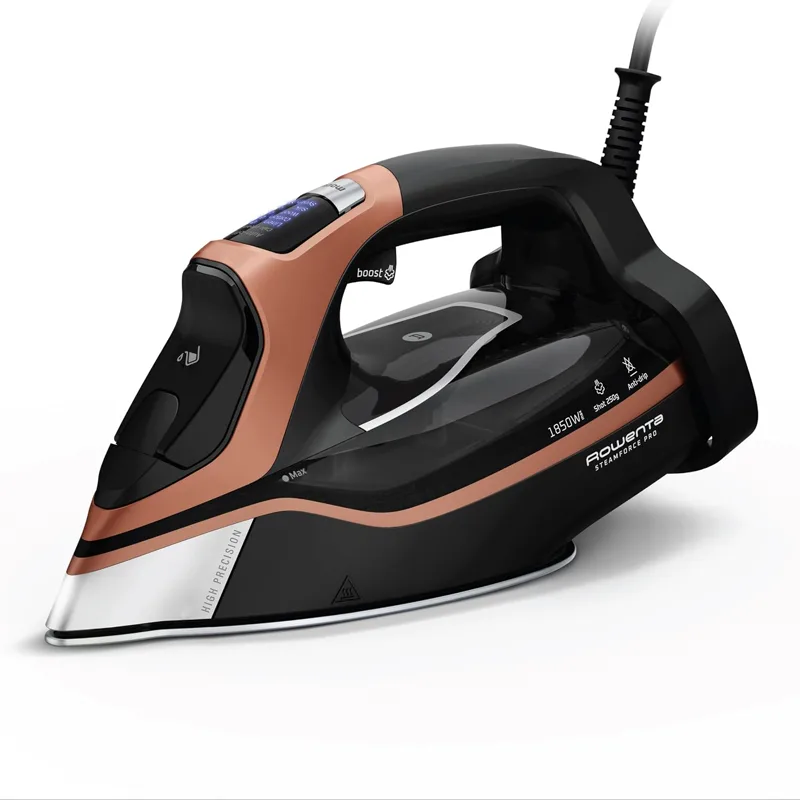
An iron does two jobs at once. The soleplate supplies heat and pressure, and the steam vents push moisture into the fibres so they relax under that pressure. The result is a flat, sharp surface with edges where you put them.
That pressure is the whole advantage and the whole limitation. It sets a crease in a cotton shirt and it also flattens a knit into something shapeless if you are careless. An iron rewards technique and punishes haste.
When an iron wins
Any garment that needs a line, a point, or a flat panel belongs under an iron: dress shirts, cotton trousers, handkerchiefs, table linen, and anything with a collar that has to stand up on its own.
Steam reaches shapes an iron cannot press flat
Curtains, upholstery, a blazer shoulder, a pleated skirt, a wedding dress: these are shapes that cannot lie on a board. A steamer works on them where they hang, which is the only reason some garments ever get refreshed at all.
When a steamer wins
Reach for the steamer when the garment is already hanging, when the fabric is delicate, when the embellishment is fragile, or when the alternative is a trip to the dry cleaner for something that only needs air and heat.
Creases and sharp lines are an iron’s home turf
There is no way to press a crease with vapour alone. Military trousers, a knife-edge pleat, a folded napkin: the shape comes from a hot plate and weight, held until the fabric cools.
If your week includes collared shirts, the iron is not optional. A steamer will make a shirt wearable, but the collar and the placket will still look soft next to a pressed one.
When weight matters
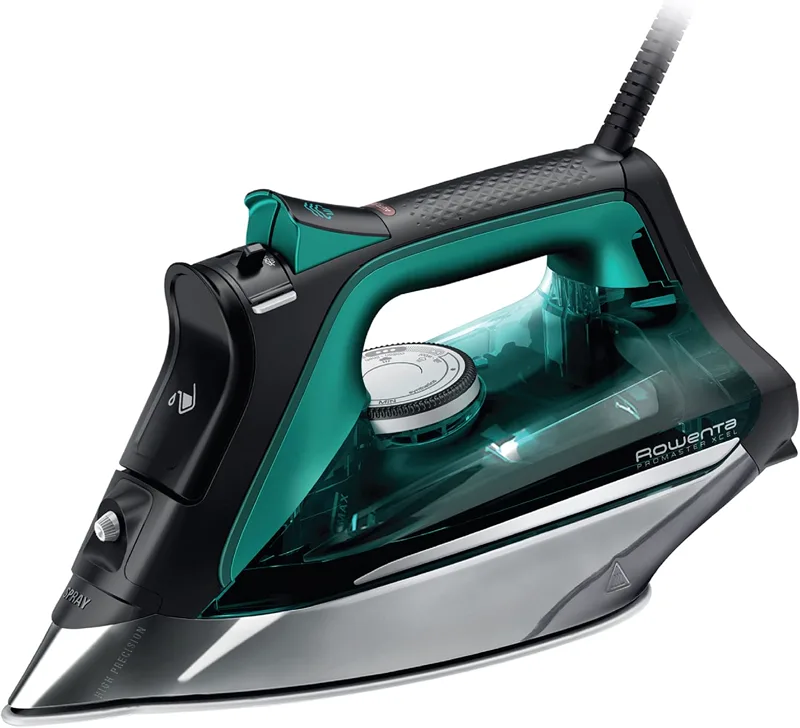
A heavier iron does the pressing with less effort from your wrist, which is why a firm plate earns its keep on linen and heavy cotton. The trade is fatigue: an arm that presses tablecloths for an hour feels every extra ounce.
Tank size decides how many garments you finish per fill
A full-size standing steamer carries enough water for a long session, which is why it makes sense for a household that refreshes several garments at once. A handheld model runs dry sooner and needs a refill in the middle of a stack.
For an iron, the tank works differently: you fill it, you iron a few pieces, you empty it. Leaving water in an iron between sessions is how mineral scale starts, so a smaller tank is not always the penalty it looks like.
Heat-up time changes when you actually use the tool
The tool that heats in under a minute gets used on the way out of the door. The one that needs several minutes of warm-up gets used on Sunday, if at all. This is the single most underrated difference between the two categories.
A steamer is usually the faster of the two to ready, because there is no board to set up and no cord to route around a table leg. An iron asks for a dedicated surface before it asks for anything else.
Fabric content is the first filter, not the price tag
Read the care label before you read a product page. Wool, silk, viscose, and anything with a metallic thread behave differently under steam and under a hot soleplate, and the label is the only honest guide you have.
When the label is missing, test an inside seam. A patch of fabric the size of a coin, steamed or pressed for a few seconds, tells you more than any description on a box. How a garment gets dried matters just as much as how it gets pressed, which is why the vented tumble dryer guide is worth reading alongside this one.
Storage space is part of the purchase
A standing steamer is a piece of furniture. It has a pole, a base, and a hose, and it needs a corner where it can stand between sessions. An iron folds onto a shelf, but it drags a board along with it unless you press on a bed or a counter.
Measure the spot before you buy either. A tool that has to be carried up a flight of stairs to be used will be used twice a year.
Delicates and embellishment punish a hot soleplate
Beading, sequins, embroidery, and heat-transfer prints all fail in the same way: they catch on the plate, melt, or leave a shine that never comes out. Steam from a distance is the safe option for all three.
If most of your wardrobe is embellished, the steamer is not a luxury. It is the only tool in the category that can touch those garments at all.
Hard water wears both tools out faster
Mineral deposits are the quiet killer of every steam appliance. An iron clogs its vents, a steamer clogs its head, and both start spitting chalk onto dark fabric.
Distilled water costs little and doubles the working life of either tool. If your tap water leaves a ring in a glass, do not put it in a steam appliance.
Small apartments push the decision toward a steamer
In a studio or a small one-bedroom, floor space is the scarcest thing in the house. A steamer stands in a corner; an ironing board lives behind a door and falls on you once a month.
The trade is real, though: a steamer-only household will never own a pressed dress shirt. If that matters, a compact board that folds into a closet is the compromise.
A daily cotton-shirt household still needs an iron
Some routines are simply iron routines. Five cotton shirts a week, a uniform, a restaurant apron: the crease is part of the job, and no amount of hanging steam replaces it. If you are still working out how those shirts get washed, our front-load vs top-load washer comparison covers the other half of the same routine.
In that household the steamer is the maintenance tool, not the primary one. It refreshes a jacket, opens up a curtain, and handles the delicates the iron cannot touch.
How the three picks compare side by side
The table below compares the tools on the things that change daily use. On a phone you can swipe the table sideways to see every column.
| Aspect | SALAV Full-Size Steamer | Rowenta Steam Force Pro | Rowenta Pro Master |
|---|---|---|---|
| Format | Standing steamer on a pole | Steam iron with a preset screen | Heavyweight steam iron |
| Action on fabric | Hanging vapour, no pressure | Heat and pressure with steam | Heat and pressure, more mass |
| Best garment | Knits, dresses, curtains, blazers | Shirts, chinos, everyday cotton | Heavy cotton, linen, table linen |
| Crease control | None, it relaxes instead | Pointed tip, deliberate lines | Wide plate, firm lines |
| Setup time | Hang and go | Needs a board and a socket | Needs a board and a socket |
| Storage | Stands in a corner | Shelf, with a board alongside | Shelf, with a board alongside |
| Water care | Large tank, drain after use | Small tank, empty each time | Small tank, empty each time |
| Main trade-off | No creases, needs floor space | Slower to set up | Heaviest in the hand |
This is a comparison of how each tool behaves on a garment, not a ranking of one product over another. Photo: Amazon product listings.
What to check before you buy either
Four checks catch most of the mistakes buyers make in this aisle:
- Read three care labels from your own wardrobe. If two of them say no iron, buy the steamer.
- Decide where the board would live. If the answer is nowhere, the iron will stay in its box.
- Think about the water in your kitchen. Hard water argues for distilled water and for a tool you can descale.
- Count the shirts. More than three a week is an iron household, whatever the rest of the wardrobe looks like.
None of these appear in the marketing copy, and all of them decide whether the tool is still in use a year later.
The short answer, if you want to stop reading here
Buy the standing steamer if your wardrobe is knitwear, dresses, and dry-clean fabrics, or if floor space is short and the board would never come out. Buy the steam iron if collars and creases are part of your week. If you wear both, buy the iron first: it is the tool that cannot be improvised.
Neither tool replaces a professional clean for a suit that has genuinely given up, and neither fixes a fabric that has already worn thin. Pick the one that matches the clothes you actually wear.