Car care · Handheld vacuums
A car is the one floor in your life that never gets vacuumed, because the household vacuum cannot reach the seat rails and the gas station one eats quarters. A small cordless hand vacuum is the fix, provided it reaches the footwell and holds a charge long enough to finish the job.
This guide covers three cordless handheld vacuums that are sold for car interiors, at three different points on the price and size ladder. It walks through reach, runtime, tools, filtration, weight, and emptying, then narrows the choice to a sedan that gets vacuumed monthly, a family car with crumbs in every seam, and a car owner who wants one tool for the vents as well as the carpets.
Nothing here is a test result. These are buying notes built from how each vacuum is built, what comes in the box, and the jobs a car interior actually asks for.
Quick answer
- Best for a car that sees kids, pets, and road salt: the Dyson Car+Boat, because the wide head and the long runtime cover a whole cabin in one charge.
- Best for a quick weekly tidy: the Shark WANDVAC Luxe, because it lives on a dock by the door and weighs almost nothing in the hand.
- Best for vents, seams, and detail work: the HOTO BlowVac, because it blows dust out of places a nozzle cannot reach and then vacuums it up.
- Best for a first car vacuum: whichever of the three fits the socket and the storage spot you actually have.
A car vacuum is judged by reach before suction
Under a seat there is a gap the width of a finger and a carpet that has collected a year of grit. The vacuum that wins is the one whose nozzle arrives there without lifting the seat or unbolting anything.
That is why the shape of the tools matters more than the number on the box. A long crevice tool, a soft brush, and a flexible extension do more for a car interior than any increase in airflow.
Battery runtime decides how much cabin you finish
A car takes longer to vacuum than a hallway, because every surface is interrupted by rails, pedals, and consoles. A vacuum that quits halfway through the back seat turns a ten-minute job into a two-day one.
Two numbers matter: how long the battery lasts in normal mode, and how long it takes to charge again. A model that runs long but charges overnight is a different tool from one that runs short and refills in an hour.
Crevice tools do the work under the seats
The standard kit for a car should cover four jobs. Anything missing from this list is a gap you will notice the first time you clean a footwell:
- A long, thin crevice tool for the seat rails and the console gap.
- A soft brush head for upholstery and for the dashboard vents.
- A wide nozzle for floor mats and cargo areas.
- An extension or flexible hose so the body of the vacuum can stay outside the car.
Filtration keeps fine dust out of the cabin air
A car interior is full of fine dust: road grit, dried mud, pet dander, and the crumbs that turned into powder under the seat. A vacuum with a washable filter and a sealed bin keeps that dust in the bin instead of blowing it back across the dashboard.
Look for a filter you can rinse, and expect to rinse it. A clogged filter is the most common reason a small vacuum starts to feel weak.
Weight decides whether the vacuum lives in the car
The best car vacuum is the one that is already in the car when you notice the mess. Anything much over a couple of pounds gets left in the garage, and anything that needs a cord gets used once.
Weight and runtime pull against each other. A bigger battery buys time and costs grams, so the right answer depends on whether you clean weekly or twice a season.
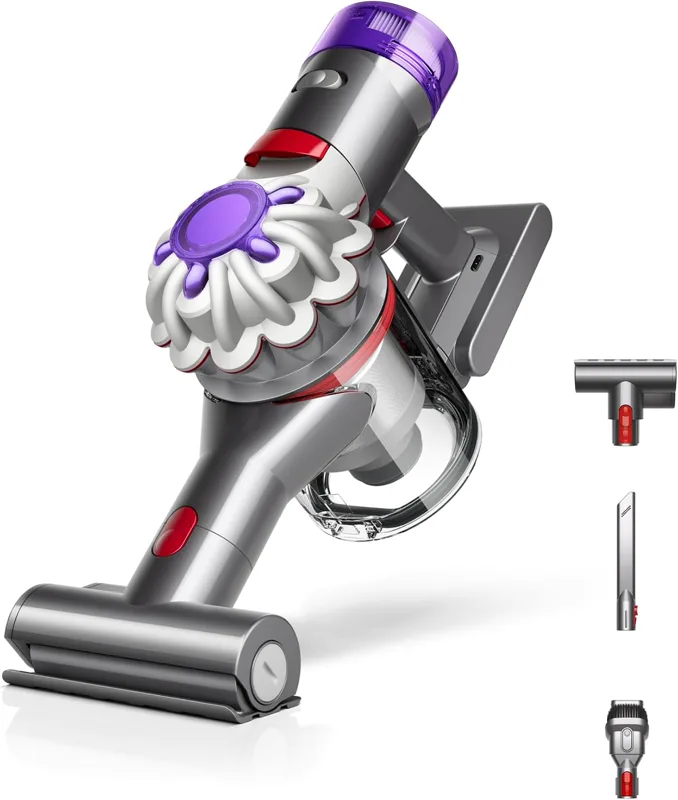
The Dyson Car+Boat is built for upholstery and hard trim
Dyson aims this model at exactly the surfaces a car is made of: fabric seats, carpet mats, rubber trim, and the hard plastic of the console. The kit includes a wide motorised head for upholstery and a combination tool for the rest.
It is the largest and most expensive of the three, and it behaves like a small stick vacuum that happens to fit in a door pocket. If your car is the family vehicle with three rows and a dog, that extra body is what makes the job finishable.
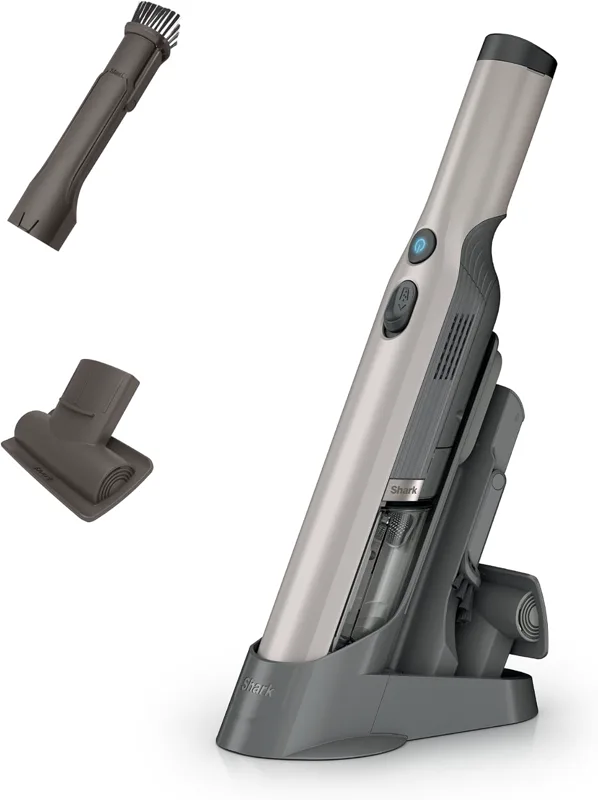
The Shark WANDVAC Luxe trades bin size for a dock
Shark’s WANDVAC line is built around a charging dock and a body you can hold like a large torch. The bin is small, the tool set is compact, and the whole thing is designed to sit by the door and come out for two minutes at a time.
For a driver who wipes down the car weekly, the small bin is not a problem: you empty it after each session and it never fills. For a spring cleaning of a neglected minivan, you will empty it several times.
When a dock makes sense
A dock only helps if it is mounted where you park. If the charger lives in a drawer, the vacuum will live in the drawer with it.
The HOTO BlowVac covers vents and tight seams
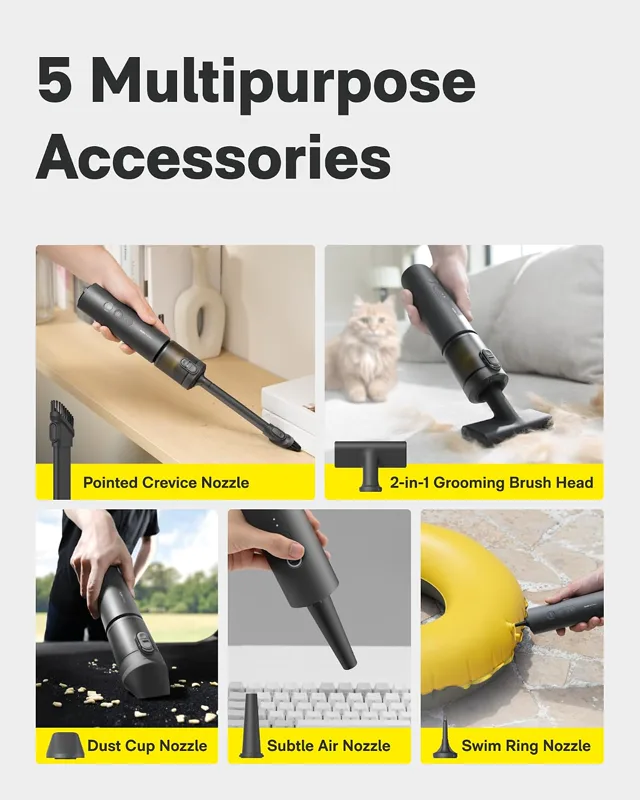
The BlowVac is a different idea: a handheld vacuum paired with a concentrated air blower. The blower lifts dust out of vent slats, seat tracks, and the seams around the gear lever, and the vacuum collects what it loosens.
That combination suits a car with a lot of hard plastic and narrow gaps, which is most modern interiors. It is the least conventional of the three, and the one that solves the problem a nozzle alone cannot.
When a combo tool makes sense
If your cleaning routine already includes a can of compressed air for the keyboard or the camera, this replaces both tools with one rechargeable unit.
How the three picks compare side by side
The table below compares the three on the things that change daily use. On a phone you can swipe the table sideways to see every column.
| Aspect | Dyson Car+Boat | Shark WANDVAC Luxe | HOTO BlowVac |
|---|---|---|---|
| Format | Larger handheld with a wide head | Light handheld on a dock | Handheld vacuum plus air blower |
| Best surface | Upholstery, mats, cargo area | Crumbs, sand, quick touch-ups | Vents, seams, console gaps |
| Reach | Long tools for footwells | Short nozzle, close work | Blower reaches where nozzles cannot |
| Bin size | Room for a whole cabin | Small, emptied often | Small, with a separate dust path |
| Weight in hand | Heaviest of the three | Lightest of the three | Middle |
| Charging | Wall charger | Dock by the door | USB charging |
| Storage | Needs a shelf or a crate | Lives on its dock | Fits a glovebox or a door pocket |
| Main trade-off | Costs the most | Small bin, shorter sessions | Niche tools, less raw capacity |
This is a comparison of how each vacuum behaves in a car, not a ranking of one product over another. Photo: Amazon product listings.
Emptying a small bin is a weekly habit
Every handheld in this class holds less than a household vacuum, and every one of them loses suction when the bin fills. Emptying it after each session takes thirty seconds and keeps the filter alive.
Wash the filter when the airflow drops, and let it dry completely before it goes back in. A damp filter smells like a wet dog by the next morning.
Pet hair needs a rubberized or powered tool
Pet hair weaves into carpet fibres and laughs at a plain nozzle. A rubberized brush strip or a small motorised head pulls it loose; a crevice tool just pushes it deeper.
If a dog rides in the back seat, spend the money on the model whose kit includes that tool, or plan to buy it separately. It is the single accessory that changes the result. For the same problem on household carpet, our roundup of cordless stick vacuums for pet hair covers the bigger machines.
What you give up under $150
Below that line you get a lighter body, a smaller bin, and a shorter runtime. For a weekly tidy of a sedan, that is enough. For a full interior after a winter of road salt, it is three sessions instead of one.
The other thing you give up is tool variety. Cheaper kits ship with a crevice tool and a brush and nothing else, and the accessories are often proprietary.
What the extra money buys above $200
Above that line the differences are capacity, filtration, and the quality of the powered tools. The body gets bigger, the bin holds more, and the head is designed to agitate fabric rather than skim it.
What it does not buy is convenience. A big vacuum that stays in the garage gets used less than a small one that lives in the car.
Match the vacuum to how dirty your car actually gets
Three routines cover most drivers. Pick the one that sounds like your week, and the model choice follows:
- Weekly tidy, one passenger, no pets: a light handheld with a dock covers it, and the small bin never fills.
- Family car, crumbs and sand, occasional muddy boots: a larger handheld with a wide head and a long crevice tool.
- Detail-minded owner with vents and tight seams: a combo blower and vacuum, plus a soft brush for the dashboard.
What to buy first
If this is your first car vacuum, buy the one that fits where you will store it. Everything else is a detail compared with whether the tool is within arm’s reach when the mess happens.
The short answer, if you want to stop reading here
For a family car that needs a real clean, take the Dyson Car+Boat. For a weekly two-minute tidy, take the Shark WANDVAC Luxe and mount the dock. For vents and seams, add the HOTO BlowVac, which does the one job the other two cannot.
None of them replaces a deep clean with a full-size vacuum once a season. They replace the gas station machine, the quarters, and the ten minutes you spend waiting for it.