Home kitchen · Stand mixers
Two mixer architectures, two very different sets of daily trade-offs, and one measurement that usually settles the argument.
Stand mixers look like a single category from a distance. Up close they split into two architectures: a head that tips back on a hinge, and a head that stays fixed while the bowl rides up and down on a lever. That one mechanical choice shapes almost everything about how the machine feels in daily use.
The difference is not about quality. Both designs cream butter, whip cream, and knead dough, and both have loyal owners. What changes is loading, clearance, batch size, and how much wobble you feel when the dough turns stiff. This guide compares the two on the things that decide whether the mixer earns a permanent place on the counter.
Quick answer
- Choose a tilt-head if you bake in everyday amounts and want the bowl in and out in seconds.
- Choose a bowl-lift if stiff bread dough is a weekly habit rather than a holiday project.
- Measure the gap under your upper cabinets before anything else.
- Shop by the batches you actually make, not by the badge on the head.
The head design decides how you load and scrape the bowl
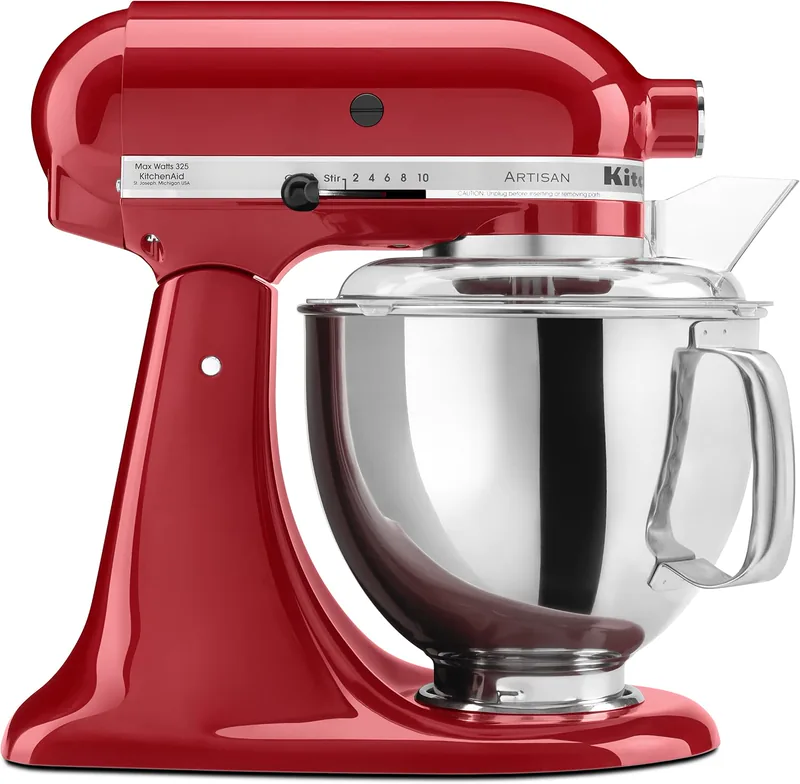
On a tilt-head mixer, the upper arm unlocks and swings back, exposing the bowl from above. Ingredients drop in through a wide opening, the sides scrape clean with a spatula, and the head lowers again with one hand.
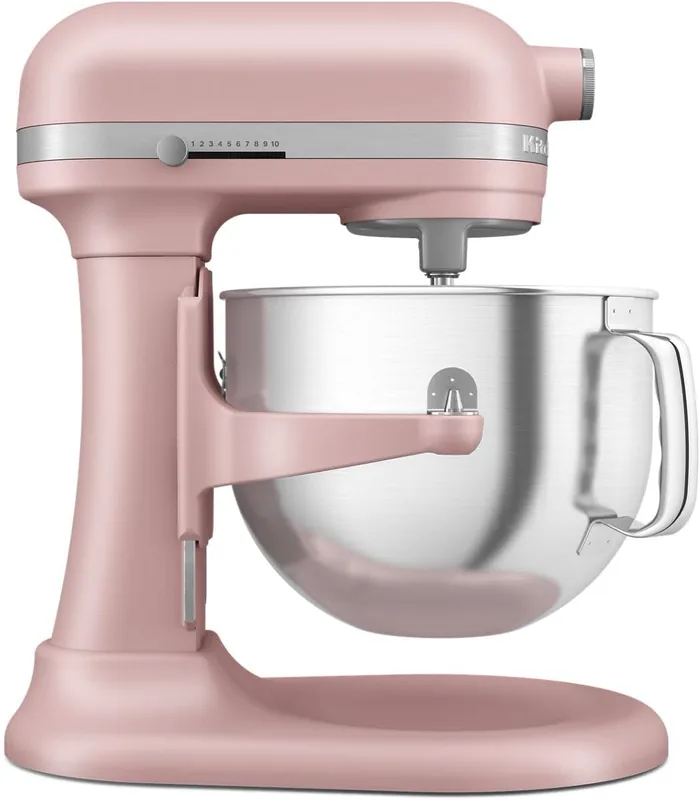
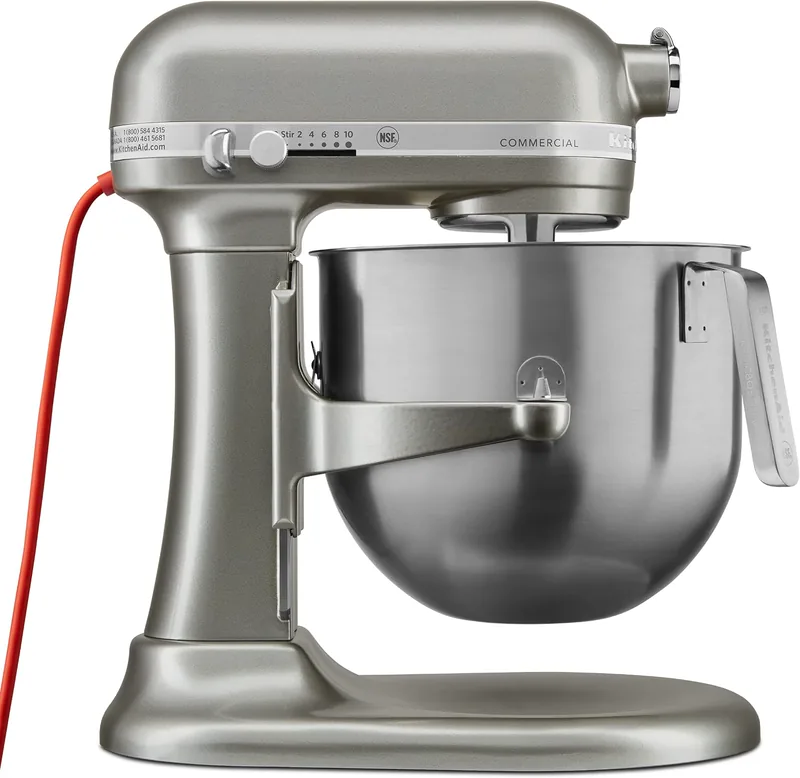
A bowl-lift works the other way around. The head is fixed to the pedestal and the bowl sits in a cradle that turns up toward the beater. Loading happens through the front of the bowl, and scraping takes a little more care because the beater stays parked over the middle of it.
- Tilt-head: the bowl stays on the base and the head moves.
- Bowl-lift: the head stays fixed and the bowl moves.
- Both mix the same way; the difference is the choreography.
Tilt-head mixers trade capacity for everyday convenience
The tilt-head family is built around quick tasks. Cookies, frosting, mashed potatoes, a single cake, a bowl of whipped cream: the head comes up, the bowl goes in, and cleanup is a rinse and a wipe.
That convenience has a ceiling. The hinge and the arm that carries the motor limit how much resistance the machine wants to meet. Push a stiff dough too far and the whole head starts to work against its own lock, which is the moment owners learn to keep batches modest.
How tilt-head clearance works under a cabinet
A tilt-head needs vertical room. The head swings up and back, so the mixer wants open air above it rather than a shelf. Tucked under a low upper cabinet, the head meets the door before it reaches its stop, and the bowl cannot be lifted out cleanly.
That is usually the point where owners start pulling the machine forward, which is also how mixers end up living permanently on the worktop instead of in a cupboard.
Bowl-lift mixers put stability first when dough gets stiff
Bowl-lift machines are taller and heavier, with a frame that holds the head still while the bowl is cranked upward. The lever is not decoration. It locks the bowl into a cradle that resists the twisting force of a hook working through dense dough.
The trade is ergonomics. You lift the bowl into place, turn a lever, and later lift a full bowl out again. With a heavy dough inside that is a real weight in your hands, and the rim sits higher than on a tilt-head, so the lift is longer as well as heavier.
Bowl size and head style usually move together
Most tilt-head models cluster around the middle of the capacity range, where a household batch of cookies or a two-layer cake fits comfortably. Bowl-lift models tend to appear at the larger end, where a double batch of bread or a holiday project makes sense.
That pattern is a design consequence more than a rule. A large bowl on a hinged head becomes awkward to lift and harder to clear, so manufacturers let capacity grow with the fixed-head format. Shoppers who want a big bowl are usually steered toward a bowl-lift frame for exactly that reason.
Motor placement changes how each machine handles heavy dough
Both types use a planetary action, with the beater travelling around the bowl while spinning on its own axis. What differs is how the frame absorbs the reaction. A fixed head braces the housing against the pedestal, while a hinged head sends part of that force into the hinge and the arm.
In practice a tilt-head feels lively with light mixtures and starts to sound laboured with a stiff one. A bowl-lift feels slower and more planted, and it keeps the same rhythm as the dough tightens.
What bowl-lift actually changes for bread
For bread, the useful difference is not a number on a label. It is that a fixed head keeps the hook at a steady depth while the dough climbs it, so the machine needs fewer stops and less pushing down.
Attachment access is wider on tilt-head models
The front hub that drives attachments is easier to reach when the head tips back, because the whole front of the machine lifts away from the bowl. Fitting a grinder or a pasta roller takes a moment and does not require emptying the bowl first.
Bowl-lift models share the same hub, but the bowl and its cradle sit closer to it. Swapping an attachment with a full bowl in place is fiddlier, and many owners simply clear the bowl before fitting anything bulky.
- Tilt-head: attachments go on with the head raised and the bowl still in place.
- Bowl-lift: plan on clearing the bowl before fitting bulky attachments.
- Either way the hub is standard, so the accessory range is shared.
Counter clearance matters more than the spec sheet suggests
Buying guides list capacity and speeds. The measurement that actually decides whether a mixer is pleasant to use is the gap between the counter and the underside of the cabinets, plus how far back the machine can sit without fouling a door.
A tilt-head needs room to swing. A bowl-lift needs room to lift a bowl straight up and then clear the rim when the lever releases. Both are easy to check with a tape measure before ordering and almost impossible to fix afterwards without changing cabinets.
Kneading bread is where the two designs diverge most
Yeast dough is the stress test. It starts slack, tightens as gluten develops, and pulls back against the hook in a way batter never does. A machine that feels solid with cake batter can start to walk across the counter once a stiff dough forms.
Bowl-lift mixers are built for that moment, with a cradle that holds the bowl down and a frame that does not flex. Tilt-head mixers can knead bread and many do it well, but the owner learns to stop earlier, scrape more often, and keep batches smaller. Our guide to choosing between a stand mixer and a food processor covers the other half of that counter-space decision.
Small batches favor the lighter machine
A single cake, a pint of cream, a small batch of rolls: these are the jobs where a tilt-head is simply easier. The head lifts out of the way, the bowl is light enough to hold with one hand, and the whole machine moves easily.
A bowl-lift can do the same work, but the extra frame and the lever add steps that feel unnecessary when the bowl is nearly empty. Owners who mostly bake small quantities tend to leave the big machine in the cupboard and reach for a hand mixer instead.
Weight and footprint decide whether the mixer lives on the counter
A stand mixer is heavy enough that most people stop moving it after the first week. That makes the footprint a permanent decision: the machine either earns a patch of counter or it lives in a cupboard and gets used less than its owner intended.
Tilt-head models are lighter and slide back against the wall more easily. Bowl-lift models take more depth and usually need to sit further forward, which matters on a narrow worktop where the sink and the kettle already compete for space.
Cleaning and flour drift differ in small, daily ways
Flour escapes. It puffs out of the bowl when the beater starts, settles on the hinge, and collects in the groove where the head meets the base. A tilt-head has more of those joints exposed, because the hinge sits right at the front of the machine.
A bowl-lift hides less of its mechanism but keeps the head fixed, so there is no hinge gap to clear. The trade is the bowl cradle, which collects crumbs and needs a brush rather than a wipe. Either way, a pastry brush kept nearby saves more time than any cleaning spray.
When a second bowl is worth it
If you bake in rounds, an extra bowl turns a two-hour project into a one-hour one, because the mixer never has to be washed between stages. It is the single accessory that changes workflow more than any beater, hook, or splash guard.
Price bands overlap, so shop by the job rather than the class
The old assumption that a bowl-lift always costs more no longer holds. Mid-range tilt-head models with a large bowl can sit close to entry bowl-lift prices, and premium tilt-heads with an upgraded motor can pass them outright.
That means head style is not a reliable proxy for quality. Two machines at the same price can differ mainly in bowl size, gearing, and how much of the frame is metal rather than plastic.
- Compare bowl size before brand.
- Check whether the head or the bowl does the moving.
- Ignore wattage claims unless the gearing and frame match them.
How the two designs compare side by side
The table below is about behaviour, not about a winner. Swipe sideways on a phone to see every column, and read each row as a description of how the design handles the same task.
| Aspect | Tilt-head | Bowl-lift |
|---|---|---|
| Loading the bowl | Head tips back, open top | Bowl lifts into a cradle |
| Cabinet clearance | Needs room to swing up | Needs room to lift the bowl |
| Stiff dough | Slows down, wants smaller batches | Holds steady through the knead |
| Batch size | Built for everyday amounts | Built around larger batches |
| Attachments | Fitted with the head raised | Fitted with the bowl clear |
| Weight | Lighter and easier to move | Heavier and stays put |
| Cleaning | Hinge and head joints collect flour | Cradle collects crumbs |
| Best fit | Cakes, cookies, frosting | Bread, big batches, weekly dough |
A practical way to choose without overthinking it
Start with the heaviest thing you make in a normal month. If that is a cake or a tray of cookies, a tilt-head will feel easier every single time. If it is a double batch of bread dough, the fixed head and cradle will earn their space quickly.
Then check the counter. Measure the gap to the cabinet, decide whether the machine will live out or go away, and pick the frame that survives that reality. More kitchen buying guides sit in our Kitchen & Cooking section if you want to compare the rest of the counter.
- Write down your three most common mixing jobs.
- Measure cabinet clearance and counter depth.
- Choose the head style that makes those three jobs easy.