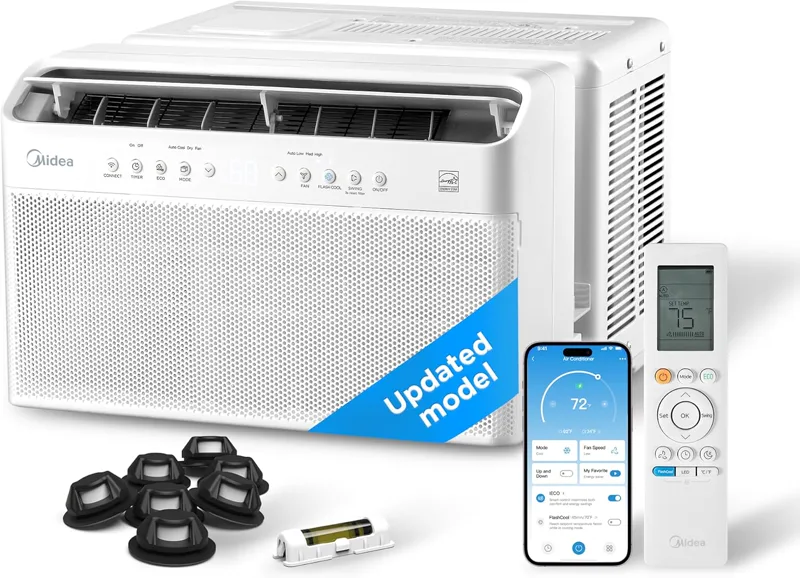
Home comfort · Moisture control
One machine pulls water out of the air, the other pulls heat out of a room — and only one of them fixes a clammy basement.
A damp room has two problems that feel like one. The air is humid, and the air is often warm. Because both sensations arrive together, it is easy to assume a single appliance handles both, which is why so many basements end up with an air conditioner that runs all evening and still smells musty in the morning.
The two machines are built for different jobs. A dehumidifier is a moisture tool; an air conditioner is a heat tool that happens to wring some water out along the way. Understanding where that overlap ends is the difference between a dry, comfortable room and a cold, clammy one.
Quick answer
- Pick a dehumidifier when the room is humid but not too warm, especially below grade.
- Pick an air conditioner when heat is the main complaint and cooling will run consistently.
- Treat cooling-based drying as a side effect, not a moisture plan.
- Use both when a basement is damp in spring and hot in July.
Moisture and heat are two separate problems
Humidity is water suspended in air. Heat is energy in the same air. A machine can address either one without touching the other, and most do exactly that. The confusion comes from the fact that both problems are solved by moving air across a cold coil.
When air passes over a cold surface, water condenses out and the air cools. Every air conditioner does this incidentally. A dehumidifier does it deliberately, then reheats the air so the room does not get cold in the process.
- A dehumidifier targets water and leaves temperature roughly alone.
- An air conditioner targets temperature and sheds water as a byproduct.
- Neither replaces ventilation or repairs a leaking wall.
A dehumidifier removes water without chilling the room
A refrigerant dehumidifier pulls air across a cold evaporator coil, collects the condensate, and passes the air back over a warm coil before returning it to the room. The net effect is drier air at close to the original temperature, which is exactly what a cool basement needs.
Because the machine is not trying to cool the space, it can run for hours at a steady rate. That continuous duty is what actually lowers humidity in a large, below-grade room, where moisture seeps in slowly and constantly.
What pints per day actually measures
The pint rating on the box describes how much water a unit can remove under specific test conditions, not how much it will remove in your room. Cooler air and lower humidity both reduce real-world output, so a basement in spring rarely sees the rated figure.
An air conditioner removes water only while it cools
An air conditioner dehumidifies as a side effect of cooling. Once the thermostat is satisfied, the compressor stops, and so does the water removal. In a cool basement the thermostat may be satisfied almost immediately, leaving the room as damp as it started.
That is why an oversized window unit can feel like it is working while the room stays sticky. It chills the air quickly, shuts down, and never runs long enough to pull meaningful moisture out of the space.
Basements expose the limit of cooling-based drying
Below grade, the ground keeps the space cool no matter what the weather does upstairs. Humidity climbs, temperature does not, and an air conditioner has little reason to run. The result is the classic damp basement that never feels cold enough to justify cooling and never feels dry.
A dehumidifier does not care that the room is already cool. It keeps pulling water whenever humidity crosses the set point, which is the behavior a basement actually needs through spring and early summer.
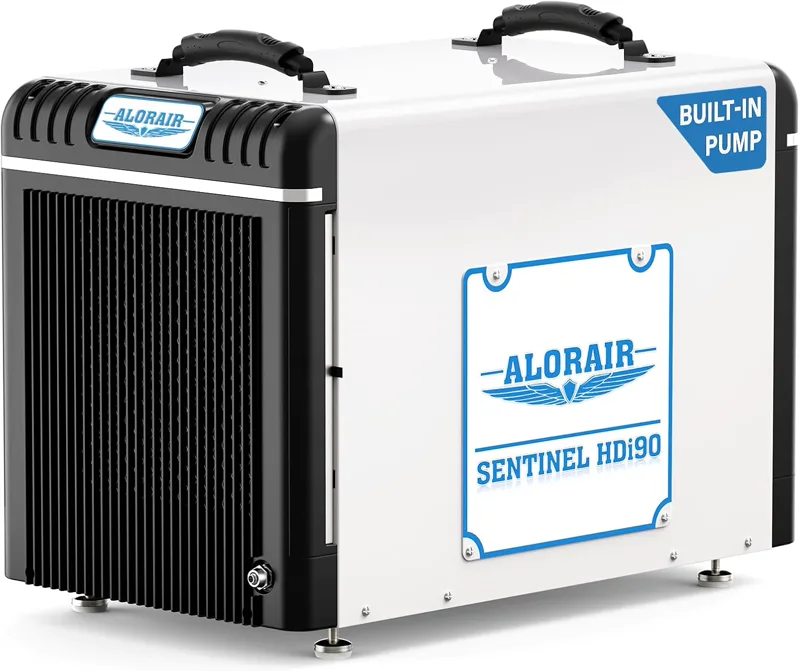
Portable dehumidifiers fit finished rooms, not sealed crawl spaces
A wheeled unit with a tank is the right tool for a finished basement, a laundry room, or a bedroom that smells close. It is easy to move, easy to empty, and easy to switch off when the season changes.
It is the wrong tool for a crawl space. Small access hatches, low clearances, and the need for unattended drainage all push that job toward a different class of machine, one designed to be installed rather than wheeled around.
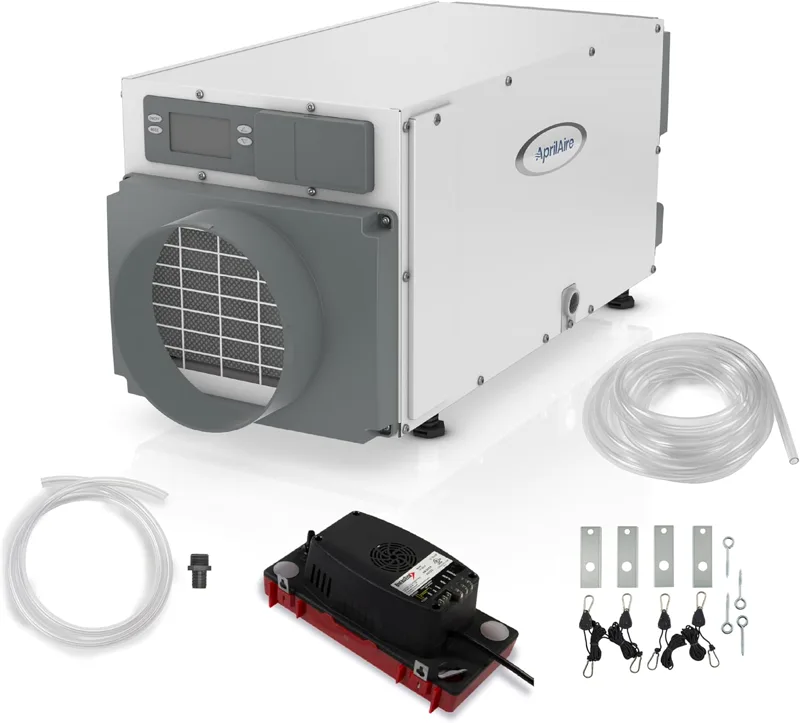
Whole-space dehumidifiers are built for continuous drainage
Crawl space and whole-basement units are larger, heavier, and plumbed for a drain line or a condensate pump. They run at lower temperatures, tolerate dirtier air, and are meant to be set and forgotten for months at a time.
The trade-off is installation. These units need power, a drainage path, and often a ducted return. In exchange they hold a large space at a stable humidity level without anyone remembering to empty a bucket.
Window and portable air conditioners earn their place in summer humidity
None of this makes an air conditioner useless for moisture. In a hot, sticky bedroom in July, cooling and drying happen together for hours at a time, and the room feels dramatically better. The unit is doing its job because the job is heat removal.
The key is duty cycle. An air conditioner only dries while it is actively cooling, so sizing it for the room rather than for the biggest number on the shelf keeps it running long enough to matter.
The comparison below is about behavior in a real room rather than a shopping ranking. On a phone, swipe the table sideways to read every column.
| Aspect | Dehumidifier | Air conditioner |
|---|---|---|
| Main job | Removes water | Removes heat |
| Temperature effect | Close to neutral | Cools the room |
| Runs when cool | Yes, by design | Rarely, thermostat stops it |
| Moisture while idle | Continues at set point | Stops with the compressor |
| Best space | Basement, crawl space, laundry | Bedroom, living room, office |
| Drainage | Tank, hose, or pump | Drip tray or hose |
| Season | Spring through fall | Summer heat |
| Noise | Steady fan and compressor hum | Cycles up and down |
Running costs follow the job, not the sticker on the box
A dehumidifier in a damp basement may run many hours a day through the wet months. An air conditioner runs hard in the heat of summer and sits idle the rest of the year. Comparing the two by wattage alone misses how differently they are used.
Think in terms of the job each machine is asked to do. If the goal is a dry basement, the dehumidifier is the machine that will be running, and its consumption is the real cost of solving the problem.
Sizing starts with the space, not the pint number
Manufacturers publish square-footage ranges, but the more useful starting point is the condition of the space. A sealed, dry basement and a damp crawl space with exposed soil can be the same size and need very different capacity.
Err toward a unit that can hold the set point without running flat out, and plan for drainage before you plan for capacity. A machine that shuts off because the tank is full is not drying anything.
Why a cold room slows moisture removal
Refrigerant dehumidifiers lose efficiency as air gets colder, because the coil has less heat to work with and frost forms more readily. Units rated for cool spaces include defrost cycles for exactly this reason, and they are worth the extra cost below grade.
Noise and placement decide where each unit can live
A compressor-driven dehumidifier produces a steady hum that most people stop noticing after a few days in a basement but would find intrusive in a bedroom. Placing it near a drain and away from the room above solves both the noise and the drainage question at once.
Window air conditioners put the noisy half of the machine outside the glass, which is why they feel quieter in the room than a portable floor unit. Portable cooling units exhaust through a window hose and give back some of that advantage, but they trade it for floor space.
Think about where each machine will sit before you buy it. A unit that has to be moved to be used will be used less, and an appliance that stays put in the right room keeps working without anyone remembering it exists.
Drainage decides whether a unit can run unattended
The tank is the part of a portable dehumidifier that quietly ends its usefulness. In a genuinely wet space it fills quickly, and every stop is time the room spends climbing back toward its old humidity level.
A gravity hose to a floor drain solves the problem in many basements. Where gravity will not cooperate, a built-in pump lifts condensate up and out, which is the difference between a set-and-forget install and a daily chore.
- Check for a hose port before buying a portable unit.
- Confirm the drain path runs downhill, or choose a pump model.
- Keep the filter clean so airflow does not fall off over a season.
Air sealing and ventilation change the answer again
No appliance fixes a wall that leaks or a dryer venting into the room. Sealing the obvious gaps, venting appliances outdoors, and keeping gutters clear reduces the moisture load that any machine has to handle.
Ventilation helps in some rooms and hurts in others. Opening windows on a humid day makes a basement wetter, while a bath fan running during showers removes moisture at the source. Matching the strategy to the weather matters more than running equipment harder.
A two-unit setup is often the honest recommendation
Many homes need both machines, just not at the same time of year. A dehumidifier holds the basement through spring and early summer, and an air conditioner takes over the living space when heat arrives. Neither is redundant when each has a clear season.
If you are also weighing air quality equipment, our guide to air purifiers versus dehumidifiers in a bedroom covers where those two overlap, and the rest of our home improvement guides cover the installation side of basement work.
When to call a technician instead of buying a unit
If humidity stays high after a properly sized dehumidifier has run for a week, the likely cause is water entry, not capacity. Standing water, efflorescence, or a musty smell that returns quickly point to a drainage or waterproofing problem that no appliance will solve.
Match the machine to the season and the room
Choose a dehumidifier when the complaint is dampness in a space that is not hot. Choose an air conditioner when the complaint is heat and the room will be occupied during the hottest hours. Recognize that the second machine dries air only as a byproduct of cooling.
Then plan for drainage, sizing, and the honest possibility that the answer is two machines with different seasons. That approach costs less over time than replacing an undersized unit that never quite kept up.