Home cleaning · Floor care
One cleans while you are out. The other cleans what you point it at, properly. Households usually need to know which of those two problems they actually have.
Robot vacuums and cordless stick vacuums are sold as rivals, but they solve different halves of the same job. A robot keeps a floor from accumulating, running unattended on a schedule. A stick removes what has already accumulated, in one deliberate pass, including the places a robot cannot reach. Buying one and expecting the other’s job is the most common way people end up disappointed with both.
What follows is a behaviour comparison, not a brand ranking. It covers what each machine actually picks up, how the floors in a typical home split the decision, and what maintenance and battery life really cost over a couple of years. The three picks at the end were each checked as live US listings, deliverable to a New York ZIP code, with a working add-to-cart button at the time of writing.
The short answer
- Mostly hard floors, no pets, busy schedule: a robot vacuum is the better first purchase.
- Wall-to-wall carpet, pets, stairs, or a car to clean: a cordless stick does more per dollar.
- Both become useful only after you clear the floor. A robot on a cluttered floor cleans the edges of the clutter.
- If you can only buy one and your home is mixed, buy the stick first and add the robot later.
What a robot actually removes
A robot vacuum is a low, wide machine with a spinning brush and enough airflow to lift surface debris. Its strength is frequency. Running every day on hard floor removes dust, crumbs, and hair before they are visible, and the floor never reaches the state where you decide it needs vacuuming. That is a different product benefit from deep cleaning, and it is the one people underestimate before they buy and rely on afterwards.
Its weak points are predictable. It cannot climb stairs, it cannot clean a couch or a car, it struggles with a deep pile carpet compared with a mains-powered upright, and its bin is small by design. Navigation quality decides almost everything else: a machine that maps in rows and avoids cables covers a room in one pass, while a machine that bounces randomly covers it in three, and drains its battery doing so.
What a stick does that a robot cannot
A cordless stick vacuum is a tool you aim. That sounds trivial and it is the whole point. Stairs, sofa cushions, the car footwell, the top of a skirting board, the corner behind a door, the pile of cereal under a chair: all of it is reachable in seconds, with the suction concentrated where you are looking. A robot cleans the floor plane. A stick cleans the room.
Sticks also handle carpet better, simply because the brushroll is pressed into the pile and the airflow has nowhere to escape. That is why a mid-priced stick usually out-cleans a mid-priced robot on a rug, even when the robot’s specification sheet quotes a larger suction number.
The cost is your time and your shoulder. A stick cleans only when someone holds it, and a full-house pass on a large floor is a twenty-minute job with a machine that weighs several pounds in the hand. Most people do it less often than they intended.
The floor-type question decides most of it
Hard flooring tilts the decision toward a robot. Tile, laminate, and sealed wood are the surfaces a robot covers efficiently, and a robot that mops adds a second daily pass that no one has to perform. On a single-level home with mostly hard floor, a robot running daily keeps the floor cleaner than a stick used weekly, which is the honest comparison: frequency beats power when the floor never gets truly dirty.
Carpet tilts it toward a stick. Deep pile needs the brushroll pressed down and the airflow concentrated, and a robot’s light chassis cannot deliver that. If most of the home is carpet, the first purchase should be a stick, and a robot becomes a supplement for the hard-floor rooms rather than the main machine.
Mixed homes — bedrooms carpeted, living areas hard — get the most from the sequence rather than the choice: a stick for the carpeted rooms and the stairs, a robot for the daily pass downstairs.
Runtime, batteries, and the two-year reality
Published runtime figures are always measured in the lowest power mode. A stick quoted at fifty minutes typically delivers thirteen minutes in turbo, and turbo is the mode you use on carpet. That gap is not deception so much as physics: suction costs watts, and the battery is a fixed size. Plan on the turbo number, not the headline one, and the machine will meet expectations.
Batteries are consumables, and this is where the two product types diverge most in ownership cost. A stick with a removable battery can be revived for the price of a cell pack; a stick with a sealed battery is a disposable appliance once the runtime halves. A robot’s battery is usually replaceable but the procedure varies from a five-minute swap to a partial teardown, so check before buying rather than after the second year.
Pet hair changes the math
Hair wraps around brushrolls, and a wrapped brushroll loses suction quietly. The feature that matters for pet households is not raw power but a brushroll designed to resist wrapping, and a tool that gets hair out of upholstery and car seats. That is a stick job, not a robot job, because the hair is on the couch, the stairs, and the passenger seat.
A robot still earns its place in a pet household — daily hair removal from the floor keeps the tumbleweeds from forming — but the machine that solves the actual pet problem is the one with the handheld mode and the motorised pet tool.
Docks, storage, and where the thing lives
A robot needs a home: a charging dock on the wall with clearance in front, and ideally a power outlet that is not behind the sofa. Self-emptying docks remove the daily bin chore but add a footprint the size of a small wastebasket, plus bags or a washable bin to maintain. If the only free wall space is in a hallway with a door swing, measure before you buy.
A stick needs a wall mount or a cupboard corner, and self-standing designs are worth a premium in small flats because they can be parked mid-job without propping them against furniture. Both machines take up space; the question is whether the space is one you actually have.
Maintenance nobody budgets for
Filters are the recurring cost in both categories. Sticks and robots both use washable or replaceable filters, and a clogged filter is the most common cause of a machine that suddenly seems weak. Emptying bins, cutting hair off brushrolls, and clearing the robot’s wheels of long hair are the chores that decide whether the appliance is still in use at month eighteen.
Robots also need their sensors wiped and their brushes cleared of hair and fibre, and they need the floor cleared of charging cables, socks, and pet toys, or navigation accuracy drops. A robot-friendly home is a tidy home; that is a real cost and it belongs in the decision.
Three machines, three households
These picks are examples rather than a ranking, chosen to show three price points and three different jobs. Each was checked as a live listing with delivery to a New York ZIP code and a working add-to-cart button at the time of writing.
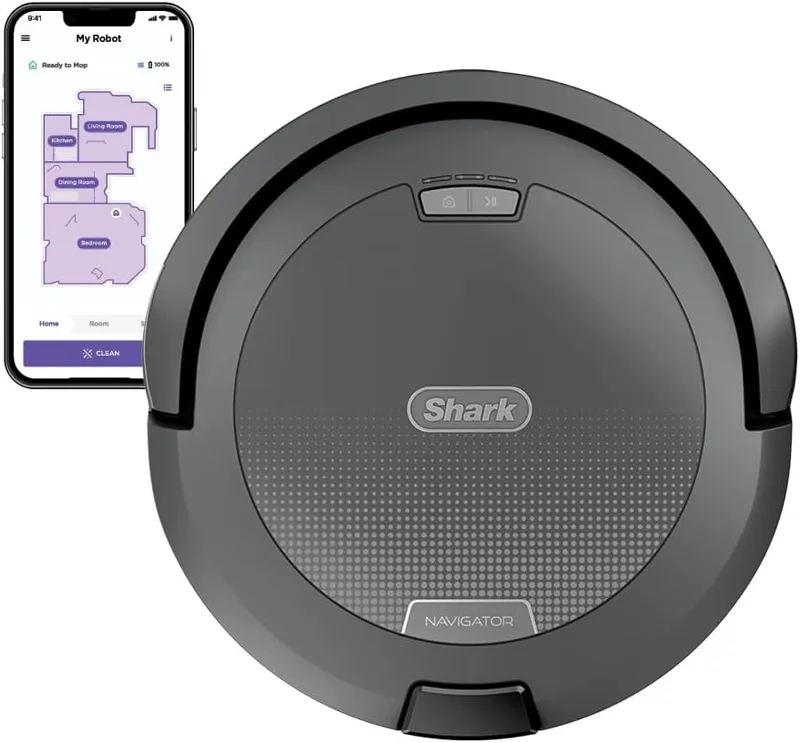
- Daily hard-floor pass, about $199: the Shark Navigator RV2110 uses spot LiDAR navigation to clean in rows, detects and avoids objects in its path, and has a self-cleaning brushroll that resists hair wrap. It recharges and resumes where it stopped, which is the feature that makes a one-bedroom flat workable on one charge.
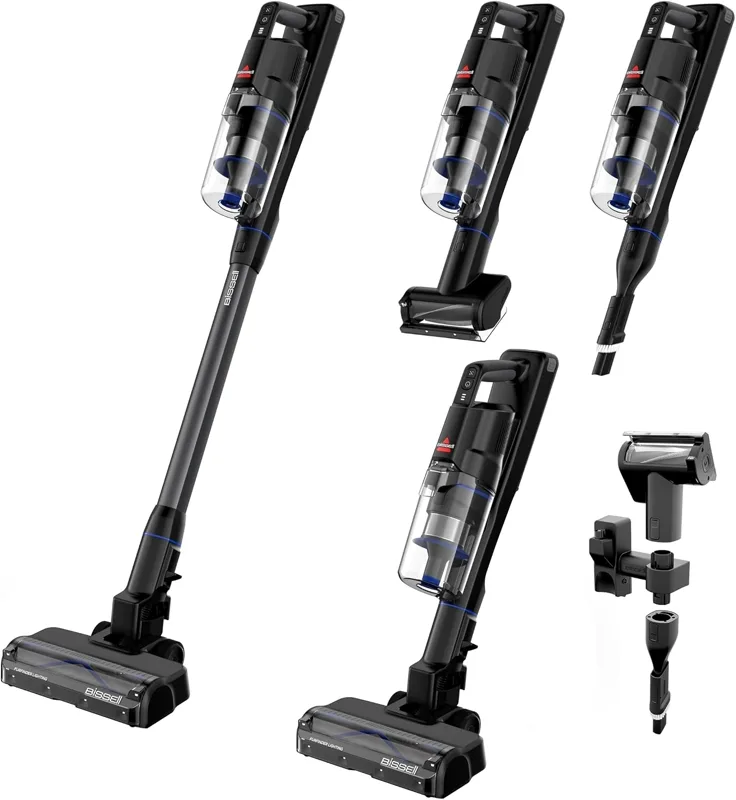
- The stick for carpet, stairs and pets, about $229: the Bissell PowerClean FurGuard 4039 runs a 280-watt motor with a HEPA-sealed allergen system, fifty minutes on low or thirteen in turbo, converts to a handheld with a motorised pet tool, and stands on its own. The removable battery is the detail that decides its second life.
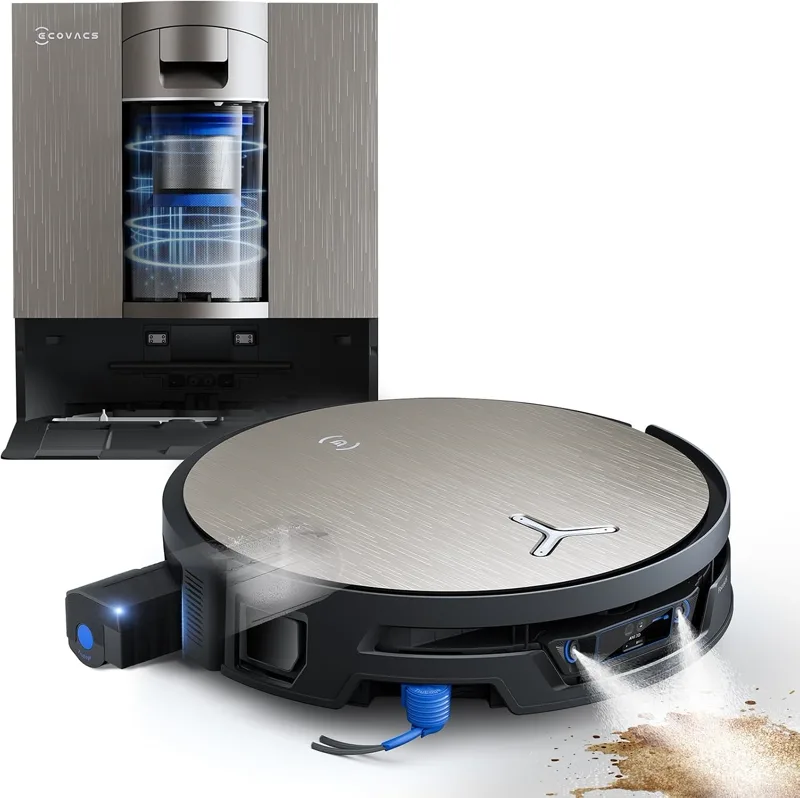
- Hands-off premium, about $1,100: the ECOVACS DEEBOT X12S pairs robot vacuuming with a self-washing roller mop and a self-emptying dock. It is a machine for someone who has already decided the floor should be maintained without them and wants mopping included in that.
Two limits worth knowing before you buy
The first is thresholds. A robot that cannot climb a half-inch lip will spend its run in one room, and a robot that cannot cross a deep rug fringe will treat the fringe as a wall. Walk the route it would take and look for lips, cables, and tassels before you assume it will reach the far end of the flat.
The second is capacity. A stick bin of half a litre fills quickly in a home with pets, and a robot bin fills in a single room when the floor has not been cleaned in a week. Small bins are not a fault, but they set the rhythm: you will be emptying the machine more often than the specification suggests.
A decision rule that holds up
Count the rooms with carpet, then count the rooms with hard floor. If carpet wins, buy the stick. If hard floor wins and nobody in the house has long hair or a shedding pet, buy the robot. If both are close, buy the stick now — it is the machine that can clean everything at least once — and add a mid-priced robot later for the daily pass downstairs.
- Mostly hard floor, single level, no pets: robot first.
- Mostly carpet, or stairs, or pets: stick first.
- Mixed home, one purchase only: stick, then robot.
- Wants mopping without effort: robot with a washing dock, and accept the price.
For carpet-specific model detail, the earlier cordless vacuum guide goes deeper on suction and brushroll types, and the home and tools archive collects the rest of the appliance comparisons.
The table below compares the two machine types on the points that decide the purchase. Swipe sideways on a phone to see the full row.
| Aspect | Robot vacuum | Cordless stick vacuum |
|---|---|---|
| Who does the work | The machine, on a schedule | You, deliberately |
| Hard floor | Strong, repeatable | Strong but manual |
| Carpet | Surface cleaning | Deep cleaning |
| Stairs and upholstery | No | Yes, with handheld mode |
| Pet hair | Floor only | Floor, couch, car |
| Runtime | Recharge and resume | Twenty to fifty minutes by mode |
| Storage | Dock with clearance | Wall mount or cupboard |
| Main consumable | Filter, brushes, bags | Filter, battery |
| Typical US price | Roughly $150 to $1,500 | Roughly $150 to $600 |
One expectation worth setting before you spend: neither machine removes the need to move things off the floor. A robot will clean around a pair of shoes for its entire service life, and a stick reaches only what you point it at. The appliance that gets used is the one that fits the way the room is already kept.