Workshop tools · Sawing
One saw cuts straight lines and joinery all day. The other cuts curves, resaws thick stock and reaches jobs no other machine in the shop can.
Sooner or later every small shop reaches the same fork: buy a table saw or buy a band saw. Both are stationary, both cut wood, and both get called the heart of a workshop, which makes the decision harder than it needs to be.
They are not really competitors. A table saw is a precision straight-line machine built around a flat table and a fence. A band saw is a thin-blade machine built around a throat and two wheels, which is exactly why it can cut a curve, resaw a board, or slice a shape you could never hold safely on a table.
The short answer
- If your projects are cabinets, shelving, boxes and frames, a table saw earns its space first.
- If you cut curves, shape parts by eye and resaw thick stock into thin boards, a band saw unlocks the work.
- In a one-machine shop a band saw is the more forgiving choice, while a table saw is the faster and more accurate one for square, repeatable cuts.
- Whichever you buy first, extraction, outfeed support and a better blade will change the experience more than the next machine will.
The two saws side by side
They both spin a blade through wood, and that is where the similarity ends. On a narrow screen, swipe the table sideways for the second column.
| Aspect | Table saw | Band saw |
|---|---|---|
| Built for | Straight rips and repeatable crosscuts | Curves, resawing and thick stock |
| Reference surface | Flat table and a fence | Throat depth and the upper blade guide |
| Blade | Rigid circular blade | Thin continuous loop |
| Kerf | Wider, more waste | Narrow, less waste |
| What it cannot do | Cut tight internal curves | Rip long sheet goods cleanly |
| Setup that matters | Fence alignment and blade height | Blade tension and guide position |
| Floor space | Moderate, needs outfeed room | Tall but a small footprint |
| Usual mistake | Chasing capacity before a good blade | Expecting straight edges without a fence |
What each saw actually does to a board
A table saw holds the workpiece flat on a table and pushes the blade up through it. The fence or the miter gauge sets the path, so the cut is only as accurate as the fence and the operator are. Repeatability is its strength: set the fence and every board comes out the same width.
A band saw pulls a narrow loop of blade down through a small table. Because the blade is thin and flexible, it can turn a corner, which is what makes curves and circles possible. The trade is that the blade can drift, so straight cuts need a fence and a well set up guide.
Where a table saw earns its place
The table saw is the machine that makes lumber dimensional. It rips boards to width, crosscuts parts to length against a stop, and cuts the joinery that holds a carcass together. It is the fastest route from a pile of boards to a set of matching parts.
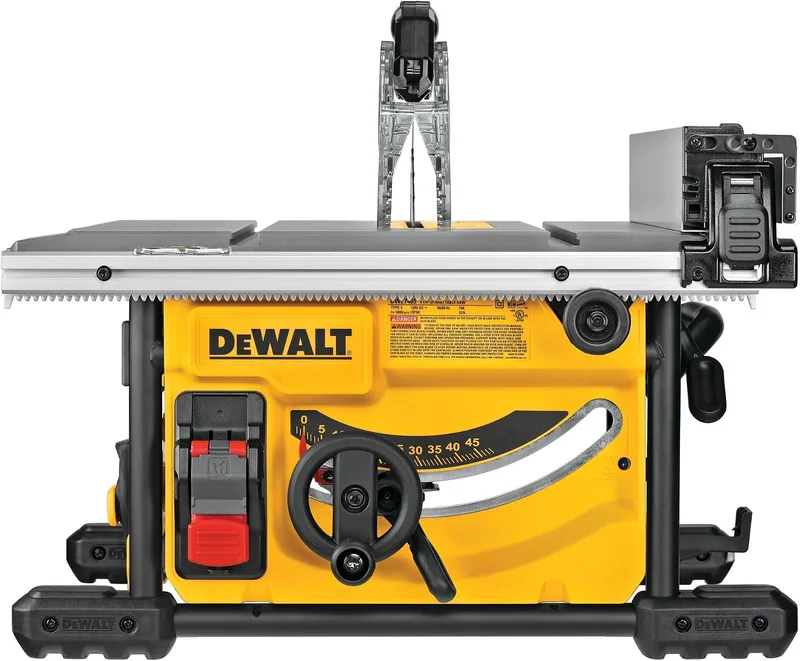
For anyone building cabinets, shelving or furniture with square parts, that repeatability is the whole point. If you are still choosing between classes of machine, it is worth reading a table saw buying guide before you commit, because compact and full-size saws solve different problems.
See the table saw buying guide for beginners
Where a band saw earns its place
A band saw does the jobs that have no other home. It cuts curves in solid stock, shapes parts from a template, slices a thick board into two thin ones, and cuts tenons, blanks and odd shapes that would be unsafe on a table.
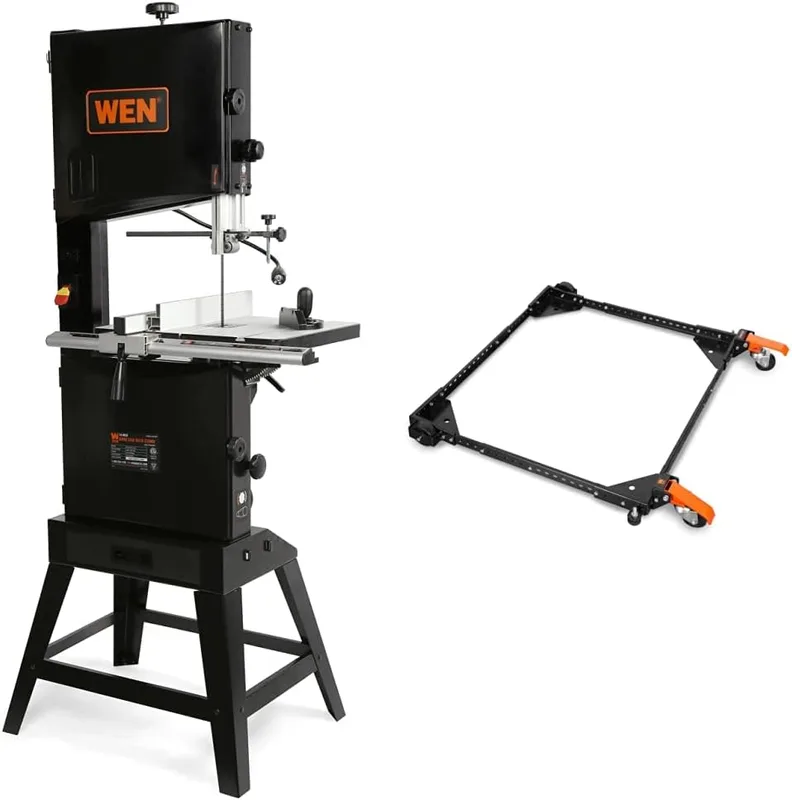
It also cuts thick material with a composure no other saw matches. A resaw cut that would stall a table saw with a short blade takes a patient pass on a band saw, and the kerf is narrow enough that the shavings barely register.
Ripping, crosscutting and the curve question
The question to ask yourself is not which saw is better, but how often you need a straight line and how often you need a shape. A table saw produces straight edges quickly and accurately. A band saw produces shapes, and it can produce straight edges too, just more slowly and only with the right fence and blade.
Most people overestimate how much straight-line cutting they do in a year and underestimate how many curved or fitted parts they will make. Both numbers decide which machine earns the floor space first.
Capacity, throat depth and the space you actually have
Capacity means different things on the two machines, and shopping by a single number is the fastest way to buy the wrong one.
Throat depth and resaw height
On a band saw the throat sets how far from the blade you can swing a part, and the resaw height sets how tall a board can stand under the guides. Those two numbers decide whether you can resaw, and they have nothing to do with the size of the table.
Blade length and the cost of switching
Band saw blades are consumables and they come in lengths matched to the machine, which limits your choice and adds a small running cost. Table saw blades are more standardised, so you can move one blade between machines and buy replacements anywhere.
Blades: the cheapest upgrade and the fastest frustration
In both cases the blade that ships with the machine is a starting point, not a finished decision. A better blade improves cut quality more than a bigger motor does, and it costs a fraction of the price of an upgrade.
- Ripping on a table saw wants a blade with fewer, larger teeth and a deep gullet to clear chips.
- Crosscutting and joinery want more teeth and a finer finish, which is why most shops keep two blades and swap them.
- Resawing on a band saw wants a wide blade with a low tooth count; curve cutting wants a narrow one, so the blade is a choice you make per job.
Safety is a different conversation for each saw
A table saw demands respect because the blade is exposed, the work is fed by hand, and kickback happens fast. Push blocks, a riving knife and a blade guard are not optional extras, and neither is thinking about where your hands are before the cut starts.
A band saw is gentler in the common cases, because the blade travels downward and the work sits on a table, but the trade is different: a blade that breaks is a real event, and pushing material sideways can strip teeth or pull the work. The two machines ask you to be careful about different things.
Dust collection decides how pleasant the shop is
A table saw throws dust upward and toward the operator, and a band saw sends it below the table. Either machine turns a small shop into a dusty one within a day, and extraction is what decides whether you enjoy using it.
A shop vac can keep up at the cut on both machines, while a dedicated extractor handles the finer dust and the longer runs. If you are still working out which one to buy, the comparison of dust extractors and shop vacs for sanding is the right place to start.
Read the dust extractor vs shop vac comparison
Resawing, veneer and the jobs only a band saw takes
Resawing is the one capability nothing else in a small shop covers. Taking a thick board and turning it into two thin ones means you can book-match a pair, cut your own veneer, or turn one expensive board into two matched panels.
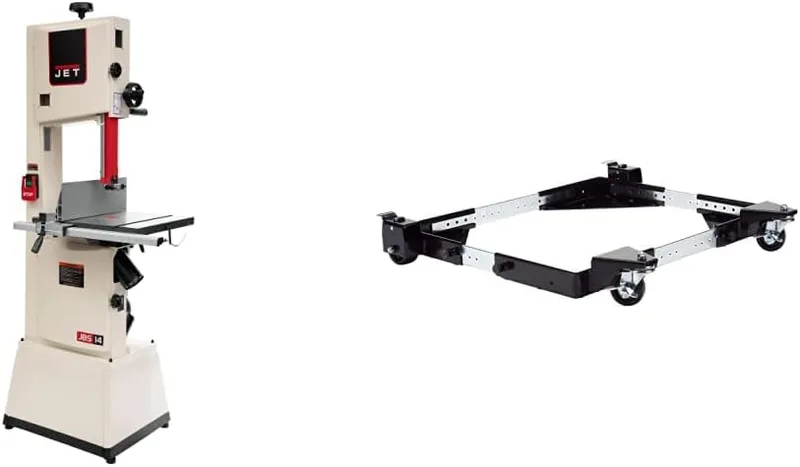
Resawing is also where the machine class matters most, because the height under the guides decides what you can do. If resawing is the reason you are buying a band saw, compare a benchtop machine against a 14 inch model before you decide.
Benchtop or 14 inch band saw for resawing?
Sheet goods, joinery and the jobs only a table saw takes
Breaking down sheet goods, cutting tenons and shoulders, and ripping a stack of boards to the same width are table saw jobs. Doing them on a band saw is possible, but it is slower and it needs a fence, a wide blade and a steady hand.
Sheet goods without a panel saw
A full sheet is awkward on any small machine, which is why the usual answer is a track saw or a circular saw with a straightedge for the first breakdown, then the table saw for the accurate second cuts. Knowing that split saves you from buying a table saw bigger than your shop can hold.
Which one comes first in a small shop
If you build square things out of flat boards, buy the table saw first. It cuts more of the work you will actually do, and the parts it makes are the ones that hold a project together.
If you cut shapes, work with thick or irregular stock, or want one machine that can do a little of everything, buy the band saw first. It will not rip a sheet of plywood, but it will cut almost anything else, and it is the easier machine to learn on.
Bottom line
A table saw and a band saw are complementary, not redundant, and the order you buy them in decides which jobs wait. Decide from the parts you make most often, not from the specification you find most impressive.
For a wider view of how the machines around a bench divide the work, keep an eye on the workshop tool guides on the site.