Workshop tools · Milling lumber
One machine flattens a face and squares an edge. The other brings every board to an even thickness. Most small shops only need one of them to start.
Rough lumber never arrives ready to use. It is cupped across the width, twisted along the length, and sawn a little thicker than the part you are making actually needs. Two machines deal with that condition, and in most small shops they are bought a year or two apart rather than together.
The reason the choice feels confusing is that a planer and a jointer look alike, sound alike, and are described with the same words: flat, square, true. They remove material in different places and they fix different defects. Buying the wrong one first does not ruin a shop. It just leaves the most common job undone.
The short answer
- If you buy lumber that is already flat and simply needs an even thickness, a planer earns its space first.
- If you work with rough, salvaged or air-dried boards, you need one flat face and one square edge before anything else, and that is a jointer job.
- Most small shops start with a planer and add a jointer when they notice their stock is no longer arriving flat.
- Both machines are only as useful as the dust extraction and outfeed support standing behind them.
The two machines side by side
They share a cutterhead style and a feed direction, and almost nothing else. On a narrow screen, swipe the table sideways for the second column.
| Aspect | Planer | Jointer |
|---|---|---|
| What it fixes | Uneven thickness | Cupped or twisted faces and edges |
| Reference surface | None needed, it copies what you feed it | The tables the board rides on |
| Board path | Under the cutterhead | Over the cutterhead |
| Typical form | Benchtop up to floor standing | Short-bed benchtop up to long-bed floor model |
| What it cannot do | Flatten a cupped board | Bring a board to an even thickness |
| Wear parts | Knives or indexed inserts | Knives or inserts, plus table alignment |
| Floor space | Moderate | Long beds take real room |
| Usual mistake | Expecting flatness from a thicknesser | Buying a short bed and fighting long boards |
What each machine actually does to a board
A planer, often called a thicknesser, holds the cutterhead still and moves the table up and down. You set a depth of cut, feed the board through, and the machine shaves the top face down to the thickness you asked for. It copies the face resting on the bed, so a cupped board comes out thinner but still cupped.
A jointer has an infeed table, a cutterhead and a slightly lower outfeed table. You flatten a face by pressing the board down as it passes over the head, then square an edge by running that flat face against a fence. The tables are the reference surface, which is why bed length matters more than motor size.
Where a planer earns its place
The planer is the machine that makes parts interchangeable. Cabinet sides, drawer boxes, face frames and tabletops all depend on boards that end up the same thickness, and a planer is the ordinary way to guarantee it. It also handles a job that surprises new owners: taking a thin cleanup pass off a board that is already flat.
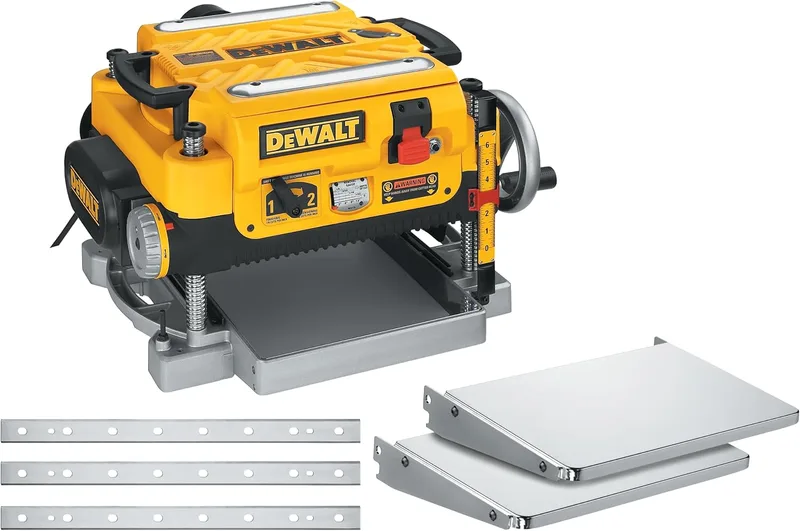
That is why a planer is frequently the first stationary machine a small shop buys. It turns the pile of boards you own into a set of boards you can actually assemble, and it does so without demanding a long bed or a lot of floor space.
Where a jointer earns its place
A jointer answers a different question: is this board flat, and is this edge square to that face? If your stock arrives twisted or cupped, no amount of planing will fix it, because the planer has no way of knowing which face is the true one.
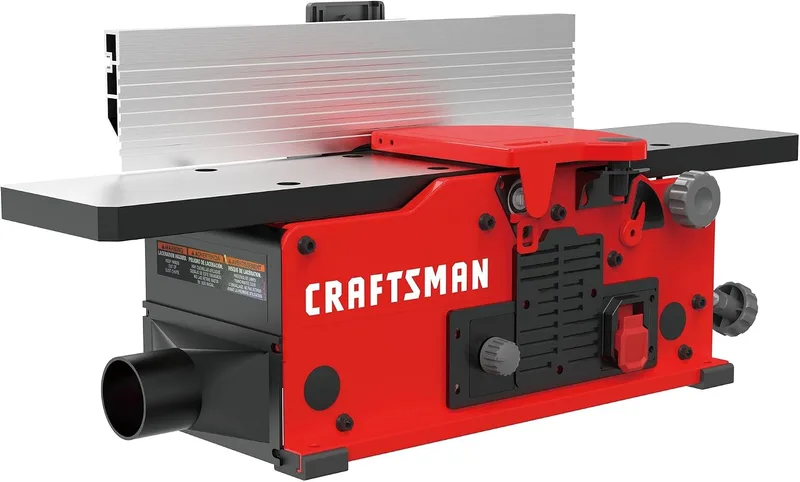
The jointer creates the reference. Once one face is flat and one edge is square to it, the planer can copy that flatness into a consistent thickness, and the table saw can rip against a trustworthy edge. Without that first step, every later cut inherits the warp.
The milling sequence is the whole argument
The order of operations is the reason both machines exist. Flatten a face on the jointer, square an edge on the jointer, then bring the board to thickness on the planer and rip it to final width. Skipping the first two steps means the planer is copying a face that was never flat.
Seen that way, the jointer is not an accessory to the planer. It is the machine that makes the planer useful on rough stock. The sequence is short, but every step depends on the one before it.
Flat faces and square edges are not the same job
New buyers often assume a jointer produces flat boards and a planer produces smooth ones. In practice the jointer flattens a face and squares an edge, and the planer makes two faces parallel. Neither one sands your project, and neither replaces a properly supported outfeed table.
This matters when you shop. A long bed helps you flatten long boards, while a wide planer lets you thickness wide ones. The two capacities are separate, and a shop usually notices the limit on the jointer first.
Capacity: width, thickness and how long a board you can handle
The numbers that matter on either machine are about the wood you feed it, not the badge on the motor. Read them as limits on projects rather than as points of pride.
Width per pass
A machine can only flatten or thickness what fits between its guides. Narrow machines push you into ripping boards before you flatten them, which is awkward on figured stock and wasteful on expensive timber. Buy the width your normal projects actually use.
Thickness range and short stock
Planers have a minimum and a maximum thickness. Very short or very thin parts can be awkward to feed safely, which is why shops keep a sled or a carrier board around. If you build small parts, this limit shows up sooner than you expect.
Knives and cutterheads: the running cost nobody budgets for
The cutterhead decides how pleasant the machine is to own. Straight knives are simple and cheap to sharpen or replace. Indexed inserts cost more up front and let you rotate a dull edge in a minute instead of setting blades with a jig.
- Straight knives: lowest purchase price, quietest cut, slowest to reset and easy to set slightly out of line.
- Indexed inserts: higher up-front cost, fast edge changes, and a cut that stays consistent because the geometry is fixed.
- Either way, dull cutters burnish the surface instead of slicing it, so the first sign of a worn edge is usually tear-out rather than a noise.
Dust collection decides how often you use either machine
A planer makes chips and a jointer makes chips and dust. Feed either one without extraction and the shavings back up in the cut, the finish suffers and you stop using the machine because cleaning up takes longer than the work.
This is worth planning before the machine arrives. If you are still deciding how to keep a small shop clean, the comparison of dust extractors and shop vacs for sanding applies to planers and jointers just as directly.
Read the dust extractor vs shop vac comparison
Snipe, straightness and the first test board
Almost every planer leaves a slightly deeper cut at the leading and trailing end of a board until it is set up properly. Supporting the board on both sides of the cut and taking light passes reduces it. A jointer has its own version of the problem: the first few inches of a long board can dip if you press down too early.
Both faults disappear with a scrap board and twenty minutes of patience. Run a test piece through, check it with a straightedge, adjust, and only then start on the stock you care about.
When one machine can stand in for the other
A planer cannot flatten, but it can clean up a board that is already flat, and many shops get surprisingly far with a planer, a straightedge and a sled. A jointer cannot thickness, but it can flatten one face well enough that a hand plane finishes the job.
If you are weighing the planer against a sanding machine instead, the same logic applies in a smaller way, and the question of a bench planer versus a sander is a useful double-check before you buy.
Should you use a bench planer or a sander?
Which one comes first in a small shop
For most people reading this, the answer is a planer. It is the machine that solves the problem you already have, which is boards of inconsistent thickness, and it does it in less floor space and for less money than a jointer of comparable quality.
If you buy dressed stock
If you buy lumber that has already been surfaced and squared at the yard, the jointer can wait. A planer will handle the small movement those boards pick up in the shop, and it will do it without a long bed or a bigger extraction system.
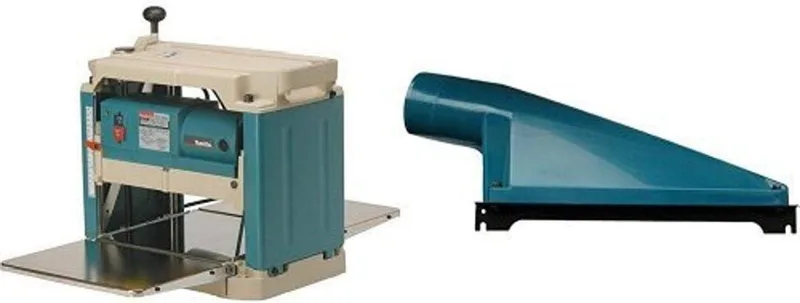
Higher-capacity planers are the natural second step. They cost more and take more room, but they hold their settings and they take heavier cuts, which matters once flat stock stops arriving from the yard.
Bottom line
Buy the planer first if your boards arrive flat and your problem is thickness. Buy the jointer first if your boards arrive rough and your problem is flatness. Either way, budget for extraction and outfeed support at the same time, because a stationary machine that cannot be used indoors is a machine that sits idle.
For more ways to set up the machines around the bench, browse the workshop tool guides on the site.