
Sanding is the one shop job where the mess you can see is the least of the problem. The fine dust that stays in the air is the part that reaches your lungs and settles on every surface in the house.
That is why the extractor-or-shop-vac question matters more than the spec sheet suggests. Both machines move air. They are built around different jobs.
The short answer
- Sand indoors, sand for long sessions, or sand finishes: a dust extractor with a fine filter and automatic filter cleaning is the safer default.
- Sand occasionally with the door open: a shop vac with a good filter and a cyclone separator is a defensible compromise.
- The connection at the tool matters as much as the machine. A loose cuff leaks dust exactly where it is most harmful.
- Buy for airflow that holds up as the bag fills, not for the suction number printed on the box.
Extractor or shop vac at a glance
The first two rows decide most buying decisions. Everything below them is convenience you will feel later. On a narrow screen, swipe the table sideways to see the second column.
| Aspect | Dust extractor | Shop vac with cyclone |
|---|---|---|
| Filtration | Fine filter built for respirable dust | Bulk filter, fine dust can pass |
| Hose and fittings | Small hose matched to tool ports | Wide hose, adapters often needed |
| Airflow as the filter loads | Auto filter cleaning holds flow | Flow drops as the filter clogs |
| Switching | Tool-triggered outlet with run-on | Usually switched by hand |
| Mobility | Wheels, low centre, swivelling inlet | Bulky, and the hose drags it around |
| Best sanding jobs | Indoor work, finishes, long sessions | Occasional work with ventilation |
| Emptying | Disposable bags, cleaner change | Canister dump releases fine dust |
| One machine or two | Dedicated to the tool | Also cleans the floor |
Why sanding dust is a different problem from sawdust
Sawdust from a table saw arrives in chips and ribbons. A sander produces a plume of particles small enough to stay airborne for hours, settle on every surface, and travel through the house on shoes and clothing.
That difference drives every practical decision: hose size, how fast the bag loads, how often the filter needs cleaning, and whether the machine can keep its airflow up as the load increases.
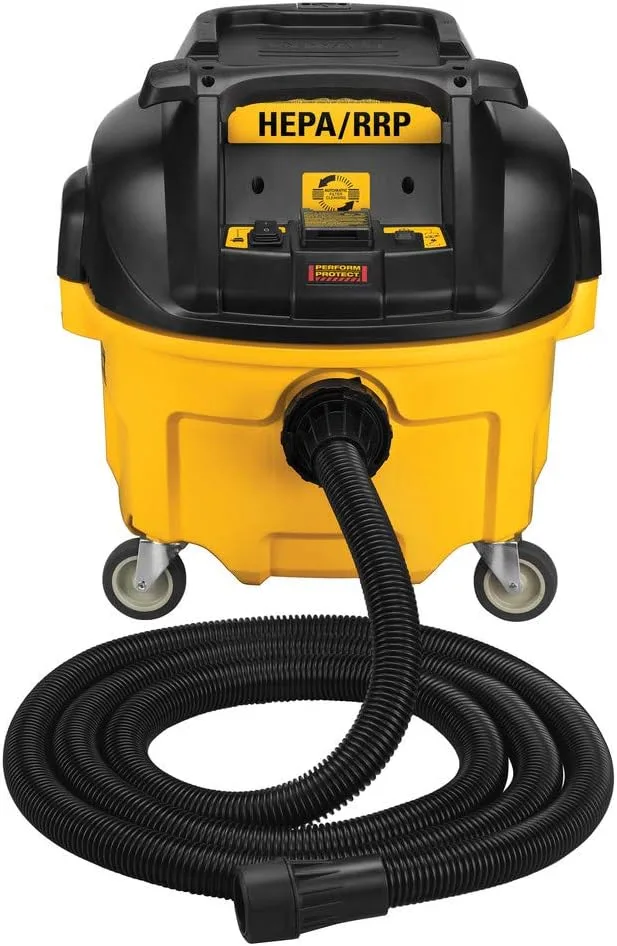
A shop vac is tuned for volume and suction at the end of a wide hose, which is what you want when you clean up debris. An extractor is tuned for a narrow hose connected to a tool, with filtration and airflow stability treated as the primary job.
Airflow, not suction, is what keeps a sander clean
Suction is easy to feel with your palm and easy to advertise. Airflow is what actually carries dust away, and airflow is what disappears first when a filter clogs or a bag fills.
A vacuum that pulls hard against your hand can still leave dust on the work surface if too little air moves through the hose. Three things matter more than the headline suction figure:
- Whether flow holds up as the filter loads, which is what automatic filter cleaning is for.
- Whether hose diameter and length match the tool. A long, narrow hose strangles airflow.
- Whether the connection is airtight. A cuff that whistles is a dust leak, not a small inefficiency.
If you are still choosing the sander itself, our guide to orbital versus belt sanders explains which machines produce which kind of dust, and that shapes how much collection capacity you need.
Filtration: the part that affects your lungs, not your floor
What a HEPA rating does and does not fix
Every vacuum captures the visible dust. The difference shows up in what comes out of the exhaust. A standard filter catches the bulk of the debris and lets the finest fraction pass, which is exactly the fraction that stays suspended longest.
A HEPA-rated filter is designed to capture that fine fraction, but only if the rest of the system is sealed. The bag, the gasket, the lid and the hose cuff all have to be airtight, or air will take the easy path around the filter.
Filter condition beats filter rating
A HEPA filter on a leaking machine is mostly decoration. And a loaded, torn or badly seated filter passes dust regardless of what the label says.
Check the gasket and the seating every time you change bags, and replace filters when airflow drops rather than waiting for a visible failure.
Bags, cyclones and the cost of emptying
Sanding fills a bag fast. A cyclone separator ahead of the vacuum catches most of the fine dust before it reaches the filter, which keeps airflow up and stretches bag life.
The trade-off is another canister to empty, another connection to seal, and a small loss of airflow through the extra path. For heavy sanding the trade is usually worth it. For occasional work, a bag in the vacuum is simpler and leaks less.
Disposable bags are cleaner to empty than a bare canister. Reusable bags are cheaper per load but release a puff of fine dust every time you open them, which is the dust you were trying to control in the first place.
Automatic filter cleaning and tool-triggered start
Two features separate extractors from shop vacs in daily use. The first is automatic filter cleaning, which pulses the filter while you work so airflow stays stable instead of decaying over a session.
The second is a tool-activated outlet: the sander’s switch turns the vacuum on and off, with a short run-on delay to clear the hose.
Neither is essential for a single afternoon of sanding. Both become close to essential once you sand regularly, because they remove the two habits that quietly ruin dust collection: forgetting the filter, and leaving the vacuum running all session because the switch is out of reach.
Hoses, cuffs and the adapter drawer
Port sizes and adapters
The most common reason a good extractor performs badly is a bad connection. Sander ports come in several sizes, and the hose that ships with the machine may not fit any of them without an adapter.
Before you buy, identify the port size on your sander and confirm the hose or adapter that fits it. If you own several sanders from different brands, plan on a small collection of stepped adapters and keep them with the hose rather than in a drawer.
A dedicated, short hose for sanding is also worth considering. Long hoses are convenient for reach and bad for airflow.
Capacity, weight and where the machine lives
Capacity versus portability
A large canister means fewer bag changes and more weight to drag around. Small extractors are easier to move between rooms and easier to store under a bench.
If your work happens in one spot, capacity wins. If you carry the vacuum to the work, weight and a stable base matter more than volume, and a machine that tips when you pull the hose becomes a safety problem, not just an annoyance.
Wheels, a low centre of gravity and an inlet that swivels all reduce the chance of dragging the machine over. On stairs, a smaller unit with a shoulder strap is often the difference between using the extractor and leaving it behind.
Noise, and why it matters more than you think
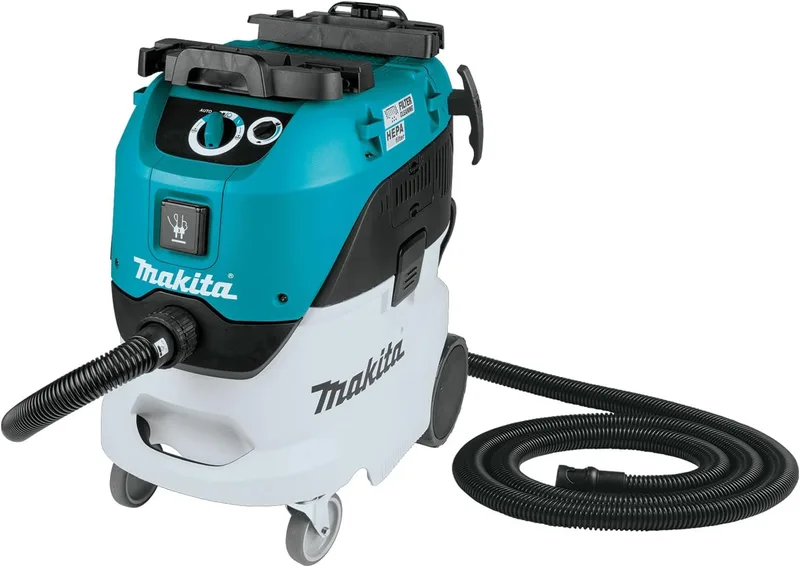
Extractors are generally quieter than shop vacs of similar airflow, but none of them are quiet. In a small shop or a spare room, the noise decides how long you are willing to keep the machine running, and that decides how much dust you actually capture.
If you sand next to living space, hearing protection for yourself and a machine that does not scream are dust-control decisions, not comfort extras.
When a shop vac plus a cyclone is genuinely enough
There is a real case for staying with a shop vac. If your sanding is intermittent, your work happens outdoors or in a well-ventilated garage, and you want one machine that also cleans the floor, a shop vac with a fine filter, a sealed lid and a cyclone will capture most of the dust at a fraction of the complexity.
Where the shop vac stops being enough
The limits show up when you sand indoors for long sessions, when you sand finishes that produce especially fine dust, or when the filter loads so quickly that airflow collapses mid-task.
Cabinet work adds another pressure: finish quality depends on cleaning between grits, which is a dust-control problem as much as a sanding problem. Our notes on sanders for cabinet work cover how that workflow differs.
Maintenance that keeps airflow where it started
Dust collection degrades quietly. The hose picks up a coating, the filter loads, the gasket hardens, the bag fills past the point the machine was designed for.
A five-minute routine every few sessions keeps the system close to its original performance: change the bag before it is full, pulse or knock out the filter, check the gasket seating, and run a hand along the hose looking for splits and loose cuffs.
Our guide to cleaning and maintaining a bench sander covers the tool side of the same routine. Dust packed around a platen or bearing causes its own problems, whatever the vacuum is doing.
A buying checklist you can use in the aisle
- Confirm the hose fits your sander’s port, or budget for the adapter first.
- Check that the filter is rated for fine dust and that replacements are easy to find.
- Look for automatic filter cleaning if you sand more than short sessions.
- Look for a tool-activated outlet if you want the vacuum to follow the sander.
- Decide whether disposable bags fit your workflow. Indoors, they usually should.
- Match capacity to how far you carry the machine, not to how big the canister looks.
- Add a cyclone only if you sand enough to justify the extra connection and emptying.
Bottom line
Buy for the dust you actually make, not for the specification sheet. Occasional sanding with ventilation is a shop vac problem. Regular indoor sanding, finish work and long sessions are extractor territory.
What matters there is filtration, airflow stability, a sealed connection to the tool, and a machine you are willing to keep running. Everything else is convenience. For the wider picture, browse our tool guides and reviews.


