Home improvement · Home heating
Both machines plug into a standard outlet and both promise a warmer evening, but one is furniture with a heater inside and the other is a heater you carry. That single difference decides where each one belongs.
Electric fireplaces and space heaters share an aisle, an outlet, and most of the same marketing language, so it is easy to treat them as one decision. They are not. A freestanding electric fireplace is a piece of furniture that happens to heat; a portable heater is a tool that happens to look like nothing in particular. Once you separate those two ideas, the choice becomes concrete: where the machine sits, how the heat leaves it, how often you touch the controls, and how long it stays in the room.
This guide compares three machines that represent the choice in today’s market: two freestanding electric fireplaces and one oil-filled portable radiator. It covers heat delivery, room size, controls, safety, noise, and running cost, then narrows the decision to a living room, a bedroom, and a cold bathroom, so you can pick a side without reading every listing.
Quick answer
- Best for a living room you sit in every evening: a freestanding electric fireplace, where the flame is the point and the fan is the bonus.
- Best for a bedroom or home office you heat for twenty minutes: an oil-filled radiator, which runs silent and keeps radiating after the thermostat clicks off.
- Best if the machine has to move between rooms: the radiator, which needs no designated corner.
- Skip both if the room is large and open: neither will heat that space.
An electric fireplace is a heater built into furniture
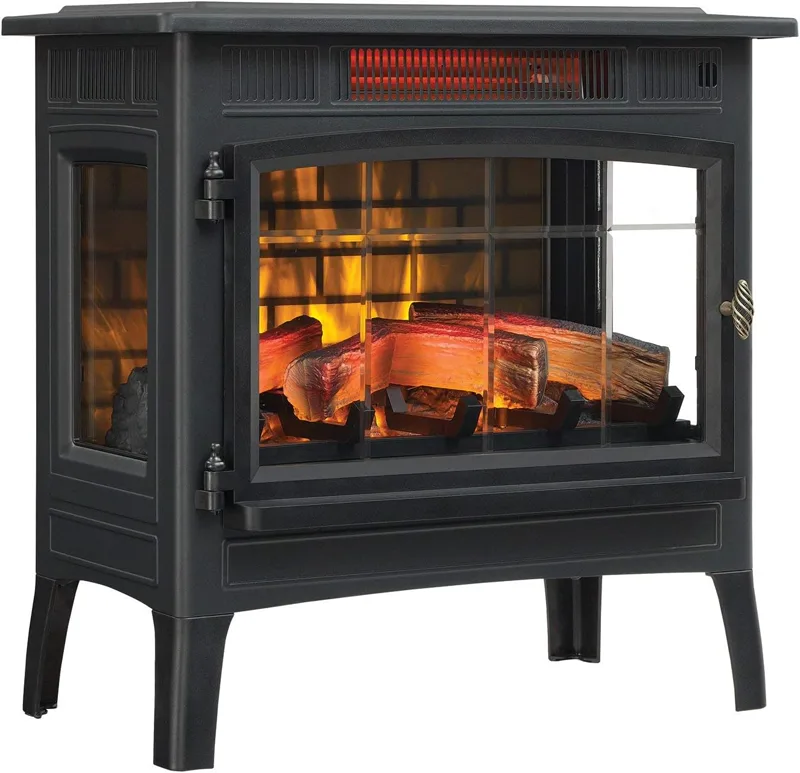
A freestanding electric fireplace is a cabinet, a flame effect, and a fan-forced heater in one box. The flame is usually light projected onto a rotating rod, and the heater is a resistance element with a blower behind it. The cabinet is what you are paying for: the surround, the mantel line, the doors, the finish. In a room where the wall is otherwise empty, that piece of furniture is doing real work.
The trade-off is that everything about the format is fixed. The machine wants a wall, a footprint, and a little clearance, and it does not move once placed. Heat leaves through a grille at the front, so the fireplace warms the part of the room it faces rather than the whole floor plan.
A space heater is a tool you move from room to room
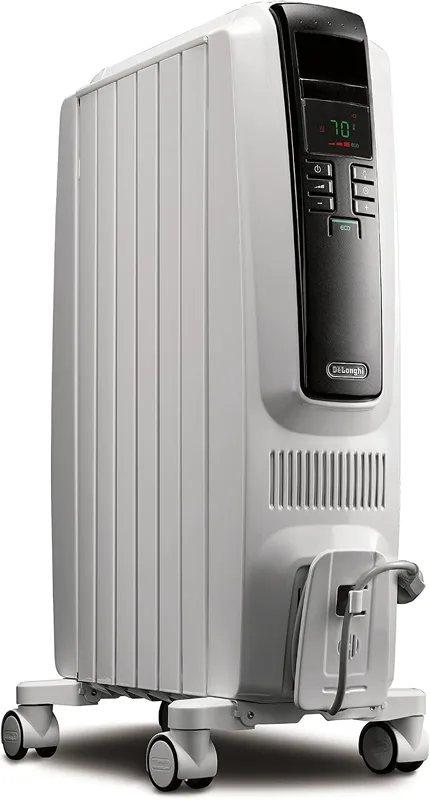
A portable space heater is an element, a thermostat, and a handle. There is no cabinet to pay for, so the same money buys more heat, better controls, or both. An oil-filled radiator is the quietest version of the idea: the element heats oil sealed inside fins, the fins radiate, and there is no fan to hear.
What you give up is presence. A radiator in a living room looks like an appliance and needs floor space near an outlet. What you get back is flexibility: it can follow you to the bedroom and the bathroom, and it keeps giving off warmth after the power cuts out.
How the three picks compare side by side
The table below compares the machines on the things that change daily use. On a phone you can swipe the table sideways to see every column.
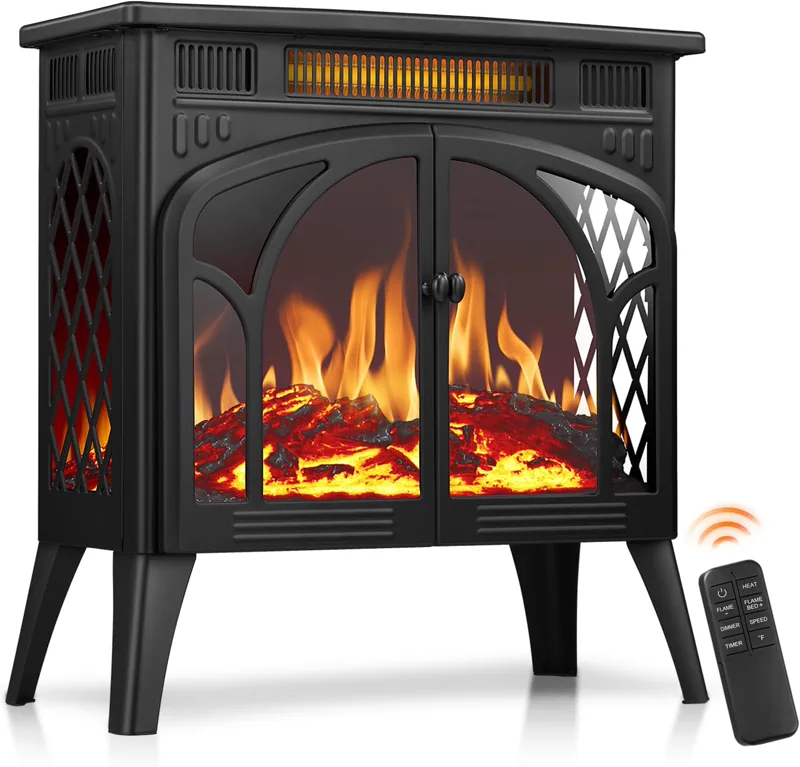
| Aspect | duraflame 20-inch | R.W.FLAME 25-inch | De’Longhi Dragon |
|---|---|---|---|
| Product type | Freestanding stove cabinet | Freestanding stove cabinet | Portable oil radiator |
| Heat output | Fan-forced air from the front grille | Fan-forced air, wider throw | Radiant heat from sealed fins |
| Coverage | A seating area of four | A larger seating area | One closed room at a time |
| Heat delivery | Warm air pushed forward | Warm air across a wider arc | Slow radiant warmth, no fan |
| Controls | Dial thermostat plus remote | Remote for flame, heat, and dimmer | Programmable digital timer |
| Footprint | Narrow footprint against a wall | Wider footprint, needs a free wall | Slim body, rolls between rooms |
| Noise in use | Low fan rush | Low fan rush | Silent apart from the thermostat |
| Main trade-off | Stays where you put it | Takes up more floor | Looks like an appliance |
This is a comparison of how each machine behaves in a room, not a ranking of one product over another. Photo: Amazon product listings.
Heat delivery is the real difference, not the flame
Fan-forced heat arrives fast and stops the moment the element switches off. Radiant heat from an oil-filled radiator arrives slowly and keeps going, because the oil is still hot. In a room you enter and leave, the fan is the better match; in a room you sit in for hours, the radiator is easier to live with.
The practical difference shows up in how the room feels. Fan heat stratifies: warm near the machine, cooler at the far wall. Radiant heat is strongest within a few feet of the fins. Neither fills a room evenly, and neither is a substitute for closing a door.
The flame is a design feature, not a performance one
The flame in an electric fireplace is a light show. It does not add heat, it does not consume fuel, and on most models it can run with the heater switched off. That is a feature in October, when you want the look without the warmth.
Judged as a heater, the flame is neutral. Judged as furniture, it is the whole product. If you would not want the cabinet in the room with the lights off, the fireplace is the wrong purchase.
Room size decides which one stops feeling weak
Manufacturers quote coverage in square feet, and those numbers assume an open room, a standard ceiling, and a mild climate. In a real house, a generous rating usually means a room of half that size heats comfortably.
For a 150 to 250 square foot living room, either format works. Past 300 square feet, a single portable unit starts to feel like a heater pointed at one sofa, and the honest answer is a second heat source or a different category entirely.
Thermostats and timers change how often you touch the machine
A thermostat is the difference between a heater you switch on and a heater you forget. Mechanical dials drift; digital thermostats hold a room within a couple of degrees and let the machine cycle instead of running flat out. Timers matter most in bedrooms and bathrooms.
Both formats now offer remote controls and app pairing. Treat those as convenience, not control. The useful questions are whether the thermostat reads the room or the housing, and whether the display can be dimmed at night.
Safety features are not equal across the two categories
Both categories run at high wattage on a standard circuit, so the safety differences sit in the housing rather than the plug. A fireplace keeps the element behind glass or a grille; a radiator keeps it sealed in oil. Both need the same three things: a wall outlet rather than an extension cord, clear space around the body, and a tip-over switch that works.
If you have pets or small children
A radiator gets hot on every fin, and a toddler or a cat will find it. A fireplace cabinet is warm rather than hot on the outside, which is the one clear safety advantage of the format. If the room has crawling children, look for a cool-to-touch cabinet and a door that latches.
If the room has carpet and curtains close to the machine
Neither machine should sit against fabric. A fireplace needs a few inches of clearance on all sides, and a radiator needs enough gap that air can move across the fins. Long curtains near a heater are the most common avoidable mistake in this aisle.
If you rent
Renters should favour the radiator: no wall anchoring, no mantel to patch, and nothing to remove at move-out. A fireplace is furniture that has to be lifted, and in a small apartment it can end up in the only free corner you had.
Noise: fans, crackles, and what you will live with
An oil-filled radiator makes no noise beyond the thermostat. A fan-forced fireplace makes a low rush that is easy to ignore in a living room and impossible to ignore in a bedroom. Some models add a crackle effect, which is a small speaker playing a sound file.
If the machine is going into a room where you watch television or take calls, listen to it before you buy. Reviews that call a fireplace quiet usually mean quiet for a fireplace.
Running cost tracks wattage, not the flame picture
Both formats draw the same power per hour at the same setting, because both are resistance heaters. A machine running flat out uses its rated wattage every hour; a radiator on a thermostat uses less over an evening, not because it is more efficient but because it is off part of the time.
That is the whole efficiency story. There is no meaningful difference in how much heat a dollar buys between the two formats. The difference is how often each one runs, which comes down to thermostat behaviour and how well the room holds heat.
Which one fits a living room you use every evening
For a living room used every evening, the fireplace wins on presence and loses nothing on heat. It gives the room a focal point, it can run flame-only in mild weather, and the fan throws warmth toward the seating area. Choose it if the room has a free wall and you want the machine to stay put.
Choose the radiator instead if the living room is small, if the wall space is already spoken for, or if quiet matters more than looks.
Which one fits a bedroom or a cold bathroom
Bedrooms and bathrooms reward quiet and quick warm-up, and that is the radiator’s territory. It runs silent, it holds heat after the thermostat cuts, and it can be wheeled into the bathroom and out again. A fireplace in a bedroom is a large piece of furniture in a room with no space for one.
The exception is a large master bedroom where the fireplace is part of the design. Even then, size the machine for the room.
What to check before you buy either
Four checks catch most of the mistakes buyers make in this aisle:
- Measure the room, not the wall. Coverage ratings assume an open plan, and a closed door changes the number.
- Check the circuit. A high-wattage heater on a shared bedroom circuit will trip a breaker on the first cold night.
- Decide where the machine lives before you buy. A fireplace that has to move is a radiator with extra steps.
- Read the thermostat behaviour, not the wattage. Cycling is what keeps an evening comfortable and the bill predictable.
None of these are in the marketing headline, and all of them decide whether the machine stays plugged in past January.
The short answer, if you want to stop reading here
If the room has a free wall and you sit in it every evening, buy the electric fireplace: the flame is furniture, the fan is the heat, and the combination is why the format exists. If the heat has to move, or the room is a bedroom, buy the oil-filled radiator and spend the difference on a thermostat you can programme.
Neither machine will heat a whole house, and neither is cheaper to run than the other at the same setting. Pick the one that matches the room you actually have.