Home tools · Drills and drivers
One of these tools makes the hole. The other one drives the screw that holds the world together. Buying the wrong one first is the most common mistake in a first tool kit, and it costs a weekend to discover.
Both tools are sold in the same aisle, both run on a battery pack, and both look like a gun with a nose. That resemblance is what makes the choice confusing. Under the shell they do different work, and the difference shows up the first time a screw refuses to go in.
This guide covers what each tool is good at, where they overlap, and which one earns the first slot in a kit that is still being assembled. It compares behaviour rather than spec sheets, because the number on the box rarely matches the job in front of you.
Quick answer
- Best for a flat full of flat-pack furniture and curtain rods: a cordless drill, because it drills, drives, and controls depth in one tool.
- Best for a deck, a fence, or anything held by long screws: an impact driver, because the rotary hammer seats a long fastener without stripping the head.
- Best for a home that will eventually own both: the drill first, the impact driver when the first outdoor project arrives.
- Best for a starter kit with one purchase: a two-tool combo kit, because the shared battery is where the real saving lives.
A cordless drill makes the hole and controls how deep it goes
A drill does two jobs with one motor. The chuck spins a bit to cut a hole, and the same chuck holds a driver bit to send a screw home. A clutch sits behind the chuck and slips at a set resistance, which is how you stop a screw head from burying itself in a soft pine shelf.
That clutch is the feature people forget to use. On a cabinet hinge or a painted panel, it separates a clean install from a crater, and once you learn to dial it down the drill becomes a precision tool rather than a fast one.
An impact driver adds a rotary hammer to the same job
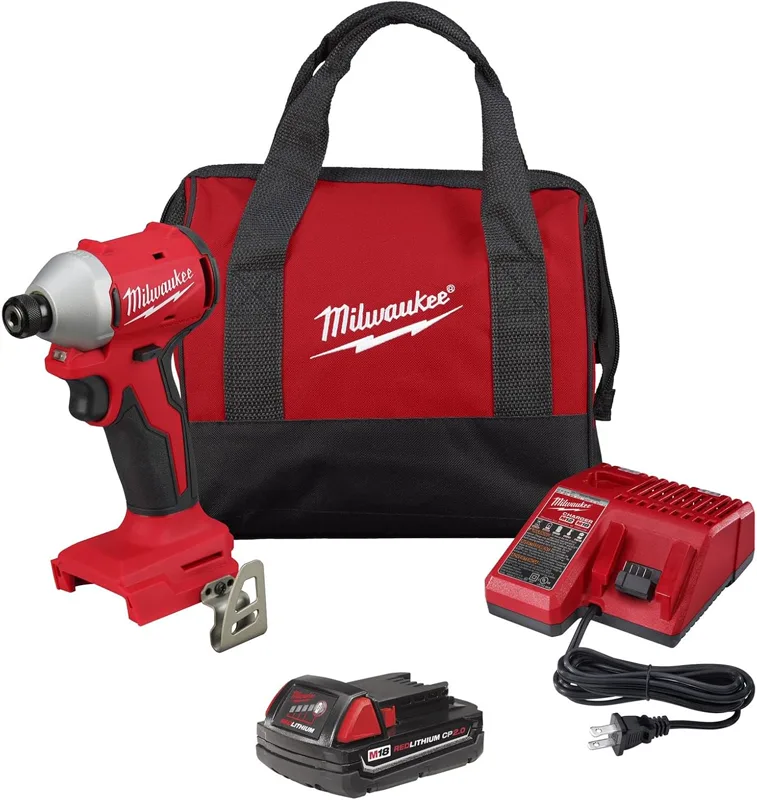
An impact driver looks like a drill with a shorter nose. Inside, a spring and hammer assembly strikes the anvil as it turns, so the bit receives a burst of force rather than a steady twist. The result is far more driving power from a much smaller body.
The trade is precision. There is no clutch on most impact drivers, only a variable trigger and sometimes a speed selector. Control comes from your finger, which is fine for framing and rough work and less fine for a hinge screw on a white cabinet door.
When the impact action is the point
Reach for the impact driver when a fastener is long, when the material is dense, or when the screw has a head that strips easily under a steady twist. A star-drive screw into pressure-treated lumber is the classic case: the hammer seats it while the steady twist of a drill would cam out first.
The chuck is the difference you can see from across the aisle
A drill has a three-jaw chuck that opens to take round shanks, hex shanks, hole saws, and step bits. An impact driver has a hexagonal collet that takes only bits with a matching hex shank, snapped in and pulled out with a collar.
That single difference decides what each tool can hold. Anything with a round shank belongs in the drill. Anything that needs to survive a hammer blow needs the hex shank and the impact-rated bit that goes with it.
Torque delivery decides whether a screw strips or seats
A drill delivers torque smoothly, which is why it can strip a soft screw head if you lean on the trigger. An impact driver delivers torque in pulses, which is why it can seat a stubborn screw without twisting the head off, as long as the bit fits properly.
Long deck screws and lag bolts belong to the impact driver
Once a fastener passes a certain length, friction in the wood grows faster than a drill can comfortably overcome. The hammer action keeps the bit moving when a steady twist would stall, so the screw goes in rather than spinning in place.
- Deck boards and fence pickets held by long coated screws
- Lag bolts into a ledger board, with a pilot hole first
- Assembling a shed or a raised bed from pre-cut lumber
- Driving structural screws where a stripped head means a cut fastener
Holes, hole saws, and mixing paddles belong to the drill
An impact driver cannot hold a round-shank bit, which rules it out of every hole in the house. Door locksets, shelf pins, cable runs, and the pilot holes that come before any screw all belong to the drill, because the drill is the only one of the two built to spin a cutting bit.
The drill also wins on the jobs that need slow, steady rotation: a hole saw through a countertop, a step bit through sheet metal, or a paddle through a bucket of thin-set. Hammering is the last thing those jobs need.
Bit compatibility quietly decides which tool you can use
Impact-rated bits carry a heavier shank and a hardened tip because they have to survive the hammer. A standard bit in an impact driver will eventually shatter, and the pieces travel. The reverse is safe: an impact-rated hex bit works in a drill chuck without drama.
Adapters solve the shape, not the torque
A hex-to-square adapter lets an impact driver hold a socket, which is genuinely useful for lag bolts and fence hardware. What an adapter cannot do is turn a light-duty driver into a tool that survives a hundred lag bolts. Buy the adapter for the occasional job, not as a substitute for the right tool.
Noise and kickback change how long you can work
An impact driver is loud in a way that a drill is not. The hammer strikes are fast and metallic, and in a stairwell or a small bathroom the sound bounces until it is genuinely unpleasant. Ear protection stops being optional once a project runs past an hour.
Kickback is the other difference. A drill that binds twists your wrist; an impact driver binds less often but arrives suddenly. Two hands on the tool, feet planted, and never a bit larger than it was built for.
Battery platform matters more than either tool
Every brand locks its tools to one battery family. That is the decision that outlives the tool, because a battery bought today is meant to feed the tool you buy in three years. Pick the platform first, then the tool inside it.
A homeowner with two batteries and a charger from one brand has a kit. A homeowner with one battery per brand has three chargers, three wall warts, and no spare when a pack dies mid-project. This is the quiet argument for staying inside one family even when a rival tool looks better on paper.
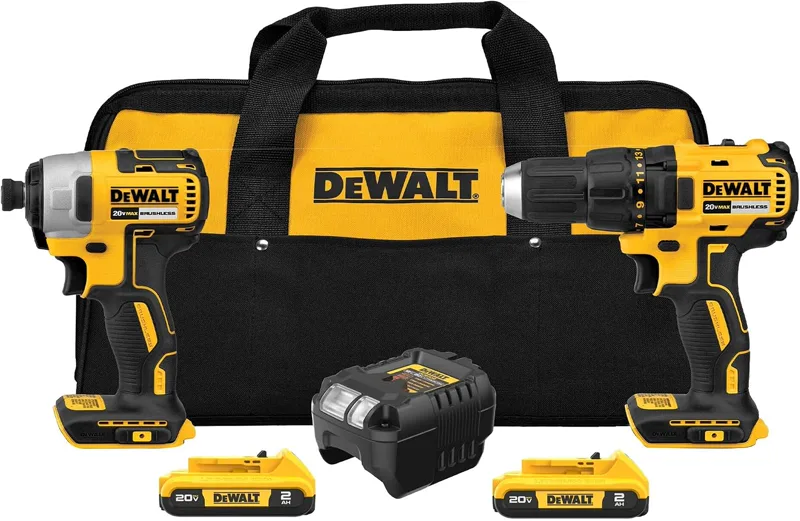
A combo kit is often the cheaper way to own both
Combo kits bundle a drill, an impact driver, two batteries, a charger, and a bag. The tools inside are usually the brand’s mid-range models rather than its top tier, which is exactly what a household needs, and the bundle costs less than the two tools bought separately.
The catch is that a kit locks you into a platform before you have decided what else you want. If the same brand sells the circular saw and the sander you planned to add, the bundle is a bargain. If it does not, you have bought a battery family you will fight later.
What a combo kit changes
A kit turns the choice into a scheduling question: which tool stays in the bag for the next job. For a first-time buyer with a list of projects, that is usually the right trade.
Buy the drill first when the apartment is still full of flat-pack
The first year in a home is a list of small holes: shelves, curtain rods, a wall anchor for a mirror, a bracket for the bike. Every one of those jobs starts with a drill and finishes with the same drill holding a driver bit. An impact driver cannot start any of them.
Add a set of bits, a handful of wall anchors, and a small level, and the drill covers more of the first year than any other power tool in the shop. That is the argument for buying it first, and it holds even if a deck is on the list for next summer.
Buy the impact driver first when the project is a deck or a fence
There is one scenario where the order flips. If the next job is measured in dozens of long screws into treated lumber, the impact driver is the tool that finishes it. A drill will do the pilot holes and then struggle on the fasteners, and your wrist will remember the difference.
In that case, buy the driver and borrow a drill for the pilot holes: a worse long-term kit and a better short-term answer.
How the three options behave side by side
The table below compares the three tools covered here on the points that decide day-to-day use. On a phone, swipe the table sideways to see the full width.
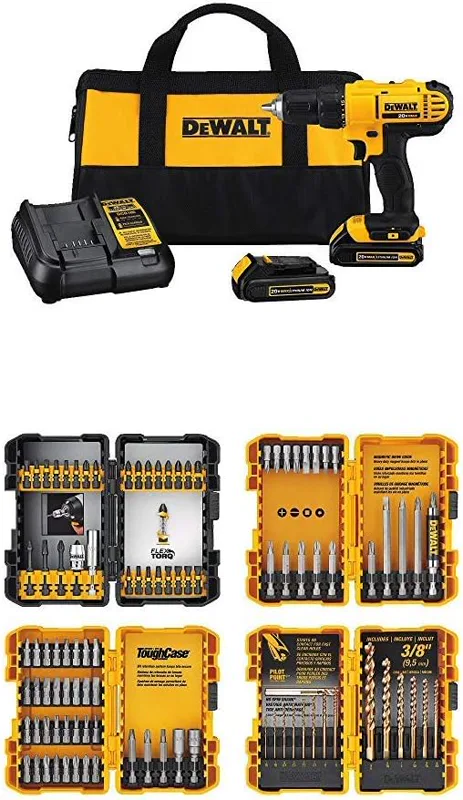
| Aspect | DeWalt Drill Kit | Milwaukee Impact Kit | DeWalt Combo Kit |
|---|---|---|---|
| Primary job | Holes and controlled driving | Fast driving into dense material | Both, in one bag |
| Work holding | Three-jaw chuck, round or hex | Hex collet only | Chuck plus collet |
| Torque delivery | Steady twist with a clutch | Pulsed hammer strikes | Steady and pulsed, chosen per tool |
| Hole cutting | Its main strength | Not possible without an adapter | Handled by the drill half |
| Long fasteners | Stalls before the head strips | Seats them in one pass | Deck work stays comfortable |
| Control at low speed | Clutch and two speeds | Trigger feel only | Depends which tool you pick up |
| Weight in the hand | Heavier, longer nose | Shorter and lighter | Two bodies, one charger |
| Best first buy | Yes, for a new home | Yes, for an outdoor build | Yes, for a kit that will grow |
This is a comparison of how each tool behaves on a job, not a ranking of one product over another. Photo: Amazon product listings.
The short version
A drill is the tool that starts projects and finishes the indoor ones. An impact driver is the tool that keeps a big outdoor job moving. A combo kit is the shortcut that puts both on one battery, and it is usually the cheapest honest way to stop thinking about the question.
If you only buy one, buy the drill, add a decent bit set, and let the first deck or fence tell you when the second tool has earned its place. If you already know the deck is this summer, skip ahead and buy the pair. Related reading: whether an impact wrench can stand in for a drill, and the rest of the home improvement and tools guides on this site.
Whichever order you choose, spend the difference on bits and a spare battery before a bigger motor: the consumables are what let the tool work all Saturday.