Home improvement · Indoor air
A basement that smells damp needs a machine sized for the space and a drainage plan you will keep up with, not the biggest pint number in the aisle.
A basement dehumidifier is easy to buy badly. The box shouts a pint figure, the shelf is full of near-identical white boxes, and the thing that decides whether you empty a tank twice a day is a detail nobody prints in large type.
Three machines cover most of the ground under three hundred dollars. They differ in how they drain, how they roll, and how much noise they put into the room above them. The right pick depends on whether the basement is storage, a workshop, or a finished room.
What follows is a practical shortlist rather than a lab report. Every pick is a real listing that ships to a US address, and every recommendation is about fit rather than a specification win.
Quick answer
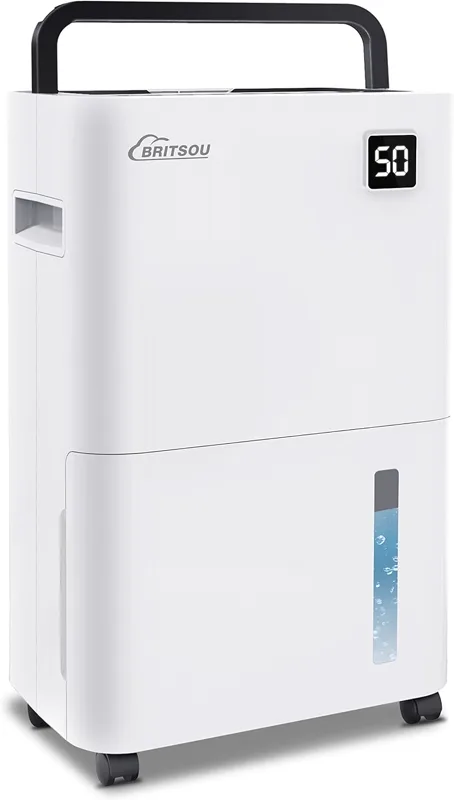
- Choose the Britsou 50-pint when you want one machine that handles a full basement without much thought.
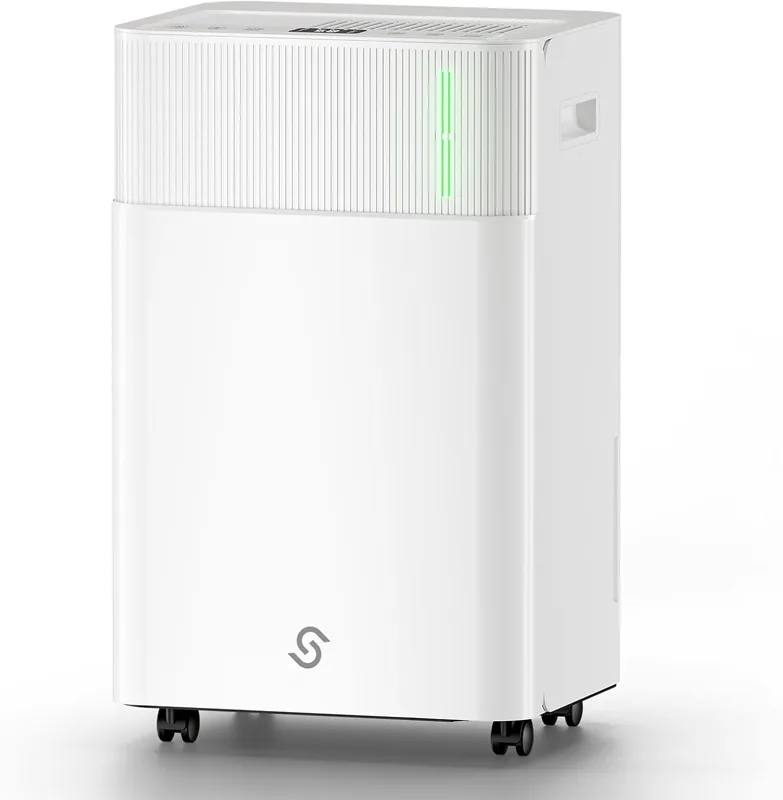
- Choose the HUMILABS 52-pint when the basement is finished and the unit will sit in sight.
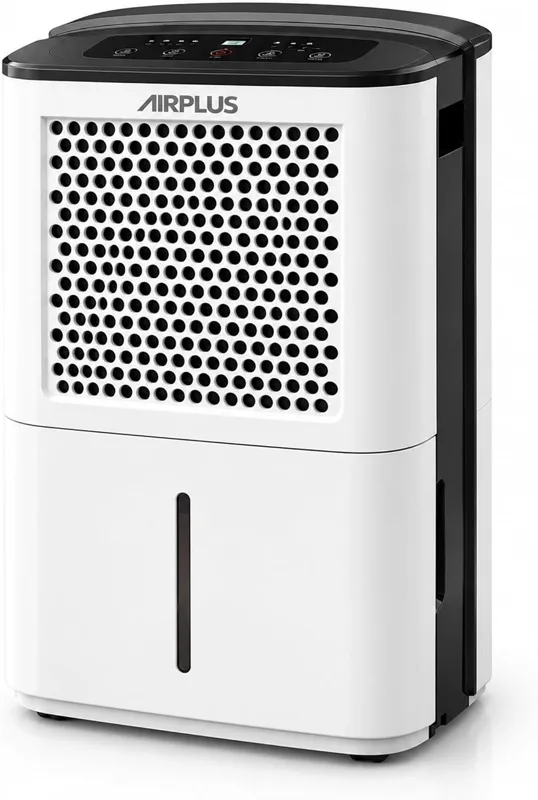
- Choose the AIRPLUS 50-pint when the budget is the binding constraint and the room is unfinished.
- Settle the drainage method first, because it decides how often you touch the machine.
Start with the size of the room, not the pint count
Pint ratings describe how much water a unit pulls out of the air under test conditions. They say nothing about how a machine behaves in a cold, open basement with a concrete floor and a furnace that never stops.
Measure the floor area and think about how the room is used. A large open basement needs a unit that moves a lot of air; a small finished room needs one that stays quiet. The pint number is a rough sorting tool, not a promise.
A 50-pint unit is the sensible default for most basements
Most basement dehumidifiers sold for residential use cluster around fifty pints. That size covers a typical open basement without running flat out, which leaves capacity for the humid weeks in late summer.
Smaller units work harder and fill faster. Larger units cost more and can be overkill. If you are unsure, the middle of the range is the safer bet.
When a 35-pint unit is enough
A sealed, finished room with a door and a small floor area can be handled by a smaller machine. The moment the space opens into a stairwell or a crawlspace, the advantage disappears and the smaller unit runs constantly.
The Britsou 50-pint is the straightforward all-rounder
The Britsou is the pick that asks the least of you. It is a tall, wheeled cabinet with a front tank and a top handle, which makes it easy to move between the stair landing and the middle of the room.
Its control panel is simple enough to set and forget, and the tank comes out from the front rather than the top. That matters when the unit sits under a shelf or beside a water heater.
The HUMILABS 52-pint suits a finished basement with furniture
The HUMILABS aims at rooms that people actually use. It is quieter in the way that matters in a finished space: the compressor noise sits behind a fan note rather than in front of it, so conversation upstairs is not interrupted.
It also looks less like a utility appliance, which is worth something when the unit lives beside a couch instead of behind a furnace.
What a finished room changes about the choice
In a finished basement the machine is furniture. Noise, appearance and the length of the power cord all become part of the decision, and a unit that would be fine in a utility corner can be the wrong one beside a television.
The AIRPLUS 50-pint is the budget pick that still does the job
The AIRPLUS costs less than the other two and gives up little that matters in an unfinished basement. It has the tall, narrow cabinet that fits between joists and a tank that slides out from the front.
The trade-off is refinement. Controls are basic, the plastic feels like plastic, and the fan note is more noticeable. In a storage basement none of that is a problem.
Drainage decides how often you touch the machine
A tank has to be emptied, and in a wet month that means daily. A hose to a floor drain or a sump pit turns the machine into something you check once a week.
Gravity drainage needs the outlet to sit above the drain. If the only drain is uphill, the hose will not work and the tank comes back into the routine.
- Check that a floor drain or sump pit sits lower than the drainage outlet.
- Keep the hose run short and sloping, with no dips that hold water.
- If neither is possible, plan on emptying the tank on a schedule.
A built-in pump is worth it when the floor drain is far
A pump pushes condensate up and across a room to a laundry sink or an exterior wall. That is the difference between a machine you can place where it works and one you place where the drain is.
Pumps add a failure point and a little noise. They are worth it when the alternative is a hose crossing a doorway or a tank that fills overnight.
Humidity targets keep the machine from running all day
A dehumidifier with a humidistat runs until the air reaches the set point, then rests. Setting that point at the low end of comfortable keeps the machine running continuously and does nothing useful.
Start in the middle of the comfortable range and adjust only if the room still feels damp. A machine that cycles is doing its job; one that never stops is usually set too low.
Cold basements change how any dehumidifier behaves
Cool air holds less moisture, so a cold basement can feel dry while the walls still sweat. Frost on the coils is the other cold-weather problem: it blocks airflow and forces the machine into a defrost cycle that does no drying.
If the basement drops near freezing, look for a unit rated for low temperatures. Otherwise expect the machine to spend more time defrosting than drying in the coldest weeks.
What the pint rating means in a cold basement
The rating assumes a warm, humid room. In a cold basement the real number is lower, which is one more reason not to buy the smallest unit that technically covers the floor area.
Where you place the unit matters more than its features
A dehumidifier needs air moving through it. Pushed into a corner behind boxes, it dries the same pocket of air over and over while the far side of the basement stays damp.
Give it a metre of clearance on every side, keep it away from the furnace and the water heater, and put it where the air naturally circulates. A cheap unit in the right spot beats an expensive one in a corner.
Filter cleaning is the maintenance nobody plans for
Every dehumidifier pulls dust through a washable filter. When the filter clogs, airflow drops and the machine works harder for less drying.
Rinse it monthly in a wet basement and more often if there is construction dust. It is a two-minute job that decides whether the unit lasts several seasons or one.
Noise levels matter if the basement is also a bedroom
A compressor and a fan in one cabinet produce a low hum that carries through a floor. In a basement bedroom the machine runs at night, which is exactly when the noise is least welcome.
If someone sleeps downstairs, place the unit as far from the bed as the hose allows and prefer a model with a low fan setting you will actually use.
Running cost is a function of runtime, not wattage alone
Two machines with similar power draw can cost very different amounts to run. The one that reaches its set point quickly and rests uses less than the one that runs all day because it is undersized.
Sizing the unit to the room and sealing the obvious drafts does more for the electricity bill than shopping for an efficiency label.
Buy for the worst month, then live with it
Late summer is when a basement dehumidifier earns its place. Buy for that week, not for the dry month when you unpack it, and the machine will still have capacity when the air is heaviest.
That also means buying a size up rather than down. A unit with headroom runs less, lasts longer, and handles the storm week when the sump pit is working.
For the wider question of whether a dehumidifier is the right tool at all, the dehumidifier versus air conditioner comparison covers where the two overlap. The air purifier versus dehumidifier guide handles the bedroom case, and the home improvement archive collects the rest of the basement fixes.
How the three picks compare side by side
The table below describes behaviour rather than a winner. Swipe sideways on a phone to see every column, and read each row against the way your own basement is used.
| Aspect | Britsou 50 | HUMILABS 52 | AIRPLUS 50 |
|---|---|---|---|
| Tank access | Front pull-out | Front pull-out | Front pull-out |
| Mobility | Wheels and top handle | Wheels, low profile | Wheels, narrow body |
| Noise | Utility loud | Quietest of the three | Noticeable fan note |
| Controls | Simple digital panel | Digital with hose setup | Basic dial and panel |
| Drain option | Hose or tank | Hose or tank | Hose or tank |
| Best room | Open unfinished basement | Finished living space | Storage or workshop |
| Build feel | Solid, plain | Furniture-grade front | Basic plastic |
| Main trade-off | Size and weight | Higher price | Fewer refinements |
Size the room, pick the drainage, then choose the cabinet that fits the life the basement actually has. The brand matters less than those three steps and the maintenance you keep up with afterwards.