Home improvement · Kitchen ventilation
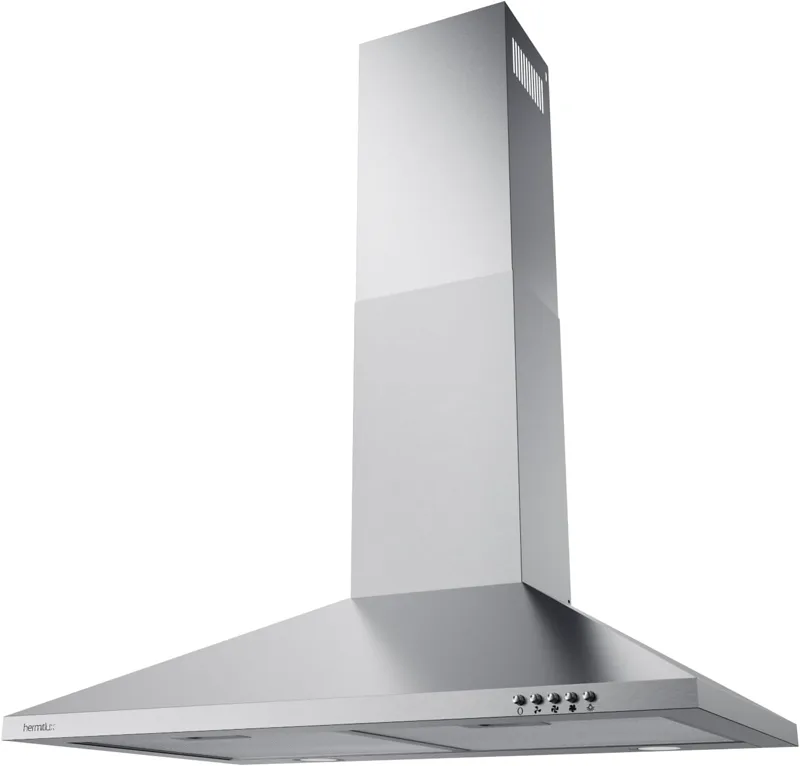
One hangs free above the cooktop and shows its chimney, the other tucks under the upper cabinets. The right choice is settled by the shape of your kitchen, not by the longest feature list.
A range hood looks simple until the cabinet layout forces a decision. One design hangs from the wall above the cooktop with its chimney in view. The other disappears beneath the upper cabinets and leaves the wall clear.
Both pull smoke, steam and cooking grease out of the kitchen. They differ in where the ductwork lives, how much cabinet space survives, and how much of the job happens at eye level. The right answer comes from the room you have rather than the model with the most buttons.
Quick answer
- Choose a wall-mount hood when the wall above the cooktop is clear and the duct can run straight up or straight back.
- Choose an under-cabinet hood when upper cabinets already frame the cooking zone and you want the hood to disappear into the cabinetry.
- Settle the duct route before the hood style, because the route usually eliminates one option on its own.
- Pick the design you can clean without a step stool, since that is the one you will actually keep clean.
The cabinet line decides more than the hood itself
Walk into the kitchen and look above the cooktop. If a run of upper cabinets frames that space, an under-cabinet hood can slide into it. If the wall is open, a wall-mount hood fills the gap and turns the duct run into part of the design.
That single detail drives cost, installation time and the finished look. Changing it later means moving cabinets or rebuilding a chimney surround, so it is worth settling before you shop.
Wall-mount hoods hang the ductwork in plain sight
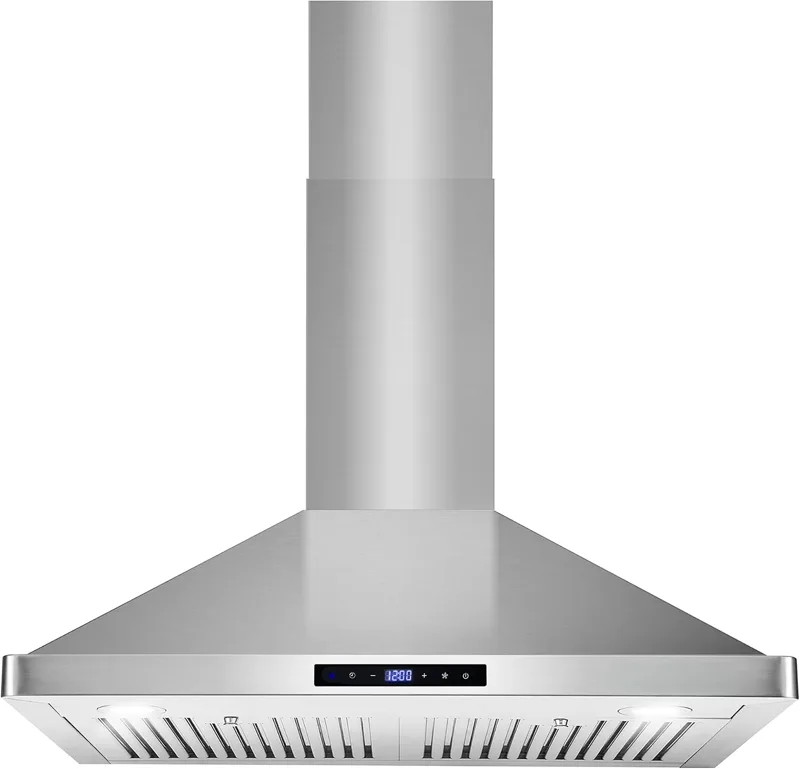
A wall-mount hood starts at the cooktop, flares into a canopy, then sends a covered chimney up to the ceiling or back through the wall. The duct run hides inside that chimney, which is why the design looks deliberate instead of improvised.
The trade-off is visual weight. A tall stainless chimney dominates a small kitchen and needs clear wall space to look right. In an open-plan room it becomes a focal point; in a narrow galley it can read as a column.
What a chimney-style hood does well
Chimney hoods put the capture area directly over the burners and keep the duct path short and straight. A short, straight run is easier to seal, and a well-sealed run is what keeps cooking smells from drifting back into the room.
Under-cabinet hoods trade reach for space
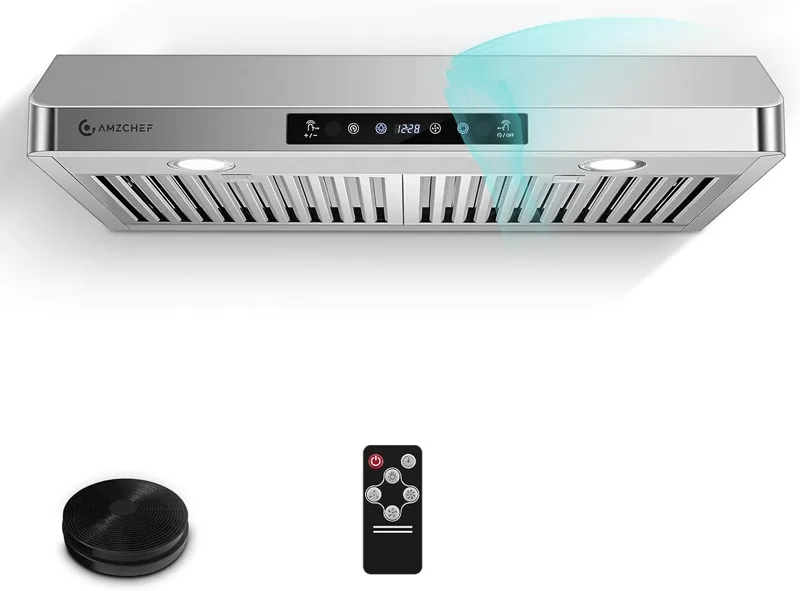
An under-cabinet hood bolts to the bottom of the upper cabinets and vents through the cabinet above, through the wall behind, or back into the room. From the front it reads as a slim strip of stainless rather than an appliance.
That slim profile comes with limits. The hood can only be as deep and as wide as the cabinet run allows, and the duct has to thread through cabinet boxes that were never designed for it.
Where under-cabinet models fall short
Cabinet depth caps how far the hood reaches over the front burners, and the cabinet above swallows the duct. If the cabinets are shallow or the run is tight, expect a smaller capture area and more careful cooking.
Capture area matters more than an airflow number
Every listing leads with airflow, but airflow only helps if the hood reaches the pan. A wide canopy with moderate airflow catches more steam than a narrow one working at full speed.
Think about the pots you actually use. A stockpot and a wide frying pan both push steam outward before it rises. The hood that overhangs them has less work to do.
- Measure the widest pan you own and compare it with the canopy.
- Prefer a canopy that overhangs the cooktop by a few inches on each side.
- Treat airflow claims as a tiebreaker rather than the deciding number.
Noise is the hidden cost of a short chimney
A hood that is loud at its working speed gets switched off, and a switched-off hood does nothing. Chimney designs can amplify fan noise because the motor sits close to ear level in some installations.
Listen for the sound at the speed you will actually use. The top setting on any hood is rarely the one you run while talking to someone across the island.
Ducting routes change what you can install
The duct route is the least glamorous part of the decision and the one most likely to rule out a design. Straight up through the roof is simplest. A short run back through an exterior wall comes next.
Every bend adds resistance, and every extra foot of duct gives grease somewhere to settle. If the only route is long, convoluted, or shared with a dryer vent, plan for a recirculating setup instead of pretending the duct will work.
A simple way to test the fit
Trace the route with a tape measure before you buy. If you cannot draw a short, smooth line from the hood to the outside, the design you want may not be the design the kitchen can support.
Filter type sets your monthly cleaning routine
Baffle filters, mesh filters and charcoal pads all behave differently. Baffles catch grease in channels and rinse clean in the sink. Mesh traps grease in fine layers and needs soaking. Charcoal only makes sense when the hood recirculates.
The right filter is the one you will clean on a schedule. A dishwasher-safe baffle that goes in weekly beats a premium filter that never comes out.
Height above the cooktop changes how well either design works
Mounting height is a compromise between reach and headroom. Too low and the hood crowds the tallest pot. Too high and steam escapes around the edges before the fan can catch it.
Follow the manufacturer range for the model you choose and check it against the tallest person who cooks. A hood that gets bumped every time someone lifts a lid will be moved up, and the capture suffers.
A wall-mount hood can free up a full cabinet
Removing the cabinet above the cooktop sounds like a loss until you count what the space holds. A chimney hood replaces a bulky corner cabinet with a clean vertical line and gives the wall back.
In a small kitchen that trade can be the difference between a usable prep zone and a cramped one. In a large kitchen the same trade is mostly aesthetic.
Under-cabinet models suit galley kitchens and rentals
Galley kitchens live on cabinet runs. An under-cabinet hood preserves that rhythm and keeps sightlines low, which makes a narrow room feel wider.
Renters face a different constraint: the hood has to work with the cabinets that are already there. A model that bolts to existing cabinetry is easier to install and easier to leave behind.
Lighting and controls are where daily friction shows up
The hood is the one appliance you touch with wet hands. Rocker switches, touch panels and gesture controls all feel different after a year of cooking.
Look for lighting that falls on the cooktop rather than the backsplash. Controls you can find without looking are worth more than a display that impresses guests once.
Recirculating setups are a compromise, not a solution
A recirculating hood pulls air through a filter and blows it back into the kitchen. It removes some grease and odor, but it cannot remove heat or moisture the way a vented hood can.
If ducting is impossible, a recirculating hood is better than nothing. Just set expectations: it is air management rather than ventilation.
Installation day is where the budget usually slips
The hood is the visible cost. The duct, the wall opening and the electrical work are the ones that surprise people. A wall-mount hood often needs a new opening in the wall or roof, while an under-cabinet hood may need a cabinet modified.
Get the installation quoted before you commit to a design. A hood that costs more up front but drops into an existing opening can be the cheaper choice overall.
Match the hood to the way you cook, then to the room
Heavy frying, searing and wok cooking produce more grease and smoke than boiling pasta. The heavier the cooking, the more the hood has to reach, and the less a slim under-cabinet strip can do.
Start with the cooking, filter by the room, and let the style follow. The hood that fits both your kitchen and your habits is the one that gets used.
If the cabinets are the sticking point, the home improvement guides cover the fittings and small renovations that come up in the same project. For the cooking side of the room, the kitchen and cooking archive collects the appliances that share the counter.
How the two designs compare side by side
The table below describes behaviour rather than a winner. Swipe sideways on a phone to see every column, and read each row against the way your own kitchen actually works.
| Aspect | Wall-mount | Under-cabinet |
|---|---|---|
| Duct route | Up through the chimney | Through cabinet or wall |
| Cabinet space | Frees the wall | Uses the cabinet above |
| Capture area | Wide canopy | Capped by cabinet depth |
| Headroom | Fills the wall | Stays low |
| Installation | New wall or roof opening | Cabinet modification |
| Cleaning | Baffles at eye level | Filters overhead |
| Best room shape | Open or island | Galley or compact |
| Main trade-off | Visual weight | Smaller reach |