Kitchen appliances · Coffee and espresso
One machine asks you to learn a craft before the first good cup; the other asks you to buy a subscription and press a button.
Both machines make a small, strong cup of coffee, and both are sold as the cure for a bad cafe habit. The difference is what they ask of you before that cup. An espresso machine asks you to learn a craft; a pod machine asks you to subscribe to one. Everything that follows, from the counter space to the milk to the washing up, comes out of that single trade.
This guide is about behaviour rather than shopping tiers. It explains what an espresso machine rewards, where a pod machine genuinely wins, and which one a household with two different coffee habits will still be happy with in six months.
The short answer
- Choose an espresso machine if you drink milk drinks daily and enjoy the ritual of grinding, dosing and tamping.
- Choose a pod machine if the morning is a race and you want one consistent cup with no technique.
- Choose neither if you drink filter coffee by the pot, because a good drip brewer is easier than both.
- Whatever you pick, budget for the beans or the capsules, because the machine is the smaller half of the cost.
Espresso is a method, not a machine
Espresso is water pushed through a compacted bed of finely ground coffee at pressure, in a short time, producing a concentrated shot. The machine only creates the conditions. The grind, the dose, the distribution and the tamp decide whether the shot comes out sour, bitter or balanced, which is why two people with the same machine can get completely different results and blame the equipment.
A pod machine takes the same idea and removes the variables. The coffee is pre-ground, pre-dosed and sealed in a capsule, and the machine punctures it and pushes water through. You cannot adjust much, and that is the point: the result is repeatable, and repeatable is what most people want at seven in the morning.
What the first month actually feels like
The gap between the two machines is widest early, when technique is still being learned and every change you make has an obvious effect on the cup.
Week one
The espresso machine produces shots that are sour, then bitter, then sour again, and you will blame the machine before you blame the grind. The pod machine produces the same cup it will produce in a year.
Week four
The grind setting starts to make sense, the dose becomes consistent, and the shots begin to taste like the coffee rather than like a mistake. The pod machine has not changed at all, which is either reassuring or boring depending on what you were hoping for.
Month six
You either own a scale and a tamper or you have stopped using the espresso machine. The pod machine is still on the counter, still making the same cup, and the capsules are still arriving.
Where the espresso machine wins
It wins on ceiling. A well-dialled shot from a machine you understand is better than anything a capsule can produce, and the gap is widest with light roasts, where the aromatics are fragile and a fixed recipe flattens them into something generic.
It also wins on milk. A steam wand produces microfoam that is wetter, glossier and easier to pour than anything a frother makes, and it holds its structure long enough to reach the table. If your morning is a flat white rather than an americano, that difference is the whole purchase.
Where the pod machine wins
It wins on the days you do not want to think. There is no dose to weigh, no puck to knock out, no grind to adjust, and no warm-up long enough to matter. You press a button and a cup appears while you are still looking for your shoes.
It also wins on space and on guests. A pod machine is short enough to live under a cabinet, and it makes a second and third cup without a second thought, which matters in a household where everyone wants a different drink and nobody wants to play barista on a Sunday morning.
The running cost argument is more complicated than it looks
The usual comparison counts capsules against beans and concludes that pods are expensive. That is true per gram, but it is not the whole sum. An espresso setup also wants a grinder, a scale, a tamper, fresh beans and the occasional descale, and it pours sink shots while you learn.
The honest version is that a pod machine has a low entry cost and a high running cost, while an espresso setup has the reverse. Which one works out cheaper depends entirely on how many cups you drink and how long you keep the machine, so the comparison is a habit question rather than a hardware one.
Milk drinks are where the two diverge most
If you drink black coffee, the difference between the machines is smaller than the difference between fresh and stale beans. If you drink cappuccino or latte, the steam wand is the deciding feature, and it is the one thing a pod machine cannot imitate no matter how good the capsule is.
A middle path exists: a pod machine with a built-in frother. It produces hot, foamed milk reliably, but the texture is stiffer and the temperature lower than a steam wand, which is fine on a weekday and slightly disappointing on a weekend. Whether that compromise matters is the clearest test of which machine suits you.
Counter space, warm-up and the morning clock
An espresso machine needs height for the cup and clearance for the portafilter, and most need a few minutes to come to temperature. A pod machine is short, narrow and ready almost immediately, which is why it fits in kitchens where the espresso machine would have to live in a cupboard and be lifted out twice a day.
The morning clock is the other half. A shot takes about half a minute, but the routine around it — grinding, dosing, tamping, purging, knocking out — takes several minutes more. If your mornings have five spare minutes, that routine is a pleasure; if they have none, it is the reason the machine ends up on a shelf.
Three machines, three different mornings
The three picks below are not a ranking. Each stands for a morning you might recognise, and each was checked as a live US listing with delivery to a New York ZIP code and a working add-to-cart button at the time of writing.
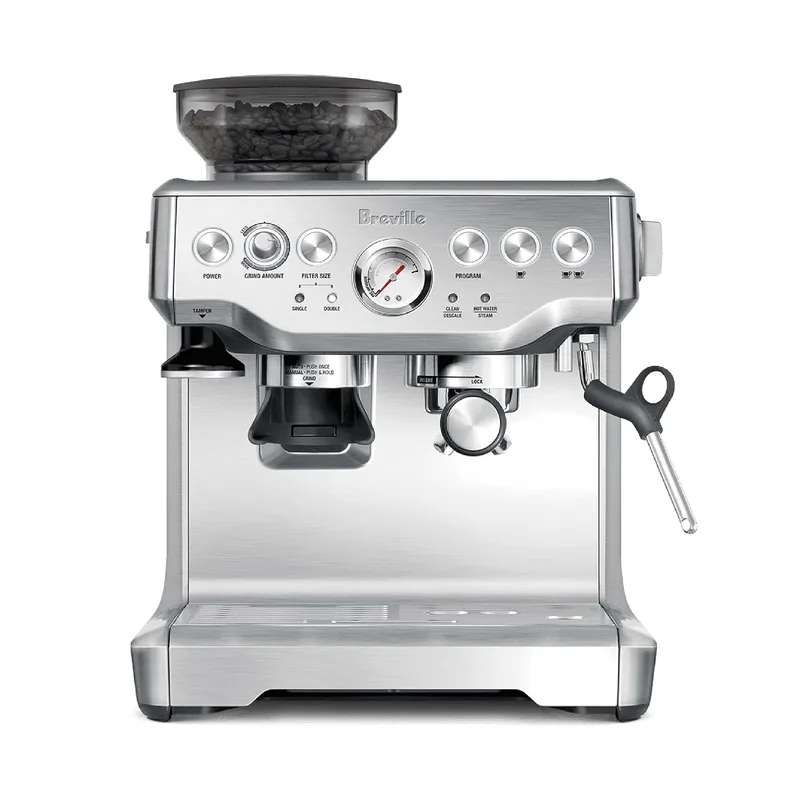
- Ritual case: the Breville Barista Express puts a conical burr grinder, a dose-control portafilter and a steam wand in one footprint, for people who want the whole routine without a separate grinder.
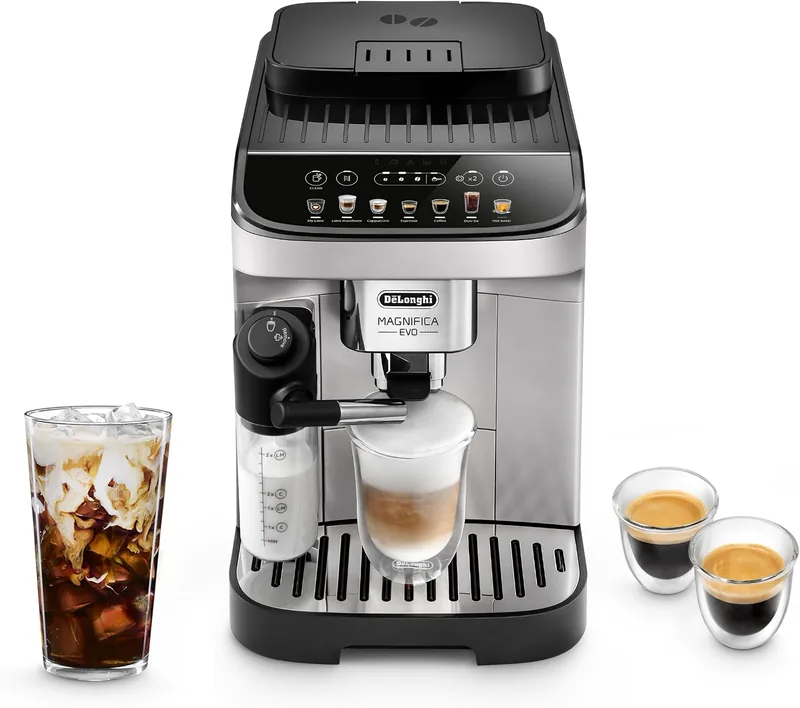
- Push-button case: the De’Longhi Magnifica Evo is bean-to-cup with a milk frother, for households that want espresso and a cappuccino without learning technique.
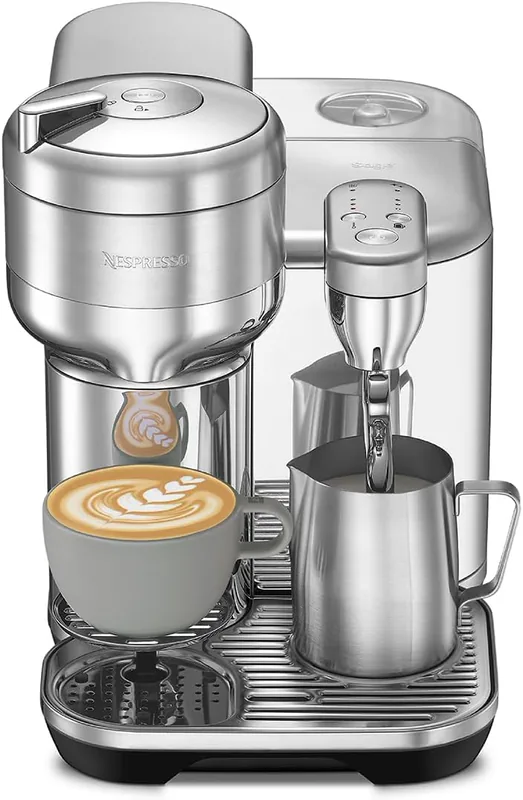
- Capsule case: the Nespresso Vertuo Creatista by Breville pairs a pod system with a steam wand, for people who care more about the milk than about the grind.
A decision rule for a shared kitchen
If two people in the same house want different things from the coffee, the machine that survives is the one with the fewest steps. A technique-heavy machine gets used by the person who enjoys it and avoided by everyone else, and that imbalance is what eventually pushes it off the counter.
- One daily milk-drink drinker who enjoys the process: espresso machine.
- Two people, different drinks, no patience: pod machine with a frother.
- Black coffee only: drip brewer, and spend the difference on better beans.
- Entertaining most weekends: pod machine for speed, espresso machine for the last cup.
Cleaning and descaling are the real subscription
Both machines need descaling, and both will tell you when. The difference is what happens between those intervals: an espresso machine wants the puck knocked out and the shower screen wiped after every shot, while a pod machine wants the capsule bin emptied and the drip tray rinsed.
None of it is difficult, but the espresso machine asks more often, and it asks at the moment you least want to do it. That frequency is the real cost of the ritual, and it is the part most buyers underestimate when they are looking at the machine rather than at their own mornings.
What to buy first when you are unsure
If you are unsure, buy the cheaper machine first and the better beans second. A pod machine will tell you within a month whether you actually want espresso at home, and it costs less to be wrong about.
If you already know you want the ritual, skip the intermediate step. Buying a pod machine and then an espresso machine six months later is the most expensive route through this decision, and it is the one most people take.
Water quality is the upgrade nobody mentions
Both machines are mostly water, and both are sensitive to what is in it. Hard water scales a boiler and dulls the flavour of a shot long before the machine fails, and a pod machine is not exempt just because the capsule is sealed.
A simple filter jug or a tap filter is enough for most kitchens, and it is the cheapest improvement available to either setup. If your kettle furs up within a month, your coffee machine will too, and descaling will become a monthly chore rather than a seasonal one.
How the two compare side by side
The table below compares the two machine types on the points that decide the purchase. On a narrow screen the table stacks into one card per row, so nothing is cut off.
| Aspect | Espresso machine | Pod machine |
|---|---|---|
| How it works | Water through a packed puck | Water through a capsule |
| Control | Grind, dose, tamp, time | Capsule and button |
| Consistency | Depends on technique | Fixed by the capsule |
| Milk | Steam wand, glossy foam | Frother, stiffer foam |
| Warm-up | Several minutes | Almost immediate |
| Cleanup | Puck out, screen wiped | Bin emptied, tray rinsed |
| Running cost | Beans, grinder, descale | Capsules, descale |
| Footprint | Tall, needs cup clearance | Short, fits under cabinets |
Neither machine makes you a better cook, and neither will fix a bad morning. What they change is how much of the morning the coffee takes, and whether that time feels like a craft or a chore. For the other countertop decision that shapes a small kitchen, the stand mixer and food processor comparison uses the same approach, and the kitchen and cooking archive collects the rest.