
Outdoor power · Firewood
An electric splitter is quiet, cheap to run and useless in the wrong spot. A gas splitter is the opposite trade.
Every log splitter makes the same promise: put a round on the beam, pull the lever, walk away with two pieces. How that promise gets kept is where electric and gas machines part company. One runs off a cord and a fifteen-amp circuit. The other runs off a small four-stroke engine and a can of fuel.
The choice is rarely about raw force. It is about where your woodpile sits, how much you split in a session, and whether you can tolerate an engine idling while you stack. This guide walks through the differences that actually change how the work feels.
Quick take
- Wood is stacked within reach of an outlet, so an electric splitter covers the job quietly and with almost no upkeep.
- The pile moves, sits at the back of a lot, or needs real tonnage on knotty rounds, so gas earns its fuel can.
- Splitting a few cords a year at home, an electric machine with a two-stage pump handles more than the sticker suggests.
- If you split for a wood stove all winter and stack as you go, buy gas and put the money into a machine with a decent beam.
Where the splitting force comes from
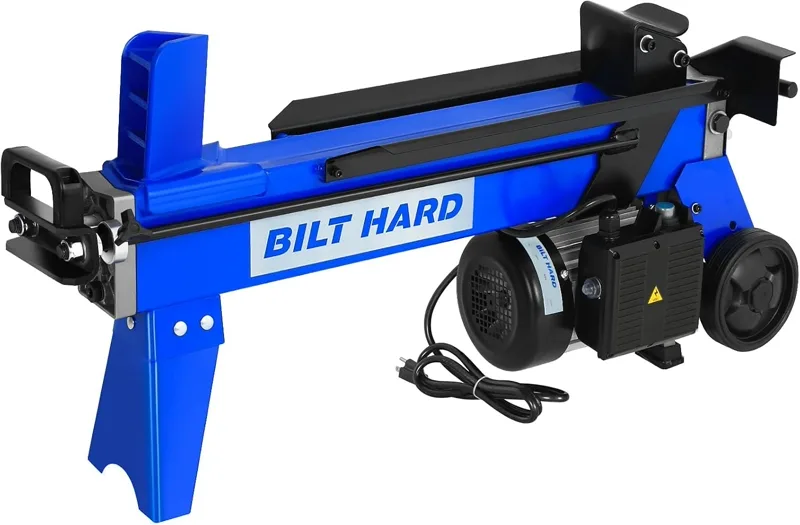
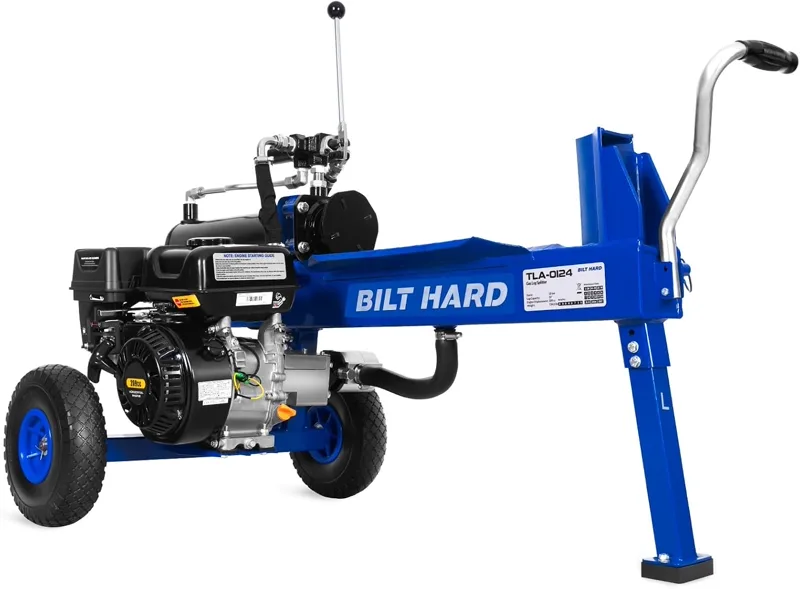
Both machines are hydraulic. A pump pushes oil into a cylinder, the cylinder drives a wedge through the round, and the return stroke pulls the wedge back. The difference is what spins the pump. On an electric splitter it is a capacitor-start motor drawing household current. On a gas machine it is a small engine burning petrol.
That single difference cascades through everything else: startup, noise, weight, maintenance, and how long you can run before something needs attention. It also explains why two splitters rated at the same tonnage can feel like completely different tools in the yard.
Motor torque versus engine horsepower
An electric motor produces strong torque from a standstill, which is exactly what a hydraulic pump wants. An engine has to build revs before it makes power, so a gas splitter needs a throttle setting and a moment of warm-up. Neither is better in the abstract. The electric machine simply starts every stroke at full effort, while the gas machine gets there after a beat.
Cycle time and what it feels like in use
Cycle time is the number that decides whether a session feels productive or like a chore. It measures how long the ram takes to travel out, split and return. Electric machines tend to be slower here, particularly on green wood and knots, because the motor and pump are sized to a household circuit rather than to production speed.
Gas splitters recover faster under load, which matters when you are feeding a steady rhythm and stacking as you go. If your splitting happens in short bursts with plenty of breaks, the difference is invisible. If it happens on a Saturday with three helpers and a trailer to fill, it compounds quickly.
What tonnage does and does not tell you
Tonnage is the force the ram can apply, and it is the only number most shoppers compare. It is useful up to a point: it tells you what the machine will attempt. It says nothing about beam height, wedge design, log cradle, or how much of that force survives a knotty crotch. A modest machine with a sharp wedge and a stable beam often outperforms a bigger one that flexes.
Wood species and seasoning matter as much as the rating. Dry softwood splits easily on almost anything. Green oak and elm will stall a machine that looked generous on paper, which is why the honest advice is to size for the wood you actually get, not the wood you hope for.
Noise, exhaust, and where you can work
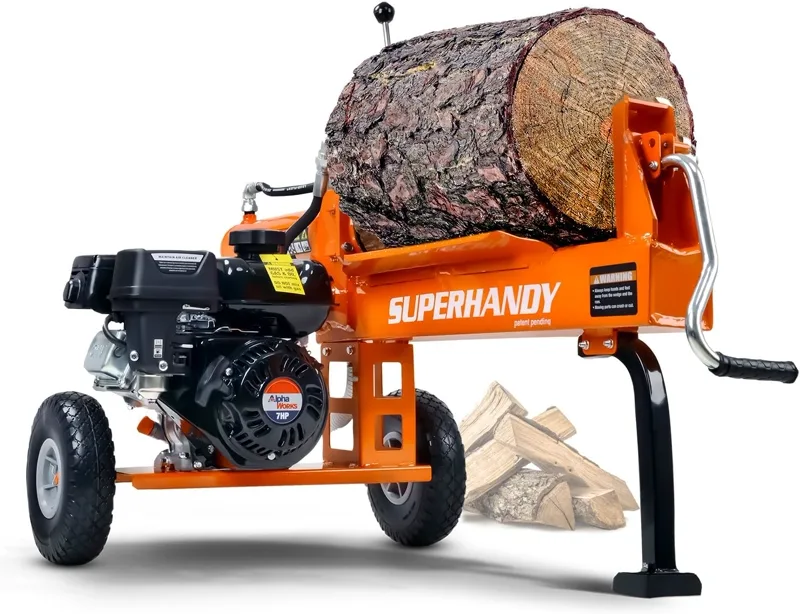
An electric splitter hums. You can hold a conversation next to it, run it under a carport, and split at seven in the morning without upsetting anyone. A gas splitter barks, and it produces carbon monoxide, which rules out garages, sheds and any enclosed space no matter how well ventilated you think it is.
This is the difference that most often decides the purchase. If your only workable spot is indoors or under a roof, an engine is simply the wrong answer, and no amount of tonnage fixes it.
Cold starts and winter reliability
Firewood season is cold season. An electric motor does not care about frost; it turns over as long as the circuit holds and the cord is not stiff as a rope. An engine cares a great deal. Cold oil, stale fuel and a flooded carburettor are the standard reasons a gas splitter refuses to start in January.
If you buy gas, treat fuel as a maintenance item: fresh petrol, a stabiliser, and a tank that does not sit half full for months. That single habit prevents most of the frustration people blame on the machine.
Log diameter, table height, and your back
Splitter geometry matters more than most buyers expect. A low beam means bending for every round, and a hundred rounds of bending is a backache with a schedule. A taller machine with a log cradle keeps the work at a height you can feed without lifting, and it catches the halves before they roll into the dirt.
Lifting a round onto the beam
Every splitter has a practical weight limit, and it is usually your shoulders rather than the machine. Large rounds need to be lifted or rolled onto the beam, and a heavy machine with a low table makes that worse. If your wood arrives in big diameter, plan for a vertical splitting position or a lift assist, not just more tonnage.
Two-stage pumps and what they buy you
A two-stage pump shifts from high flow at low pressure to low flow at high pressure. In practice it means the ram moves quickly until it meets resistance, then slows down and pushes harder. It is the reason a modest electric splitter can keep up with a steady rhythm instead of crawling through every stroke, and it is worth checking for on any machine you consider.
Moving the machine, fuel and running costs
Electric splitters are usually light enough for one person to tip onto wheels and roll, which suits a yard where the pile moves. Gas machines are heavier, often need a hand from a second person, and the bigger ones want a tow hitch. If your splitting spot is fixed, weight is not a problem. If it moves, it is the whole problem.
Electricity is cheaper per hour than petrol, and an electric splitter needs nothing but a circuit and a heavy enough extension cord. Gas machines add fuel, oil changes, filters and spark plugs to the ledger. None of those costs are dramatic on their own; together they turn a machine that was cheap to buy into one that asks for attention every season.
Maintenance and off-season storage
An electric splitter asks for hydraulic fluid checks, a clean ram, and a cord that has not been run over. Store it dry and it will start in spring. A gas machine wants the tank drained or stabilised, the plug cleaned, the air filter checked and the oil changed, and it still expects to be difficult after a long winter.
Safety habits that change with the power source
Hydraulic force does not care what spun the pump, so the core rules are identical: keep hands off the beam, split one round at a time, and never reach over a moving ram. The power source adds a few of its own.
Kickback and the two-hand rule
Kickback happens when a round catches the wedge and jumps. It is more common with dry, knotty wood and with a dull wedge.
- Keep both hands on the controls until the ram returns, and release the lever if a round shifts.
- Run a gas machine outdoors only, and shut it down before refuelling.
- Check the cord and plug on an electric machine before every session, and use a circuit with earth leakage protection.
Splitting at the woodpile versus splitting at the house
Where you split decides almost everything. A machine parked beside the stack, under cover and near an outlet, is an electric machine’s home ground. A machine that has to follow a trailer into a field, work off a generator or sit in the weather is a gas machine’s job. Be honest about which one describes your winter.
Which splitter fits your woodlot
If the pile lives within cord’s reach of the house, buy electric and spend the difference on a machine with a two-stage pump and a beam height that saves your back. If the wood is somewhere a cord will not follow, buy gas and accept the fuel, noise and maintenance as part of the job.
Either way, size for the rounds you actually handle rather than the tonnage on the box, and leave room in the budget for a sharp wedge and a log cradle. Those two details change the working day more than another few tons of rated force. Swipe the table below to compare the two power sources side by side on a phone.
| Aspect | Electric splitter | Gas splitter |
|---|---|---|
| Power source | Corded electric motor | Small four-stroke engine |
| Starting | Switch, no pull cord | Choke and pull, cold blooded |
| Noise | Motor hum, conversation possible | Engine bark, ear protection |
| Exhaust | None | Carbon monoxide, outdoors only |
| Mobility | Light, tips onto wheels | Heavy, tongue or tow |
| Cycle speed | Steady, slower on knots | Faster recovery under load |
| Upkeep | Fluid, cord, connections | Oil, filters, fuel, plug |
| Best setting | Garage, carport, near outlet | Woodlot with no power |
This table compares how the two power sources behave on a working day. It is not a ranking of individual models.
Final take
Electric versus gas is a question about your yard, not about the machine. Buy for the place the wood actually sits, keep the wedge sharp, and put the rest of the budget into beam height and a cradle that keeps the halves out of the dirt. If you are still kitting out the shed, the workshop tools archive and our guide to manual pole saws for limbing cover the rest of the woodpile workflow.


