Workshop tools · Cutting
One saw shears steel and throws sparks, the other slices wood at an angle. Confusing them is expensive.
A chop saw and a miter saw share a hinge, a handle and a very similar silhouette. Walk past both on a showroom floor and the difference looks like trim. Stand at the bench with a length of square tube or a piece of oak casing in your hand and the gap opens up fast, because one machine is designed to destroy metal with friction and the other is designed to leave a clean edge on wood.
If you are building out a shop that handles both materials, the useful question is not which saw is better. It is which saw you will reach for on a normal Tuesday, and what happens to the other material when you try to force it. This guide works through the practical differences so you can decide where to spend bench space first.
Quick take
- Steel, rebar, tube and channel are the bulk of your cuts, so a chop saw earns the bench first.
- Trim, framing and repeatable angles dominate, so the miter saw is the primary tool and metal waits.
- If cut edges have to be welded, ground or painted with no second operation, only a cold-cut saw will do.
- If both materials show up weekly, buy them as two machines with two jobs instead of one compromise.
What a chop saw is actually for
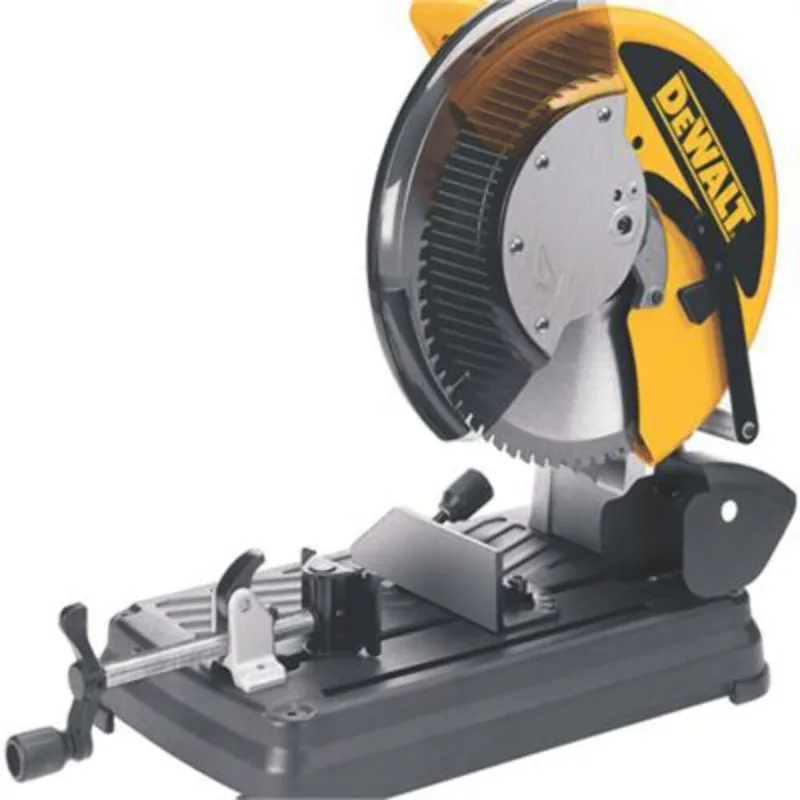
A chop saw is a cut-off machine. The head swings down on a pivot and the blade meets the work at ninety degrees, with a vise and a fence holding the stock so your hands stay clear of the wheel. It exists to shorten metal: angle iron, rebar, square tube, channel, threaded rod, and the occasional piece of plastic or composite.
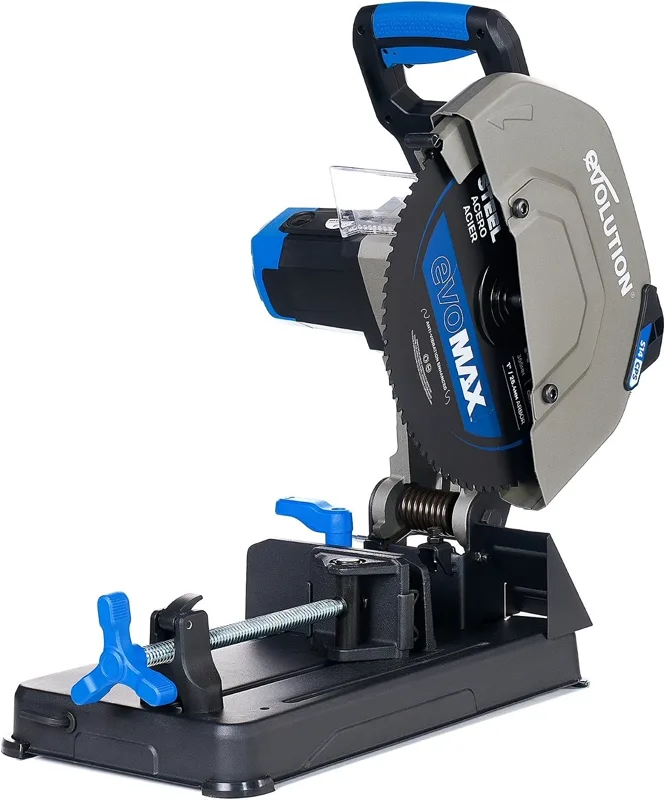
Everything about the design points at that job. The base is heavy and ribbed, the vise is stout, and the blade is either an abrasive wheel that grinds through steel or a carbide-toothed cold-cut blade that machines a chip. Neither version is built to leave a furniture-grade edge. They are built to get a length of steel down to size without wandering.
What a miter saw is actually for
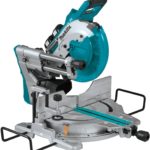
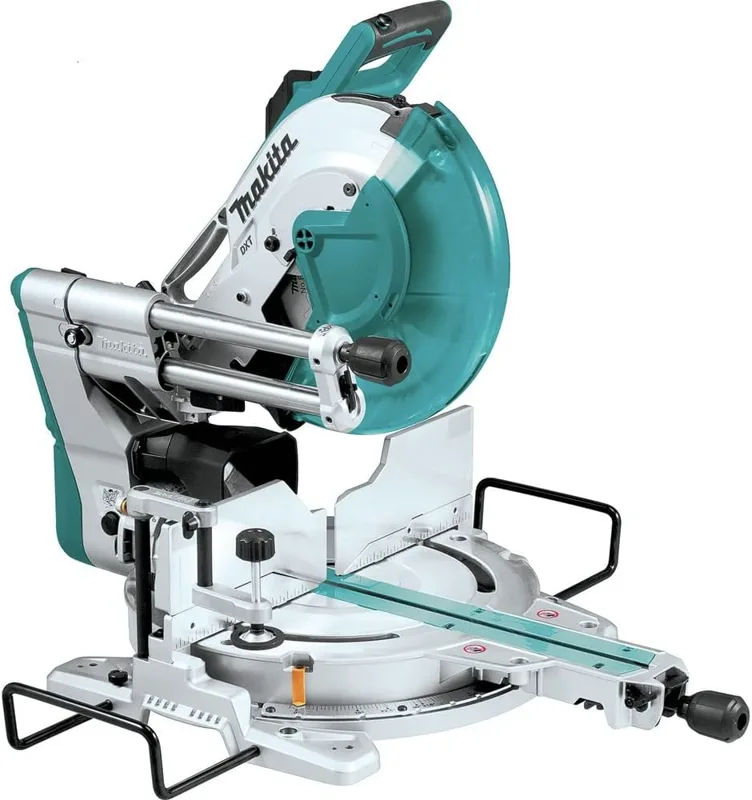
A miter saw is a crosscut machine. The table rotates, the head tilts on many models, and the blade is a toothed carbide disc spinning fast enough to sever wood fibers cleanly. You use it to bring trim, casing, framing lumber and dowel to length and to hit an angle that has to match something already installed.
The design bets on long stock and repeatability. The fence is tall and straight, the table has detents at common angles, and the whole thing is light enough to carry to a job. What it does not have is a way to hold steel still while a hot wheel grinds through it, and it is not meant to.
Blade speed changes the whole equation
An abrasive chop saw turns a reinforced wheel at high surface speed and removes material by friction. The cut is loud, the wheel wears down, and the steel at the cut line gets hot enough to change color. That heat is the mechanism, not a side effect, and it leaves a rough, burred face that usually needs a pass with a grinder before it is ready to weld or paint.
Abrasive wheels and heat
A cold-cut saw solves the same problem differently. The blade turns slowly, the teeth carve a chip, and the cut stays cool enough that the material keeps its temper. That is why fabrication shops pay for the cold-cut version: the part comes off the saw ready to go together. The trade is a much higher purchase point and a blade that can be chipped if you rush it.
A miter saw sits outside this argument entirely. Its blade is designed to cut fibers, not to survive grinding contact with steel. Running a wood blade into metal is how teeth end up on the floor.
Cut finish and the cost of a second pass
Finish is where the two machines stop being interchangeable. A miter saw with a decent 60-tooth blade leaves an edge you can assemble immediately: tight glue lines, no tear-out on the face, square enough to trust against a square. An abrasive chop saw leaves a burr along both edges and a heat-affected zone at the cut.
That second pass is where the real cost hides. If every cut needs a grinding disc and a deburring tool, a twenty-cut railing job turns into an afternoon. A cold-cut saw removes that step, and a miter saw never had it because wood does not burr the same way. Count the cuts you make in a month and multiply by the cleanup, then add consumables: abrasive wheels are cheap and vanish quickly in hard steel, and cold-cut blades cost more up front but last far longer if you do not chip them.
Capacity: crosscut width and depth of cut
Chop saws are rated by blade diameter and by how wide a piece they swallow at ninety degrees. A 14-inch machine handles common angle iron and tube without drama, but the head does not slide, so wide stock stops at the fence opening.
Miter saws split into fixed and sliding designs, and the sliding versions buy you crosscut capacity by running the head along rails. That is also why they need more room behind the fence and why they are heavier to move. If your work is trim and casing, a fixed saw with a tall fence is often the better fit than a long slider you have to shove into a corner.
The fence, the vise, and how the work is held
Workholding is the least glamorous difference and the one you notice daily. A chop saw clamps the stock in a screw vise that pulls it tight against a fence, which is what you want when a hot wheel is grinding inches from your fingers. The clamp is part of the machine, not an accessory.
Clamping steel versus clamping trim
A miter saw relies on you to hold or clamp the work against the fence, and most of us use a hand for short pieces and a clamp for anything long. That works because a toothed blade cuts fast and pulls the stock down and back rather than sideways. It does not work on steel, where the wheel wants to climb and the burr catches.
If you plan to cut small metal parts, budget for a proper clamp no matter which saw you buy. Short offcuts are the most common injury in both setups.
Dust, sparks, noise and shop air
A miter saw makes sawdust, and sawdust is at least manageable: it falls, it sweeps, and a hood or a shop vac catches a good share of it. A chop saw makes sparks, hot grit and fine metal dust that travels further than you expect and settles on everything. That grit is abrasive and it does not do your sliding mechanisms any favors.
If the saw lives indoors, plan for a fire-resistant corner with a clear sweep path. Sparks landing in a pile of planer shavings is a genuinely bad afternoon. Noise belongs in the same planning: an abrasive wheel is one of the loudest tools in a small shop, so batch metal cutting into daylight hours and treat hearing protection as part of the setup.
Portability and where the saw lives
Chop saws are bench machines. They are heavy for their size, they want a stable surface, and they are happiest bolted to something that does not move. Miter saws are the opposite: many are designed to be carried to a job and set on a folding stand, and the cordless versions remove the outlet question entirely.
If your work happens in one place, weight is a feature rather than a tax.
Safety differences that show up daily
Both tools are safe when the work is clamped and the guard is intact, and both punish rushing. The difference is the failure mode. A miter saw kicks material back along the fence; a chop saw throws sparks and hot grit forward and can shatter a wheel if it is abused or mounted wrong.
Two habits matter more than any feature on the spec sheet:
- Keep the offcut side clear so nothing pinches the blade.
- Never reach across a spinning wheel to move a piece you already released.
Angle cuts and repeatability
Miter saws win this one outright, and it is not close. The table rotates through marked detents, the head bevels on most models, and once you set an angle you can repeat it all afternoon. That repeatability is the entire reason trim carpenters own one.
Detents, stops, and marked scales
Chop saws usually offer ninety degrees and forty-five, and the forty-five is set by loosening a fence bolt and swinging it over. It works, it is not fast, and it is not something you want to reset twenty times on a railing job. If angled metal cuts are routine, a saw with a proper mitering table is worth the upgrade.
Which saw belongs in a mixed-material shop
Start with the material that pays for the shop. If you fabricate, repair trailers, build gates or weld, the chop saw is the tool that removes the most minutes from your week. If you trim houses, build cabinets or hang doors, the miter saw does the same job in wood and does it with an edge you can install.
If both are true, buy the miter saw first and a cold-cut saw second. The miter saw is the one you will use on almost every project; the metal saw becomes a bottleneck if you try to substitute. Forcing wood through a chop saw is the expensive version of this decision.
Here is the comparison laid out side by side. Swipe the table sideways on a phone to see the full set of rows.
| Aspect | Abrasive chop saw | Miter saw |
|---|---|---|
| Blade type | Abrasive wheel or cold-cut carbide | Carbide-tipped toothed blade |
| Material focus | Steel, rebar, tube, channel | Wood, trim, composite |
| Edge finish | Rough to burr-free by blade | Clean, assembly ready |
| Cut speed | Slow through thick steel | Fast in softwood trim |
| Angle range | Ninety and forty-five miter | Full miter, often bevel too |
| Debris | Sparks, hot grit, metal dust | Sawdust and chips |
| Workholding | Integral screw vise | Fence plus user clamp |
| Footprint | Compact, heavy base | Long rails, infeed space |
This table compares how the two saws behave on the bench. It is not a ranking of individual models.
A sensible buying order
Buy the saw that matches your dominant material, then add the second machine when the substitutions start costing you time. Along the way, spend on the blade before you spend on features: a sharp, appropriate blade on a plain saw beats a dull one on a machine with a laser. If you want a starting point for the wood side, our cordless miter saw buying guide covers what actually matters when you are cutting trim away from an outlet.
Final take
The two saws are not rivals. They are two answers to different questions: how do I shorten steel without wrecking the edge, and how do I cut wood at an angle I can repeat. Answer the one you ask most often, buy for that, and let the second machine arrive when the work justifies it. You can browse the rest of the workshop tools archive if you are still mapping out bench space.