Kitchen appliances · Stand mixers
The three decisions that separate a mixer you keep for twenty years from one you replace in two.
A stand mixer is one of the few countertop appliances people either keep for decades or give away within a year, and the badge on the front is rarely what decides it. The outcome is set by three choices you make before the machine is even plugged in: how the tool moves through the bowl, how big that bowl is, and what kind of motor sits behind both.
This guide works through those choices in the order they matter, then covers the small habits that decide whether the machine is still smooth after a decade of Saturday baking.
The short version
- Choose the mixing action first. It limits everything the machine can do later.
- Size the bowl to your largest regular batch, not to the recipe you make twice a year.
- Read wattage as headroom, then look at how the machine sheds heat.
- Pay for the attachment hub you will actually use, not the one printed on the box.
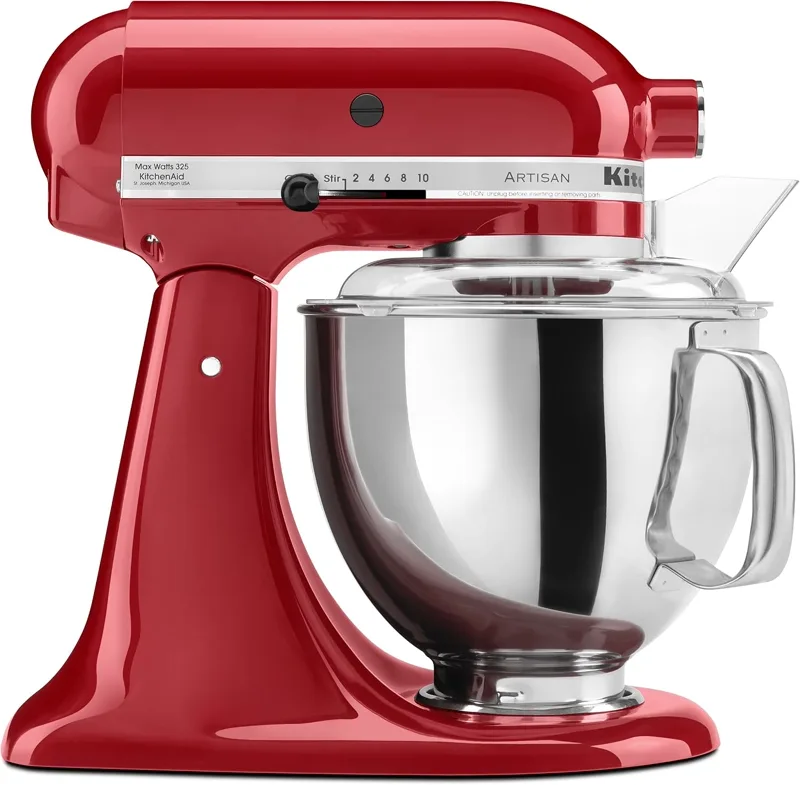
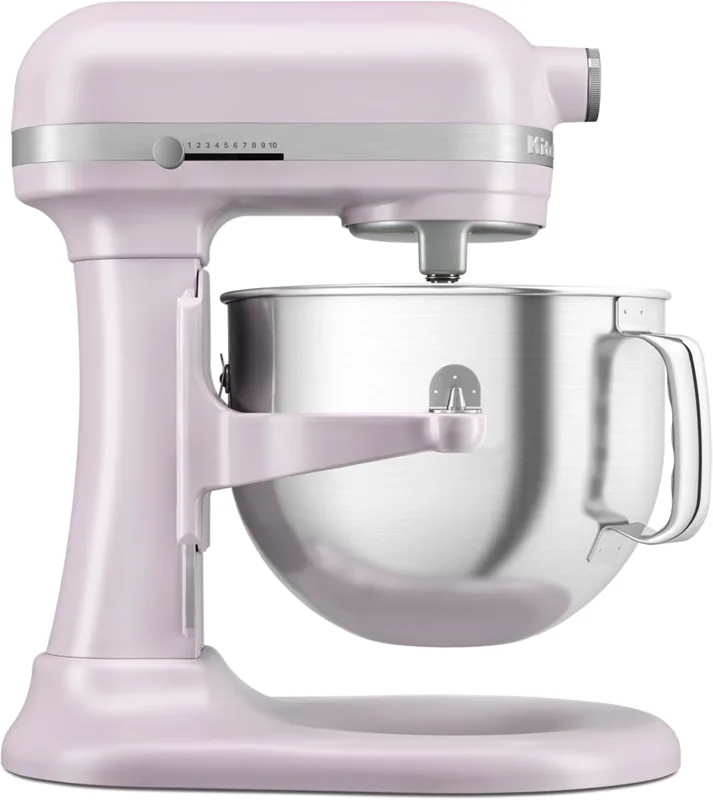
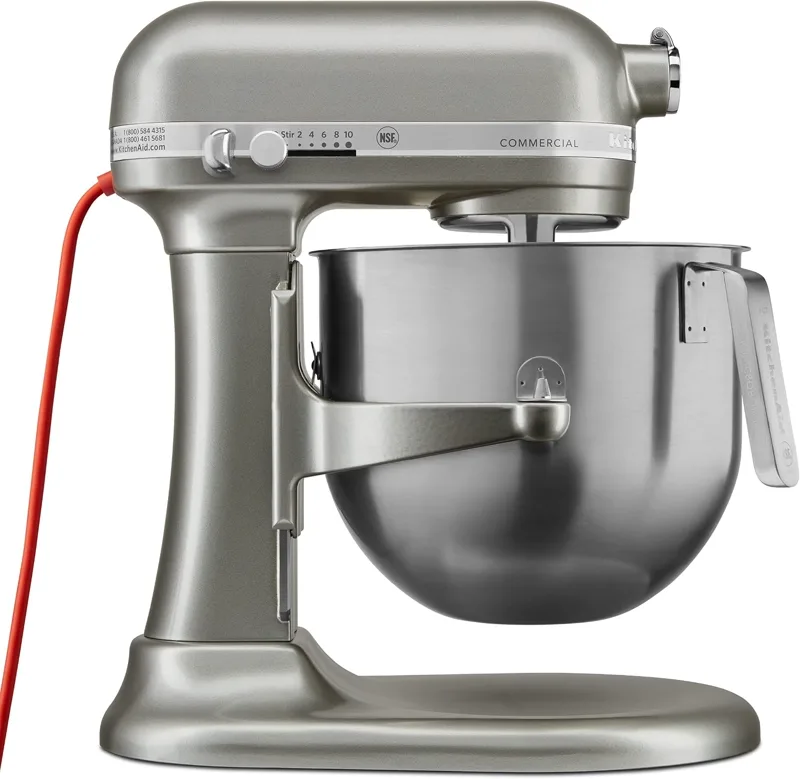
The three machines used as examples below sit at different points in the KitchenAid line, from a 5-quart tilt-head to an 8-quart commercial unit. Swipe the table sideways on a phone if the columns run off the screen.
| Aspect | Artisan 5-Quart | 7-Quart Bowl-Lift | 8-Quart Commercial |
|---|---|---|---|
| Mixing action | Planetary head | Planetary head | Planetary, gear-driven |
| How the bowl loads | Tilt the head back | Crank the bowl up | Crank the bowl up |
| Typical batch | One cake or one cookie dough | Double batches and bread | Small-bakery, repeated loads |
| Clearance needed | Room above to tilt | Room to the side, plus height | Room to the side, plus height |
| Attachment hub | Front hub, wide range | Front hub, wide range | Front hub, commercial range |
| Where it fits | Everyday home baking | Bread-heavy home kitchen | Cottage food or weekly volume |
| Upkeep | Wipe the head, wash the bowl | Wipe the head, wash the bowl | Same, plus a gear-housing check |
| Main risk | Too much dough in one go | A full bowl is heavy to lift | Counter space and head height |
This table compares how the three machines behave in use. It is not a ranking, and it does not replace the numbers on each product page.
Start with the mixing action, not the wattage
Every stand mixer moves a tool through a bowl. How it moves is the mixing action, and that single difference sets what the machine can handle. A planetary head carries the beater around the inside of the bowl while the beater also spins on its own axis, so the tool reaches the whole bowl rather than one ring of batter. Simpler machines spin the tool in place, or spin the bowl beneath a fixed tool. Those are cheaper to build and perfectly good for thin batters. The difference appears the first time you mix a stiff dough.
What planetary mixing actually does to a dough
Planetary motion folds, stretches, and turns the dough at the same time. That combination develops gluten without letting the dough climb the hook and wrap itself into a ball that never gets kneaded. It also lets the beater sit close to the bowl wall, which is why butter creams more evenly than it does under a hand mixer. The cost is mechanical: more gears, a heavier head, more metal. That is why these machines are bigger and dearer, and why they tolerate a stiff dough that would stall something lighter.
Tilt-head and bowl-lift change your workflow, not the crumb
Both are planetary. The difference is how the bowl goes in and out, and how much clearance the head needs. A tilt-head lifts at the front and swings the bowl out from under it, which is quick for small batches and easy to scrape down. A bowl-lift keeps the head fixed and cranks the bowl up into the beater. The bowl is usually larger and heavier, and the machine needs side room rather than overhead room. Neither bakes a better cake. What changes is how willing you are to use the machine when the bowl is full, heavy, and covered in dough. The full comparison of these two formats is worth reading before you commit to a shape.
When a second bowl is worth buying
If you bake bread and cake on the same day, a second bowl saves a wash and keeps dough flavour out of a delicate batter. It only pays if the machine stays on the counter, within reach. A spare bowl in a cupboard is just another thing to store.
Bowl capacity is a dough limit, not a volume
A quoted capacity is measured with water, and dough behaves nothing like water. Flour absorbs liquid, gluten tightens, and a dough that fills half the bowl at the start can reach the rim within two minutes of kneading. The practical rule is to stay inside the maker’s rated dough weight, and to keep bread dough below roughly two thirds of the bowl. A batch that looks comfortable when you start the machine can still walk the head across the counter ten minutes later.
A quick way to size a bowl for your household
Count your largest regular batch rather than your average one. Two loaves of sandwich bread, a double batch of cookies, or one large cake plus frosting is the number that matters. If that batch would reach the rim before kneading begins, move up one size, and accept that small batches will need more scraping.
Wattage is a ceiling, not a promise
Wattage describes how much power a motor can draw. It does not describe how much torque reaches the dough, and it says nothing about how long the motor can keep doing it. A high-wattage motor with poor ventilation will still overheat in a stiff dough, while a lower-wattage motor driving well-cut gears can turn a heavy load all afternoon. Read the figure as headroom, then check the things that decide whether the headroom survives: gear material, airflow through the housing, and whether the maker rates the machine for continuous use or for short bursts.
The motor type explains the noise and the heat
Most home mixers use a universal motor: small, light, loud, and warm after a few minutes of work. Many premium and commercial machines use an induction motor: heavier, much quieter, and comfortable running longer, but it needs a bigger housing and a higher price. If you bake in short bursts, a universal motor is fine and the savings are real. If you knead bread every week and the machine sounds strained after five minutes, the motor type is the thing to change, not the recipe.
Speed control: detents versus a smooth ramp
Mechanical levers click into fixed positions. Electronic controls ramp the motor and try to hold a speed as the load rises. What matters for baking is a first speed slow enough to mix flour in without throwing it out of the bowl, and a control that does not creep upward as dough stiffens.
Dough load is what actually kills mixers
Motors die from heat; gearboxes die from shock. The usual sequence is a stiff dough, a speed set too high, and a machine asked to keep going while it is clearly labouring. The machine will usually warn you before it fails: the head starts to rock, the note of the motor rises, and the bowl creeps across the counter. Stop, let it rest, and finish by hand if the dough is fighting back.
- Start every dough on the lowest speed until the flour is fully wet.
- Add flour in stages and let the hook pull the dough together before you add more.
- If the head starts to walk or the motor note climbs, stop for five minutes instead of pushing through.
The attachment hub is the long-term value
A front hub turns the mixer into a grinder, a pasta roller, a spiralizer, or a slicer, and that is often what keeps the machine on the counter after the novelty of cake wears off. Check the hub size and the attachment line before you buy. Some hubs only take the maker’s own range, and a cheap mixer becomes expensive the day you want a meat grinder that does not exist for it.
Housing material and what it does for stability
Die-cast metal housings add weight, and weight is what keeps a mixer still when a stiff dough starts to rock the head. Plastic housings are lighter and cheaper, and many are durable enough for years of light use, but they transmit vibration and they can walk on a smooth counter. Feel the machine before you buy if you can: a mixer that slides under load will keep sliding.
- Rubber feet and a dry, flat surface matter as much as the housing itself.
- A silicone mat under the machine costs little and stops most creeping.
- Weight is a feature until you have to lift the machine to clean under it.
Footprint, headroom, and the counter you actually have
Measure the space under the cabinet, then add the clearance the head needs. A tilt-head needs room above to swing back, and that measurement is often larger than people expect. A bowl-lift needs room to the side and enough height to crank the bowl down and lift it out. If the mixer lives under a low shelf or inside a cupboard, that single measurement decides which type you can use, whatever else you have read.
A cleaning routine that keeps it out of the repair shop
Most repairs trace back to flour inside the head and water in the gears. Neither takes long to prevent. Wipe rather than wash, and brush out the vents before flour turns into a paste with the steam from a warm bowl.
- Wipe the head and the hub with a dry cloth; never run water over the machine.
- Wash bowls and coated tools by hand, and dry them fully before storing.
- Once a month, tip the head and brush flour out around the hub and the vents.
Noise, vibration, and where the machine sits
A mixer on a hollow countertop sounds twice as loud as the same machine on a solid surface. Place it on the most solid part of the counter and keep it off a thin overhang. If the noise rises sharply mid-knead, treat that as information about load rather than about the room.
Service, parts, and warranty in practice
Check that bowls, beaters, and the hub cover can be bought on their own, and that the maker still lists them years after the model launched. A machine with a long parts tail is worth more than one with a longer warranty and no spares, because the failure that ends a mixer’s life is usually a small plastic part, not the motor.
What commercial means at home
A commercial-rated mixer usually brings a gear-driven transmission, a bigger bowl, and a warranty written around daily use. It also brings weight, height, and a price that only makes sense if you genuinely mix several times a week. For a household that bakes on weekends, the mid-size planetary machine is the better buy, and the money is better spent on a second bowl and a spare beater.
If you are still deciding between the two home formats, the tilt-head versus bowl-lift comparison covers the trade-off in more detail, and the rest of our kitchen and cooking guides cover the appliances that tend to sit next to the mixer.