Home cleaning · Carpet care
One machine washes a whole room and then sits in a closet for eleven months. The other lives on a shelf and comes out when the dog knocks over a bowl. The right answer has less to do with suction than with how much carpet you own and who keeps spilling on it.
Walk into the carpet care aisle and you will find two shapes of machine that sound like the same product. An upright carpet cleaner is a floor machine with a water tank, a brush roll, and a handle you push like a vacuum. A portable spot cleaner is a small tank with a hose and a nozzle that sprays, scrubs, and sucks up one stain at a time.
This guide compares three machines that represent the choice in today’s market: two uprights and one portable spot cleaner. It covers water extraction, tank size, brush action, weight, solution chemistry, drying time, and storage, then narrows the decision to a whole-house carpet, a small apartment with one rug, and a pet household that needs both.
Quick answer
- Best for wall-to-wall carpet in a house you own: an upright carpet cleaner, because the brush roll does in one pass what a nozzle does in twenty.
- Best for a small apartment with one or two area rugs: a portable spot cleaner, because it stores on a shelf and reaches the stain without moving furniture.
- Best for a pet household: both, in that order, because accidents happen between deep cleans rather than instead of them.
- Skip both if the floor is hard surface: a mop and a wet-dry vacuum cover that job with less water and less drying time.
An upright carpet cleaner is a floor machine with a water tank
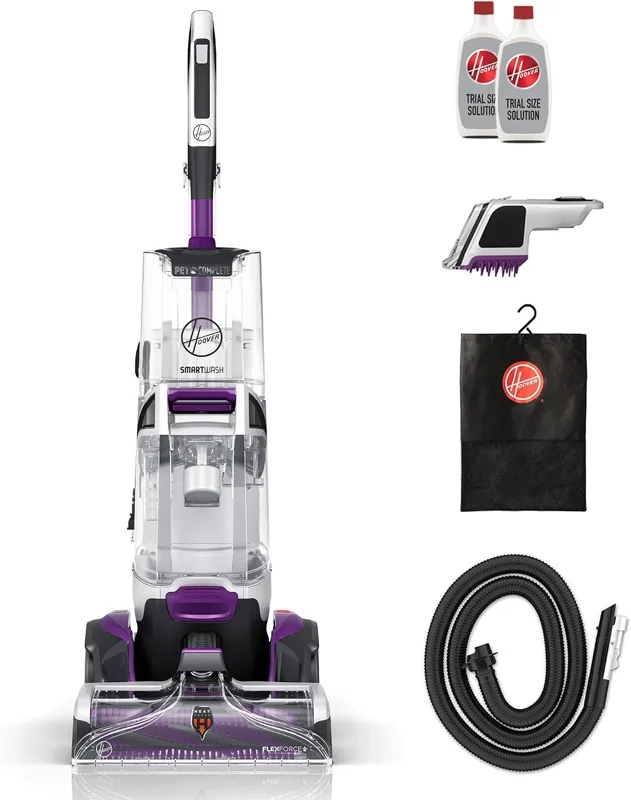
An upright carpet cleaner combines three jobs in one body: it sprays solution into the pile, a powered brush roll works it loose, and a vacuum shoe pulls the dirty water back into a tank. You push it forward, pull it back, and watch a transparent dome fill with grey water.
The machine is built around coverage. Wide cleaning paths, large tanks, and long cords exist so you can finish a bedroom without refilling. That coverage is also the weight: an upright carries its water with it, so the heaviest version of the machine is the one you are pushing.
A portable spot cleaner is a spray bottle with suction
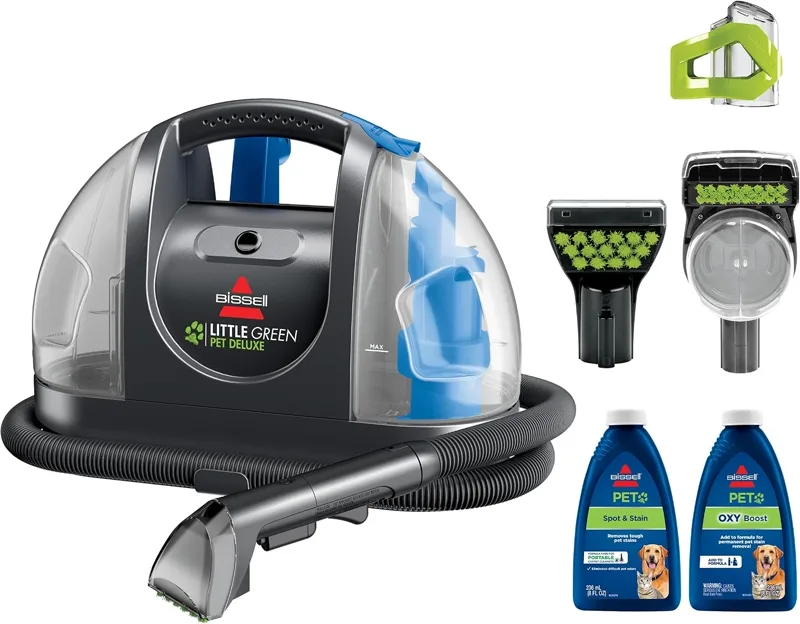
A portable spot cleaner is the opposite trade. The tank is small, the hose is short, and the cleaning head is a hand tool you press into a stain. There is no brush roll moving across the floor, so the work is done by the spray, the agitation you supply, and the suction.
What you get in exchange is reach. A spot cleaner goes onto a sofa, up a staircase, into a car footwell, and onto a mattress, which is exactly where most stains actually happen. It also stores on a shelf, which matters more than buyers expect.
How the three picks compare side by side
The table below compares the machines on the things that change daily use. On a phone you can swipe the table sideways to see every column.
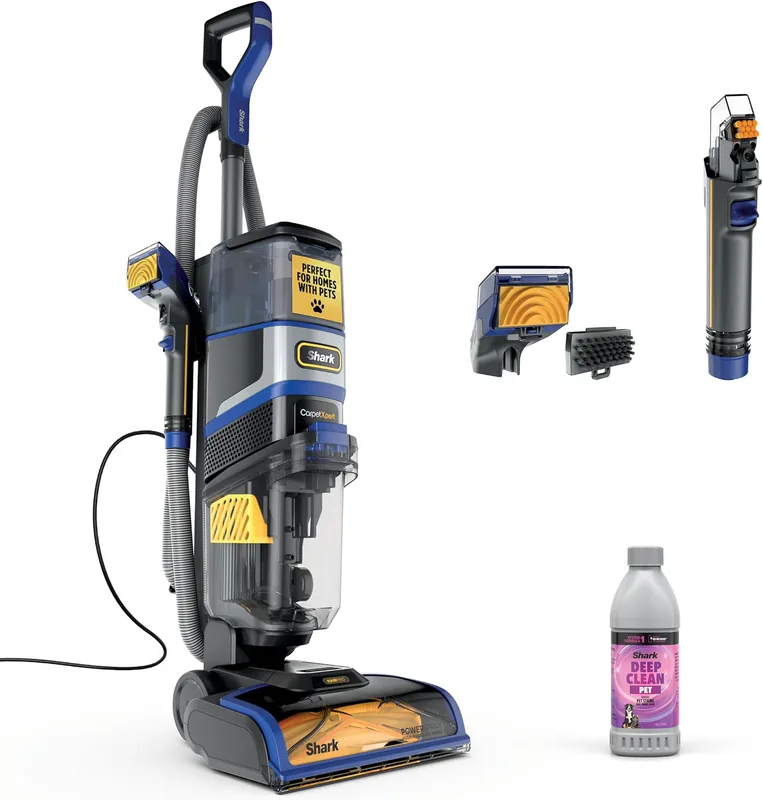
| Aspect | Hoover SmartWash Pet | Shark CarpetXpert EX304 | Bissell Little Green Pet Deluxe |
|---|---|---|---|
| Format | Upright, push-and-pull | Upright with lift-off tools | Portable hand-held spot cleaner |
| Cleaning action | Powered brush roll across the width | Brush roll plus powered spray | Hand nozzle, you supply the scrubbing |
| Coverage per pass | A full room width | A full room width plus hose tools | A stain-sized patch |
| Tank and refills | Separate clean and dirty tanks | Large tanks, self-cleaning cycle | Small tank, frequent refills |
| Reach | Floors, plus a wand for stairs | Floors, stairs, upholstery, car | Upholstery, stairs, car, mattress |
| Weight in use | Heavy when full | Heaviest of the three | Carried in one hand |
| Drying time | Hours, depends on passes | Hours, strong extraction | Minutes on a small patch |
| Main trade-off | Needs closet space | Costs the most | Slow on open floor |
This is a comparison of how each machine behaves in a room, not a ranking of one product over another. Photo: Amazon product listings.
Water extraction is what actually dries a rug
Every machine in this aisle does the same three things: put water in, loosen dirt, take water out. The first two are easy to advertise. The third decides whether your carpet is dry by dinner or damp until tomorrow, and it is the number that separates a good machine from a wet one.
Extraction depends on the seal between the vacuum shoe and the pile. A stiff, wide shoe with strong airflow pulls more water out per pass. A hand tool with a small opening pulls less, which is why spot cleaning a whole room takes an afternoon.
Tank size sets how often you stop
Big tanks mean fewer refills and a heavier machine. Small tanks mean more trips to the sink and a machine you can lift with one hand. There is no free lunch here, only a match between tank size and the area you intend to clean in one sitting.
The other half of the equation is the dirty tank. A machine that separates clean and dirty water keeps solution strength consistent from the first pass to the last, which matters on a rug that needs two rounds.
Brushes and suction do different jobs
A brush roll lifts the pile and breaks surface tension so the solution can reach the base of the fiber. Suction then carries the loosened soil away. Skip the brush and you are washing the top of the carpet; skip the suction and you are leaving soap behind, which attracts dirt back within a week.
A portable tool makes you the brush. That is why spot cleaners work best on small, contained stains and worst on a traffic lane, where the same motion has to be repeated across several feet of floor.
Weight decides whether the machine comes back out
The best carpet cleaner is the one you are willing to carry up the stairs. A full upright weighs as much as a small child, and that weight is the most common reason a machine spends its life in a closet.
Portable cleaners win on this measure outright. If your only realistic cleaning window is ten minutes after a spill, a machine that lives within arm’s reach will be used, and a machine in the basement will not.
If you have stairs
Stairs are the hardest surface in the house: narrow, carpeted, and awkward to balance on. An upright needs a hose and a stair tool to handle them, and the machine itself has to stay on a landing. A portable cleaner was built for this shape of job and does it without lifting anything heavy.
If you have pets
Pet households generate two kinds of mess: the accident and the gradual traffic wear. A spot cleaner handles the accident within minutes, which is what keeps odor from setting. An upright handles the traffic wear, which is what keeps the room from looking tired. Homes with both usually end up owning both.
If you rent
Renters should favour the portable. It stores on a shelf, it does not need a closet, and it moves house without a truck. An upright only makes sense if the carpet is yours to maintain and the apartment is big enough to justify a floor machine.
Solution chemistry matters more than the machine
Most cleaning failures are chemistry failures. Too much detergent leaves a sticky residue that attracts soil, and too little leaves the stain in place. The machine only decides how evenly the solution goes down and how much comes back up.
Follow the dilution on the bottle, use the smallest amount that works, and rinse with clean water on the last pass. An oxygen-based booster helps on organic stains, and a second rinse is usually worth more than a stronger mix.
Drying time is a scheduling problem
Wet carpet is a furniture problem and a mold problem at the same time. Plan the room around the drying window: lift the legs of anything standing on the rug, run a fan, and open a window if the weather allows. Trying to walk on a damp carpet pushes dirt straight back into the pile.
An upright with strong extraction shortens that window. A portable cleaner leaves a small damp patch that dries quickly, which is one more reason it suits apartment life.
Storage is part of the price
An upright is roughly the size of a vacuum cleaner and needs a floor space near an outlet. A portable cleaner fits on a shelf next to the cleaning supplies. Before you buy, measure the spot where the machine will live, not just the room it will clean.
Which one fits a whole-house carpet
If the house is mostly carpet and you clean it on a schedule, an upright is the only sensible answer. The brush roll covers a room in minutes, the tanks carry enough solution for a floor, and the machine pays for itself the first time you avoid a professional cleaning.
Choose the model with the strongest extraction you can lift, not the largest tank. A machine you can push through four rooms beats a bigger one that stays in the garage.
Which one fits a small apartment with one rug
For a single area rug and a couple of upholstered chairs, a portable spot cleaner is the better buy. It costs less, stores smaller, and handles the two or three stains a year that actually justify owning a machine. The rest of the time it is out of the way, which is the point.
What to check before you buy either
Four checks catch most of the mistakes buyers make in this aisle:
- Measure the storage spot. A machine that does not fit where you can reach it will not be used.
- Check the hose length against your stairs. Short hoses force you to balance the machine on a step.
- Confirm the carpet type. Wool, sisal, and some synthetics have cleaning limits that the manual states plainly.
- Look at the drying claims with suspicion. Extraction strength matters more than any number on the box.
None of these are in the marketing headline, and all of them decide whether the machine earns its shelf space past the first month.
The short answer, if you want to stop reading here
Buy the upright if you own wall-to-wall carpet and clean it on a schedule. Buy the portable spot cleaner if you rent, own one rug, or need something that handles upholstery and car seats. If you have pets and carpet, buy the upright first and add the spot cleaner when the first accident proves the point.
Neither machine replaces a professional clean once a year, and neither fixes carpet that has already worn through. Pick the one that matches the floor you actually have.