Home cleaning · Robot mops
Tile shows every mop stroke, so the machine you pick matters less than how its pad meets a grout line and how often you have to touch it.
A robot mop used to mean a damp cloth dragged across a floor. The current generation scrubs, lifts its pad at a threshold and washes itself in a dock. What has not changed is that tile is unforgiving: a wet smear dries into a film, and a missed grout line stays visible until someone notices.
These three picks sit below a self-imposed ceiling that keeps the price of a mid-range vacuum. They solve the job three different ways, and the right one depends on whether you need a vacuum that also mops, a mop built for pet hair, or a dedicated scrubber for floors that are already vacuumed.
Quick answer
- Pick the Roborock Qrevo S Pro if one machine has to vacuum and mop a mixed floor plan.
- Pick the eufy C28 if pet hair reaches the tile before the mop does.
- Pick the EVERYBOT EDEG2 if you already own a vacuum and want the scrubbing done without supervision.
- Judge every candidate by tank size, dock upkeep and edge behaviour before you look at a suction figure.
What a sub-five-hundred ceiling actually buys
At this level you get a robot that maps a floor, follows a planned route and returns to a dock that washes its mop. You do not get the top of any single brand’s range, and you should not expect it. What you get is the version of these features that a careful shopper can live with for years.
The practical difference between models at this tier is rarely the cleaning pass itself. It is how the dock behaves, how much floor one tank covers, and whether the mop head suits the mess your household actually makes.
Tile rewards scrubbing more than wiping
Glazed tile is easy to wet and hard to clean. Water alone lifts dust, but the film left behind is what makes a floor look tired, and grout lines collect a paste that a light pass simply pushes around.
That is why the mop head matters more than the vacuum side on tile. A rotating pad or a powered roller applies pressure in a small area, which is the closest a robot gets to the way a person scrubs a sticky spot by hand.
Roborock Qrevo S Pro: the do-everything pick
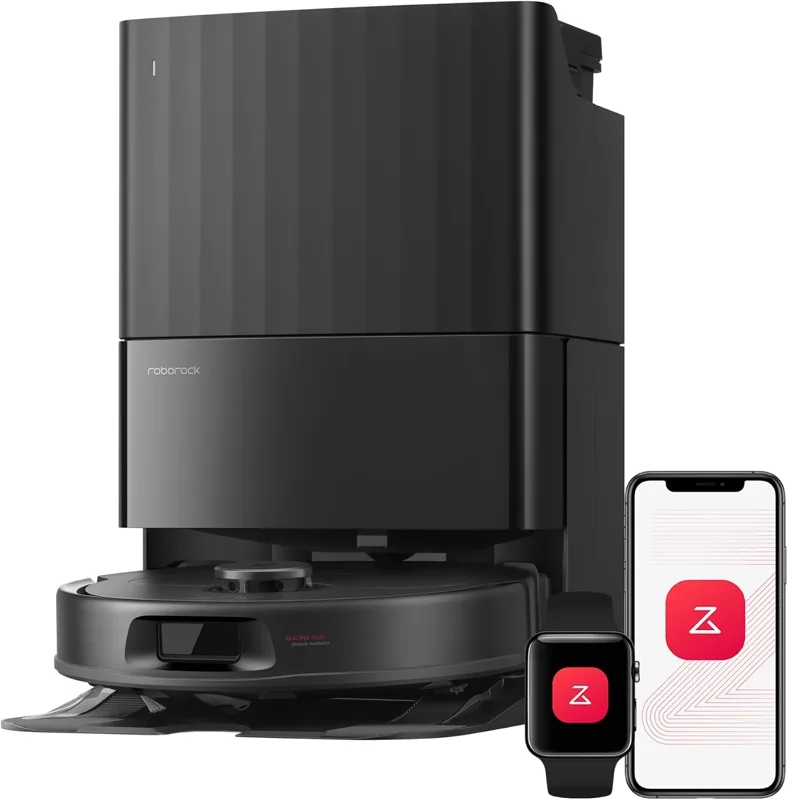
The Qrevo S Pro is the compromise most households end up wanting: a robot vacuum with a mop module and a dock that handles its own washing. It sweeps a room, transitions to a damp mop pass, and parks itself without asking you for a cloth.
On a floor plan that mixes tile, laminate and a rug or two, that single-machine approach removes the argument about which device runs first. It is the least complicated answer for someone who does not want two robots sharing a hallway.
Where the Qrevo S Pro asks for patience
A combination machine carries combination upkeep. The mop module has to be rinsed and dried, the dock needs its water tanks filled and emptied, and the brush roll collects hair that a dedicated vacuum would have swallowed. None of it is difficult, but it is a weekly habit rather than a monthly one.
eufy C28: the pick when pet hair comes first
Hair is the enemy of a mop. It wraps around pads, clogs the intake and turns a clean floor into a streaky one. The eufy C28 pairs its vacuum with a powered roller mop, a design that keeps the cleaning surface moving against the floor instead of dragging a loose cloth through whatever it finds.
For a household with a shedding animal and hard floors throughout, that ordering makes sense: lift the hair on the pass, then scrub the tile behind it. The dock handles washing so the roller does not sit damp between runs.
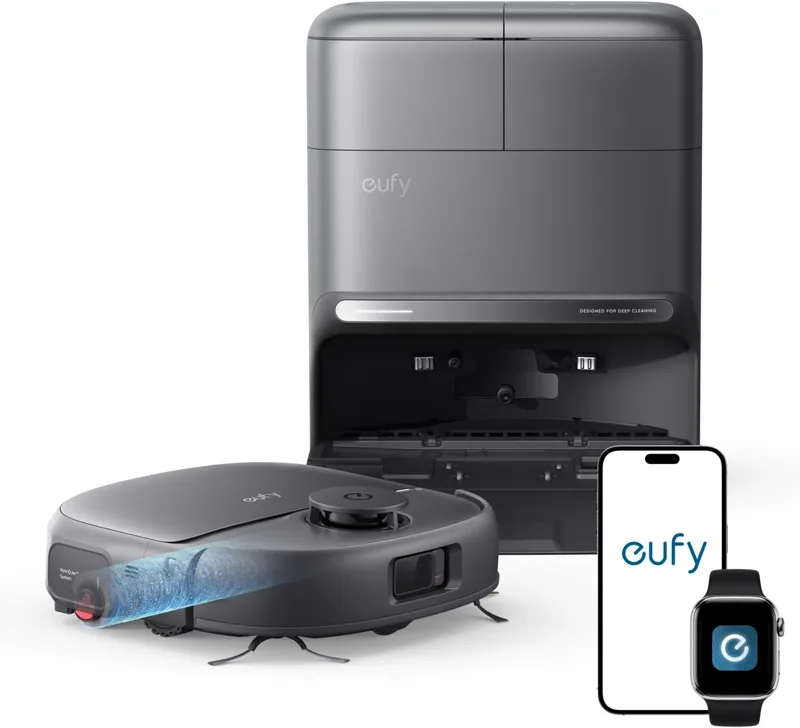
What a roller mop changes about cleanup
A roller keeps contact with the floor along a narrow line, which concentrates pressure and wrings itself as it turns. In practice it handles a sticky spill in one pass where a flat pad needs two, and it leaves less standing water on a grout line, which shortens the drying time you have to walk around.
EVERYBOT EDEG2: the dedicated scrubber
The EDEG2 does not pretend to be a vacuum. It is a mopping robot with dual spinning pads, built for homes that already own a vacuum and want the floor washed without standing over it. That focus is its advantage: no brush roll to untangle, no dust bin competing for space with a water tank.
If your routine already includes a weekly vacuum, adding a specialist mop is cheaper than replacing a working machine with a hybrid, and it keeps each job with the tool designed for it.
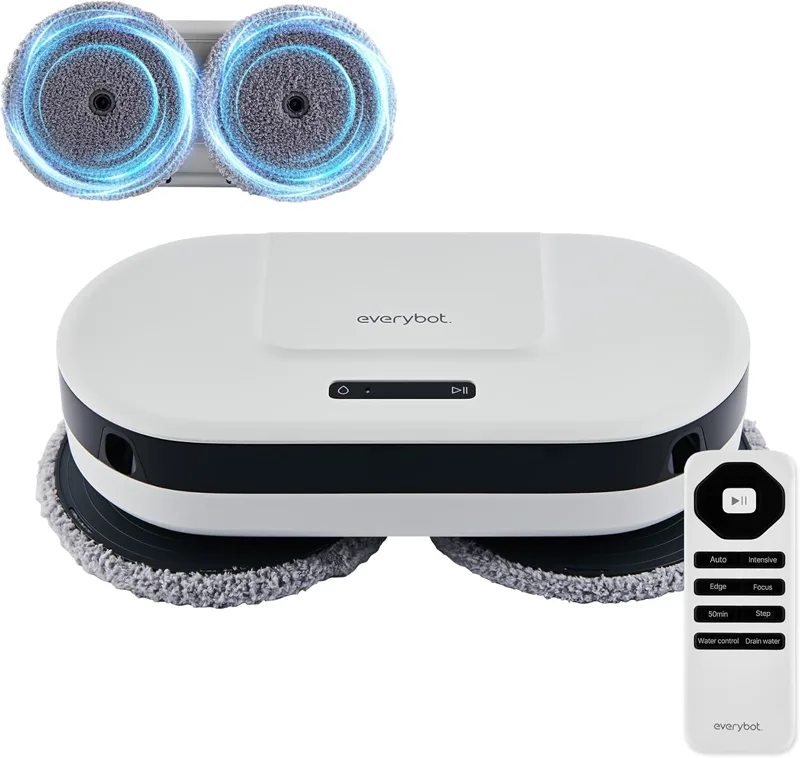
Spinning pads handle sticky spots differently
Two rotating pads work a stain from both sides at once, which is why they feel closer to hand scrubbing than a straight pass. The trade is that pads can ride over a raised grout line rather than into it, so the deepest grooves still want an occasional manual pass.
Rollers behave the other way: better along a line, less effective on a wide dried patch. Neither design is universal, and the mess in your kitchen usually picks the winner for you.
Water tanks set the rhythm of a whole-home run
Every robot mop carries clean water out and dirty water back. The size of those tanks decides whether one run covers a kitchen and a hallway or stops halfway through the living room with a warning chime.
Measure the tile you actually have rather than the tile in the marketing pictures. A dock with larger reservoirs reduces the number of times you refill, which matters more over a year than any single cleaning statistic.
- Count the rooms you expect one run to finish.
- Check whether the dock needs plumbed water or a manual fill.
- Plan where dirty water gets emptied, because it cannot sit for a week.
Dock features decide how often you intervene
A dock that washes the mop and dries it with warm air is the difference between a chore and a background task. Without drying, a damp pad sits in a closed dock and starts to smell, which is the complaint that turns people off robot mops entirely.
Self-emptying is the other convenience worth checking. It moves dust from the robot into a bag in the dock, so you touch the machine on a monthly rhythm instead of after every run.
How the three picks compare side by side
The table below describes behaviour rather than a ranking. Swipe sideways on a phone to see every column, and read each row against the way your own floors get dirty.
| Aspect | Qrevo S Pro | eufy C28 | EVERYBOT EDEG2 |
|---|---|---|---|
| Job it takes on | Vacuum and mop | Vacuum and mop | Mop only |
| Mop head | Rotating pads | Powered roller | Dual spinning pads |
| Hair handling | Brush roll collects | Roller lifts it | No brush roll |
| Dock upkeep | Wash and dry cycle | Wash and dry cycle | Pad washing |
| Water tanks | Dock reservoirs | Dock reservoirs | Onboard tanks |
| Best floor | Mixed hard and rugs | Hard floors with pets | Tile and stone |
| Setup effort | Moderate | Moderate | Low |
| Best fit | One machine homes | Pet households | Homes with a vacuum |
Edge and corner cleaning separates good mops from average ones
The last few centimetres along a skirting board are where robot mops earn or lose their reputation. A round body cannot reach a right angle, so manufacturers extend a pad, swing an arm or accept the gap.
Walk your own rooms and count the corners before you buy. A kitchen with an island and a wall of cabinets has far more edge than an open living room, and that is where the difference shows up every week.
Why edges fail and how to plan around them
Most edge misses come from the mop head sitting inboard of the bumper, so the machine stops short of the wall. The fix is a model that shifts its pad outward, or five minutes with a handheld tool once a fortnight. Expecting a robot to finish a skirting board is the fastest route to disappointment.
Scheduling turns a robot mop into a habit
The value of a robot mop is cumulative. One run a week keeps tile looking maintained; one run a month means every session starts with a floor that has already given up. Set a schedule for the rooms with the most traffic and leave the rest to a weekly pass.
Pair the schedule with the household’s rhythm: run after the kitchen is closed for the night, so chairs are pushed in and the floor is clear. A robot that starts while people are still walking through the room mostly redistributes dirt. For a look at the tools that handle the wet-and-dry mess in one pass, our wet-dry vacuum versus robot mop comparison covers the kitchen case.
What the ceiling leaves out
Above this band you start paying for longer battery life, more elaborate obstacle avoidance and bigger docks. Below it, you give up some of the polish: fewer saved maps, simpler scheduling, and mop heads that need more hands-on cleaning.
None of those omissions stops a machine from cleaning a tiled kitchen every night. They mainly change how often you think about it, which is a fair thing to pay for only if the floor plan is complicated.
- Skip premium obstacle avoidance if your floors are open and uncluttered.
- Spend the difference on a dock that dries the mop.
- Keep a spare set of pads so a wash day does not pause the schedule.
A practical way to choose
Start with the tool you already own. If a vacuum is doing the job and only mopping is missing, the dedicated EDEG2 fills the gap. If neither job is covered, a hybrid earns its dock space.
Then look at the mess your household makes. Pet hair pushes you toward the roller, dried kitchen splashes toward spinning pads, and a mix of rugs and tile toward whichever dock handles both without dragging a wet pad onto carpet. Our robot vacuum versus cordless stick comparison covers the vacuum side of the same decision.
What actually changes once a mop runs nightly
The floor stops being a weekend project. Small spills get handled before they dry, grout lines stay lighter, and the kitchen feels finished in a way that sweeping never quite achieves.
What changes most is attention. Once the machine handles the routine, the manual cleaning you do becomes deliberate rather than defensive. More floor-care comparisons sit in our Home Improvement & Tools guides.